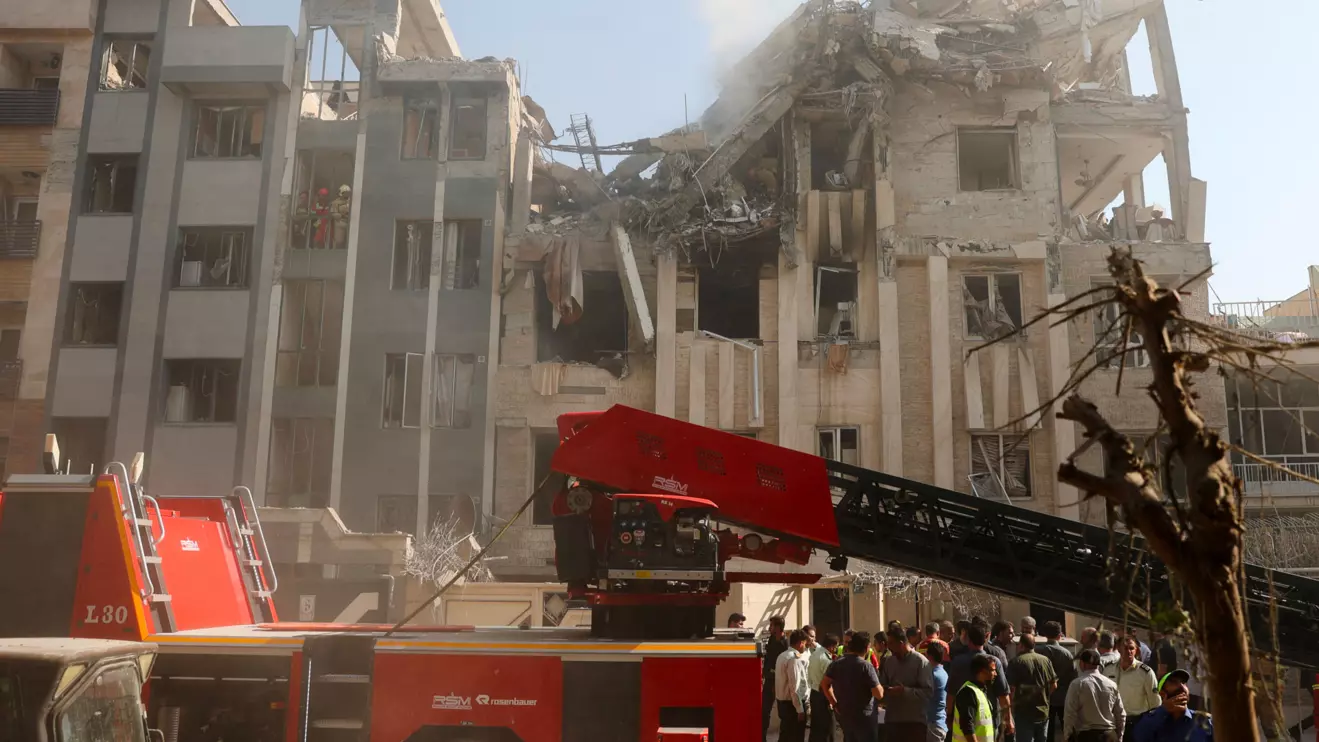
Let us be absolutely clear about what happened today between Israel and Iran.
Israel struck first—and struck smart. This was no symbolic gesture. It was a calculated military operation, targeting not only critical infrastructure tied to Iran’s nuclear weapons program but, according to multiple reports, also specific individuals: senior military commanders, nuclear scientists, and operatives embedded deep within the regime’s clandestine system.
This marks a shift. A chilling message now echoes through Tehran: You are not untouchable. For years, the Iranian regime operated under the illusion of impunity. Today, Israel pierced that illusion.
Yet even with all its daring and technological precision, Israel likely did not succeed in destroying Iran’s most fortified underground nuclear facilities. Those remain, buried beneath concrete and secrecy. And now the responsibility for final action shifts—squarely and unambiguously—to the United States.
The Trump administration now holds an exceptionally strong hand. Tehran has been rattled. Its air defenses have been bypassed. Its elite networks infiltrated.
The United States must seize this moment of maximum leverage—diplomatically or militarily—to deliver an ultimatum: dismantle what remains, or face consequences that will make today’s strike look like a warning shot.
Let us not forget who we are dealing with. This is the same regime that plotted the atrocities of October 7 through its proxies. The same regime that arms Hezbollah, funds the Houthis, trains Hamas, and chants for genocide in broad daylight. A nuclear Iran is not a hypothetical—it is a suicide belt strapped to the region.
What comes next is not just about Israel’s security. It is about global stability, Western deterrence, and whether the world’s leading power is willing to act when lines are crossed.
This is not the time for fantasy diplomacy. Talking to Iran while its centrifuges spin and its militias fire rockets is not negotiation—it is surrender in slow motion. The old playbook must be discarded. This is a moment for clarity, resolve, and the projection of strength.
Israel has done what it could. It risked everything to delay the unthinkable. Now, America must choose: Will it lead? Or will it let the world slide into a nuclear nightmare?
History will not forgive hesitation.