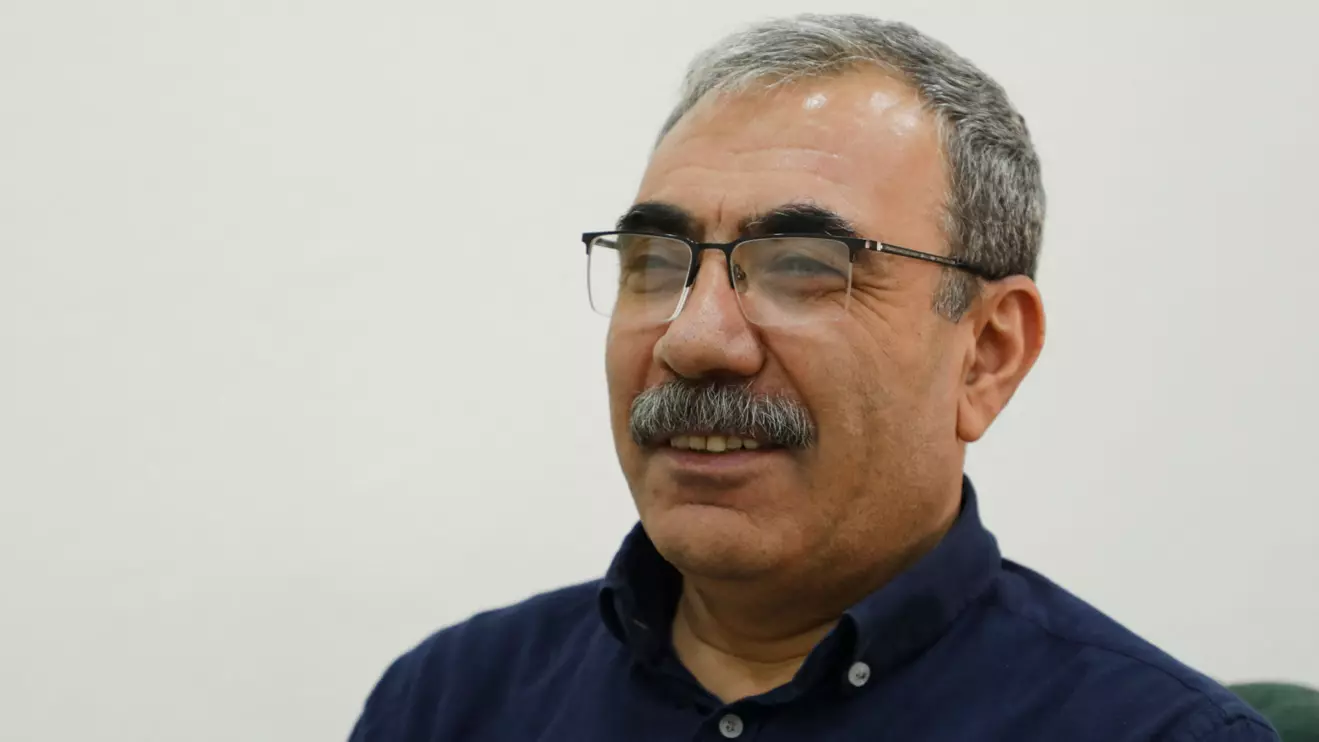
Syrian Kurdish parties will send a delegation to Damascus soon for talks over their region's political future, a leading Kurdish politician said, as they seek to advance their goal of regional autonomy despite opposition from the Islamist rulers.
More than six months after Bashar al-Assad was toppled, Kurdish demands for regional autonomy have emerged as one of the main fault lines in the new Syria, opposed by interim President Ahmed al-Sharaa and his powerful allies in neighbouring Turkey.
Oppressed by Assad, rival Syrian Kurdish groups last month issued a shared vision calling for the unification of the Kurdish regions as a political and administrative unit within a federal Syria, aiming to safeguard Kurdish gains during the war.
"Our Kurdish vision document will be the basis for negotiations with Damascus. The delegation is close to being ready to negotiate with Damascus," Aldar Xelil, a member of the presidential council of the Democratic Union Party (PYD), the dominant faction in northeastern Syria, told Reuters.
But he added: "We may face some difficulties because their position is still inflexible."
His comments point to the limited progress in bridging gaps between the sides since they signed a deal in March aimed at integrating the Kurdish-led security forces and other governing bodies in northeastern Syria with the central state in Damascus.
The Kurdish-led authorities have already had contacts with Damascus, including via a committee tasked with discussing the future of the Kurdish-led Syrian Democratic Forces, a powerful security force backed by the United States.
Last month's Kurdish declaration was adopted by both the PYD and its main rival, the Kurdish National Council (ENKS).
'WE SEEK DISCUSSION'
Following the declaration, Sharaa's office issued a statement rejecting any attempt "to impose a partition or create separatist cantons" without a national consensus.
The Kurdish groups have in turn rejected the transitional arrangements drawn up by his administration, including a constitutional declaration that focused power in Sharaa's hands and strengthened the role of Islamic law.
Xelil described the steps taken by Damascus as unilateral but added: "We seek discussion and participation."
Calls for federal rule have gathered momentum in Syria since March's mass killings of members of the Alawite minority by Islamist militants in western Syria's coastal region, with some Alawites also calling for decentralized rule.
Xelil said the role of the Kurdish-led security forces was to ensure the "security and safety of this region" and if this is "not guaranteed constitutionally, legally, and politically, then discussing the issue of weapons will be futile".
Turkey, which has emerged with big influence in the new Syria, has long opposed Syrian Kurdish autonomy. After last month's announcement, President Tayyip Erdogan dismissed calls for federalism as "nothing more than a raw dream".
Turkey's suspicion of the dominant Syrian Kurdish group stems from its ties to the Kurdistan Workers Party (PKK), which earlier this month decided to dissolve itself and end decades of armed struggle with Turkey.
Xelil said he expected the PKK move to impact Turkey's position on Syria.
"Turkey viewed the presence of the PKK or groups influenced by it as a pretext for attacking northeastern Syria," he said. "There will be no pretext for Turkey to attack the region."