The history of L’Oréal stands as one of the most complex corporate narratives of the twentieth and twenty-first centuries.
It is a story of innovation and global influence emerging from a past intertwined with extremism and hate, later transformed through conscience, memory, and an extraordinary generational reversal.
L’Oréal traces its origins to 1909, when Eugène Schueller, a young French chemist trained at the Institut de Chimie Appliquée de Paris, developed an innovative hair-dye formula and founded the Société Française de Teintures Inoffensives pour Cheveux.
His scientific ingenuity and entrepreneurial drive quickly made his products a success among Parisian salons, laying the foundations of what would become the world’s largest cosmetics company.
Beneath this narrative of innovation, however, lay darker political engagements reflecting the turbulence of the era. In the 1930s, as Europe moved toward catastrophe, Schueller provided financial support and meeting space to La Cagoule, a violent, antisemitic, fascist secret organization intent on destabilizing the French Republic. La Cagoule carried out acts of terror, including assassinations and bombings, and promoted an ideology deeply hostile to Jews and democratic institutions.
During World War II, in occupied France, these entanglements placed elements of L’Oréal within broader collaborationist networks.
Schueller later founded the Mouvement Social Révolutionnaire, a political movement aligned with the Vichy regime and cooperating with Nazi authorities. Meetings connected to these groups were held at company premises, and after the war several former members of La Cagoule found employment within the firm.
These affiliations cast a long moral shadow. While the Holocaust unfolded and millions of Jews were persecuted and murdered across Europe, Schueller’s company existed within an environment where antisemitism was not marginal but institutionalized.
The boundaries between opportunism, complicity, and survival were often blurred, leaving a legacy that would haunt both the company and French society for decades.
Following the liberation of France, Schueller was investigated during the postwar purge of collaborators. In 1947, he escaped serious sanctions, in part due to testimony that he had sheltered certain Jews and members of the Resistance.
This aspect of his wartime conduct remains complex and controversial. Nevertheless, his documented links to extremist movements remain part of the historical record.
In the decades that followed, L’Oréal underwent a profound reinvention. Successive leadership teams steered the company away from its compromised origins and toward a model centered on scientific excellence, innovation, and global expansion.
Under figures such as François Dalle and later Jean-Paul Agon, L’Oréal transformed into a diversified global powerhouse, developing and acquiring brands that now define every segment of the beauty industry.
The company pioneered dermatologically tested cosmetics, invested heavily in research, and built a reputation for scientific rigor combined with commercial sophistication. Over time, L’Oréal became synonymous with trust, innovation, and global reach.
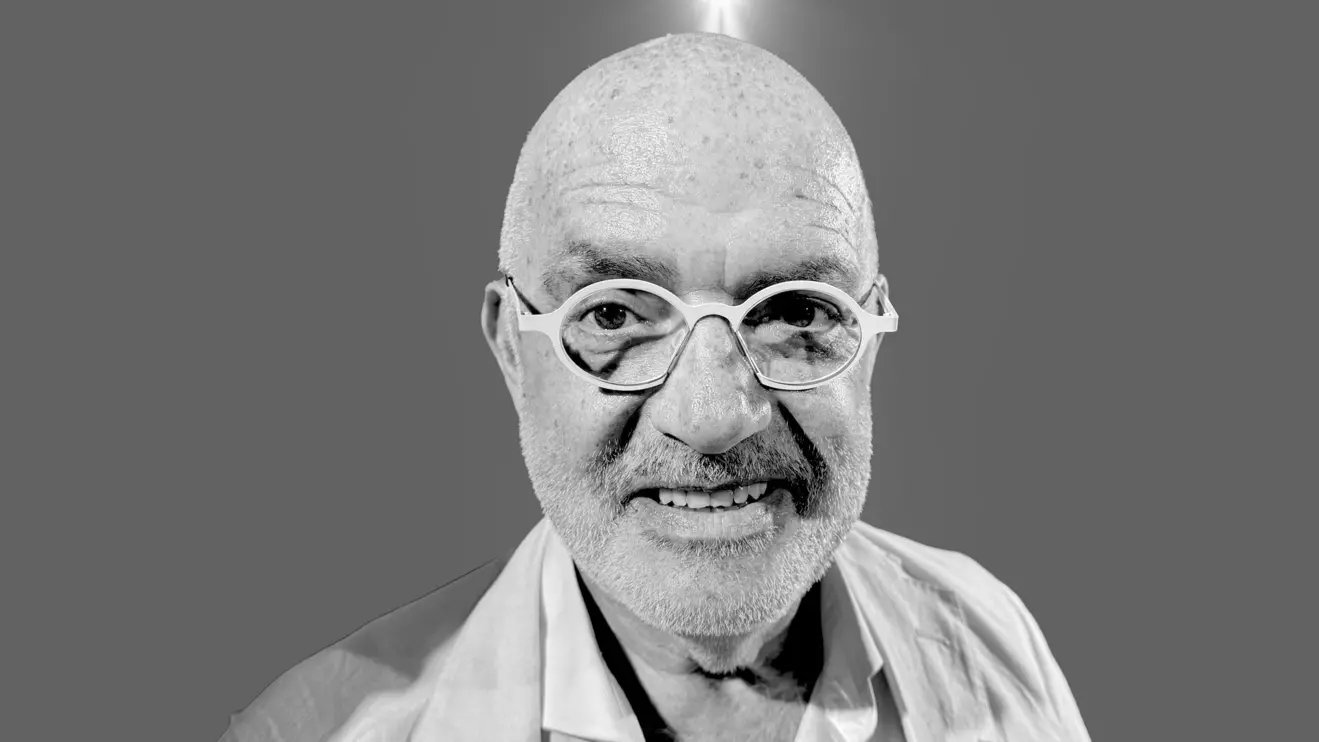
It was against this backdrop of transformation that I became involved in efforts to confront the company’s past openly.
The aim was not to diminish L’Oréal’s achievements, but to ensure that history was acknowledged honestly rather than ignored or minimized. Confronting the moral failures embedded in its origins was essential to grounding the company’s modern identity in ethical integrity.
Perhaps the most extraordinary chapter in this story is the generational shift embodied by the Meyers family
This reckoning was not symbolic alone. It helped embed a culture of responsibility and transparency, reassuring employees, partners, and the public that success would be matched by moral accountability. These conversations contributed to an environment in which leadership could operate with both vision and conscience.
Under Jean-Paul Agon, L’Oréal’s commitment to ethical leadership and social responsibility became more explicit. The company expanded to more than 150 countries, strengthened its brand portfolio across luxury, consumer, professional, and dermatological sectors, and invested in sustainability, diversity, education, and scientific research worldwide. L’Oréal positioned itself not only as a leader in beauty, but as a global corporate citizen.
Perhaps the most extraordinary chapter in this story is the generational shift embodied by the Meyers family.
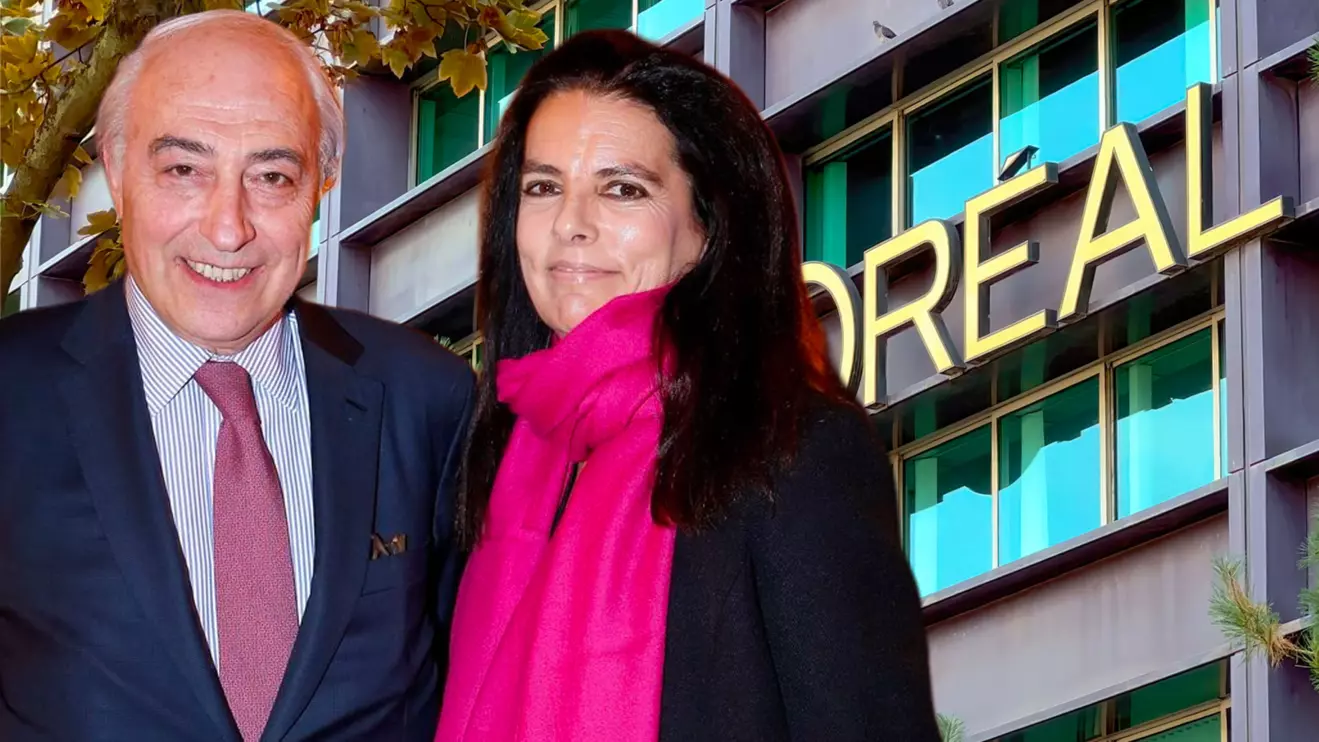
Françoise Bettencourt Meyers, the granddaughter of Eugène Schueller and principal heir to the family’s stake in L’Oréal, represents a powerful historical reversal. Married to Jean-Pierre Meyers, whose grandfather was a rabbi murdered at Auschwitz, she embraced Jewish life and values, raising her children within that tradition.
Jean-Pierre Meyers is also a proud Jew, deeply committed to Jewish life and continuity. His philanthropy extends meaningfully to Israel, reflecting a personal and moral engagement that goes beyond symbolism.
Through sustained support for cultural, educational, and communal initiatives, this commitment affirms a living connection to Jewish history, responsibility, and the future of the Jewish people.
Jean-Pierre Meyers has held significant roles within the family’s holding structure, while their sons, Jean-Victor Meyers and Nicolas Meyers, have assumed increasingly prominent positions on L’Oréal’s board.
This transition is not merely a matter of succession. It represents a profound symbolic transformation: a company once associated with antisemitic extremism now guided by a Jewish family whose ancestors were victims of that ideology.
The story of L’Oréal, like that of modern France, is neither simple nor linear. It is a tapestry of scientific brilliance, commercial ambition, moral failure, and historical reckoning. Acknowledging the darkest chapters does not negate the present; rather, it gives meaning to the transformation that followed.
By confronting its past, embracing ethical leadership, and allowing history to inform its future, L’Oréal demonstrates that institutions, like individuals, can evolve.
The fact that the company’s future is now shaped by those whose families once stood on the receiving end of history’s greatest crimes gives this narrative a resonance that extends far beyond the world of cosmetics.
L’Oréal today is more than a global beauty company.
It is a testament to the complexity of memory and the possibility of moral renewal. Its story affirms that even from the darkest origins, a different legacy can be built - one grounded in responsibility, resilience, and the courage to face history honestly.