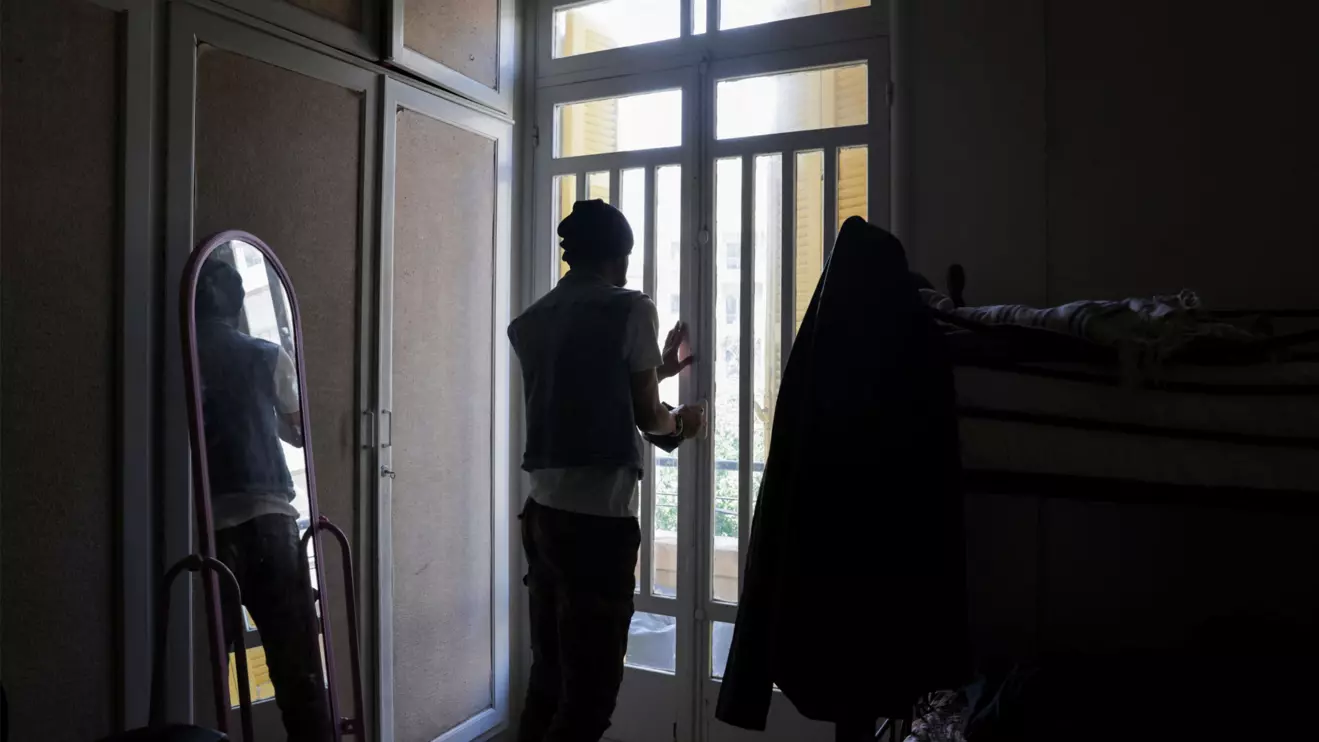
Mohammed's life as a gay man in conservative south Lebanon was already rife with challenges. But Israeli strikes on his hometown in March were the final straw, pushing him to flee to a rare shelter in Beirut hosting LGBT people.
Most of the more than one million people displaced by the war between Israel and Lebanese armed group Hezbollah live with relatives or have rented apartments. Another 124,000 have sought refuge in government shelters, and the most vulnerable are eking out a living in the streets.
But those options are rarely available to members of Lebanon’s LGBT community, who are often rejected by their families, face discrimination by government authorities and may be struggling financially.
Though Lebanon was generally considered a relative safe haven for the LGBT community in the broadly conservative Middle East, recent incidents, including the disruption of a drag show in 2023 by an angry mob, have left LGBT people feeling vulnerable, activists say.
Israeli air raids hit the building where Mohammed was living with his brother near the port city of Sidon just two weeks after the war started on March 2.
Mohammed, who spoke to Reuters on condition that his last name not be used, said his relatives had never accepted his sexuality and barred him from having visitors over.
After their home was bombed, he fled to the Lebanese capital, where he now shares a room in a shelter run by LGBT advocacy organizations Helem and Mosaic.
“It was like a safe place. I even felt a sense of psychological relief when I arrived,” Mohammed said.
FEW OPTIONS FOR DISPLACED LGBT PEOPLE
Government shelters are designed to host families and regularly exclude those not considered part of a conventional family unit, said Doumit Azzi, Helem’s communications coordinator.
As a result, the shelter opened by Helem and Mosaic is often the only recourse for LGBT people in Lebanon.
Its rooms are furnished with donated items including bunk beds to maximise the number of people it can host. An LGBT person who lives elsewhere brings hot meals for residents.
The shelter’s location is kept secret to avoid backlash from conservative members of Lebanese society.
Although the shelter is only a temporary home, Mohammed said he can live authentically there.
“I'm Mohammed, that’s it. Just the way I want to be, not the way others want me to be.”
The war has compounded the dangers for the LGBT community, the shelter’s staff said. Despite a ceasefire announced on April 16, continuing hostilities have kept many from returning home.
A hotline run by Mosaic has been receiving around 100 calls a day seeking help, according to Samar, a social worker with the organization who also asked her last name not be used.
“In normal times and without war, there are many risks to LGBTQ people, especially related to protection. What if there's a war?” she said.
She told Reuters that crises often exacerbated gaps in Lebanon’s social protection systems and deepened discrimination against LGBT people.
TRANS PEOPLE ESPECIALLY VULNERABLE
Transgender people are particularly vulnerable because they struggle to obtain legal documents that recognise their gender.
Another resident at the shelter is an Egyptian who asked to be identified by the name Mina for security reasons, and arrived in January after fleeing Egypt, where he faced persecution as a transgender man.
But even in Beirut, he has run into discrimination.
He was recently asked for his papers at a checkpoint that he assumed was government-run, but his only identification card said he was a woman.
"I am a trans man, they were looking at the document and then at me, and things were said that shouldn't be said" because of how offensive they were, Mina said.
In the quiet hallways of the shelter, he feels safe.
“We try to treat each other in a cooperative way, we help each other and we try to be friends,” he said. “If one of us needs help, the other stands by him.”