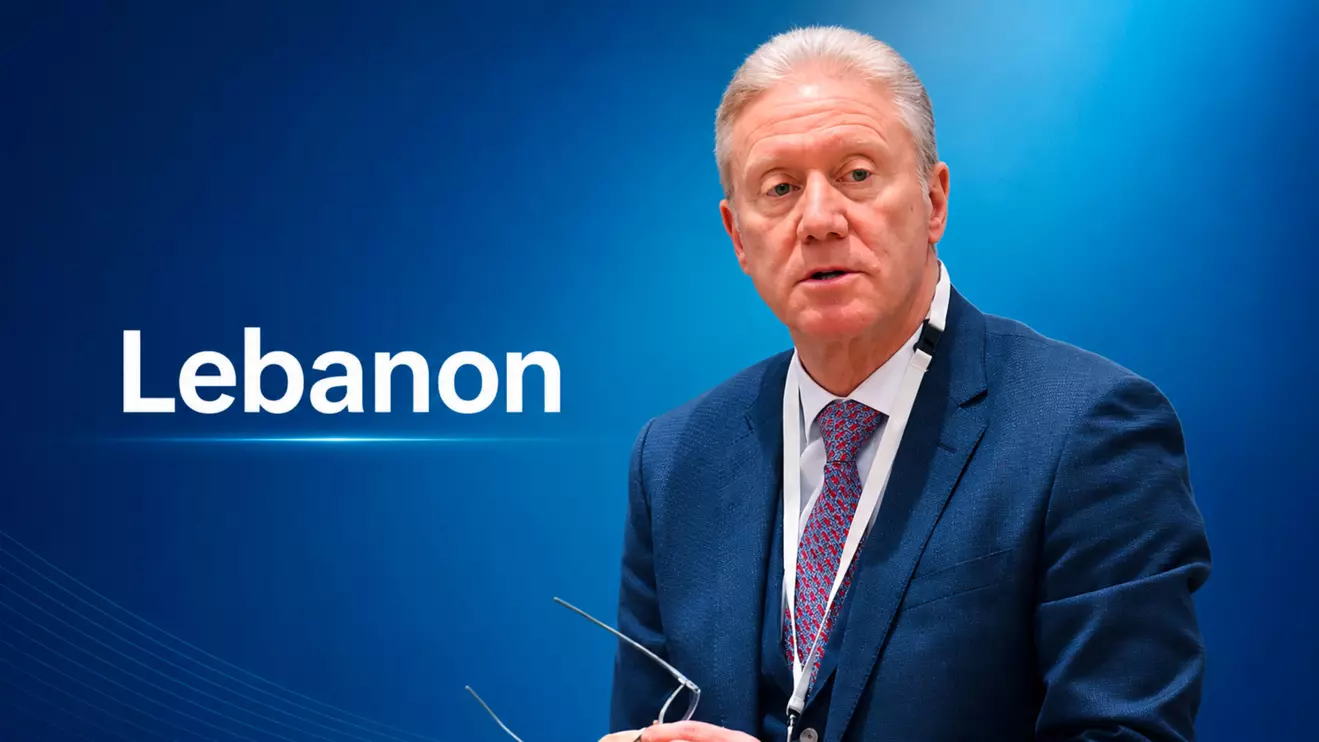
As the first session of government-level Lebanon-Israel negotiations opened Thursday in Washington, Lebanese Foreign Minister Joe Raggi moved quickly to define what Beirut is, and is not, sitting down to discuss.
"We are not talking, at this stage, about a peace agreement," Raggi stated bluntly. The priority, he said, is to "end the attacks, stop the destruction, protect civilians and create the appropriate conditions for serious and lasting negotiations."
His message was direct: "Serious negotiations cannot take place while civilians are being killed and villages destroyed."
Raggi outlined Beirut's immediate demands: the withdrawal of Israeli forces from southern Lebanon, the return of displaced civilians to their homes, and the resolution of the prisoner file. These, in Lebanon's framing, are preconditions, not concessions.
On the most politically charged question, Raggi delivered a notably firm position. "The Lebanese people want to live in a normal sovereign state where the monopoly of military force belongs exclusively to the state and its legitimate institutions."
He was careful to frame this not as a demand made to satisfy Israel or the international community, but as "a matter of national sovereignty." The Lebanese government, he said, has called on Hezbollah to disarm and considers its military actions to be "outside the legitimacy of the state."
No Iranian interference
Raggi also categorically rejected any linkage between Lebanon's negotiations and the separate US-Iran talks. "The Lebanese government has decided to completely separate the two tracks," he said. "We are a sovereign and independent state. No other party can negotiate on Lebanon's behalf."
A government that knows what it wants, and is determined to speak for itself.