Libyan rivals resume talks in Morocco to break political deadlock

1 min Mena Today

Delegations from rival Libyan institutions resumed talks in Morocco on Wednesday to try to break a political deadlock and prevent the country from sliding back into chaos.

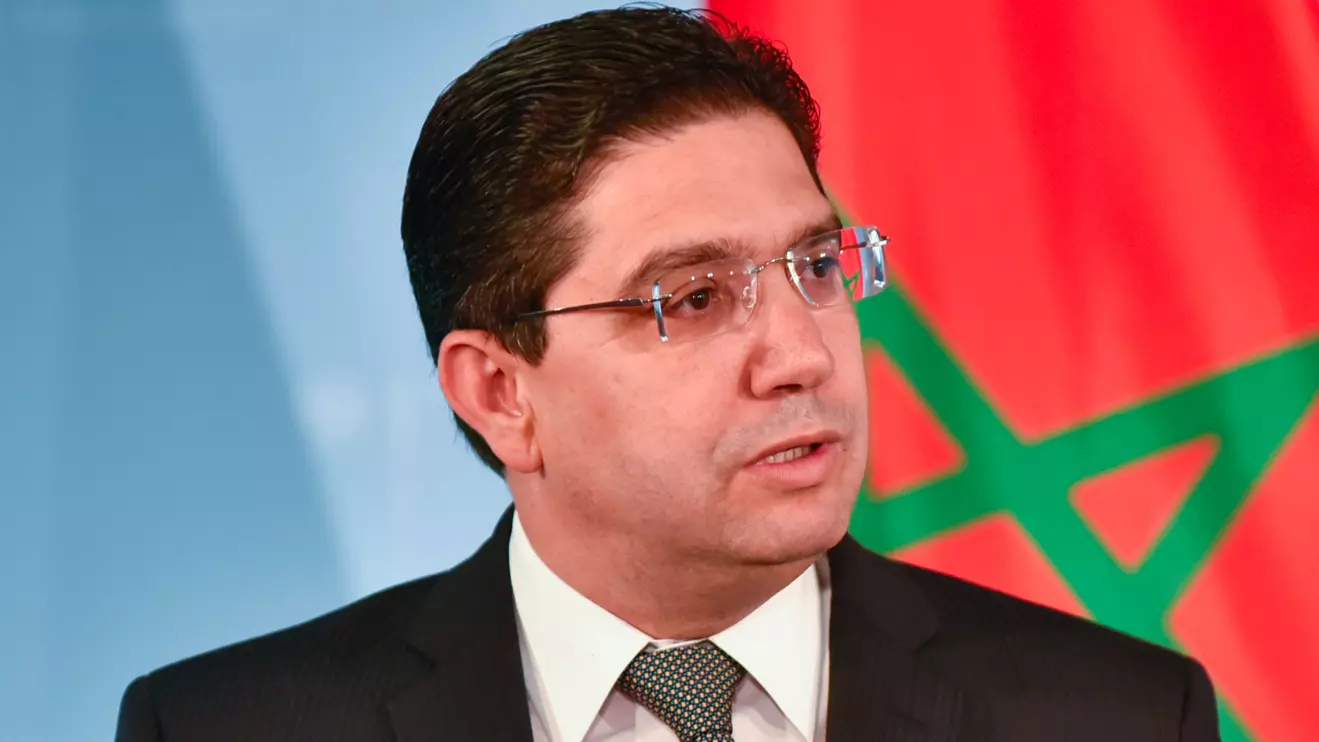
Moroccan foreign minister Nasser Bourita © Mena Today 

Moroccan foreign minister Nasser Bourita © Mena Today 

Delegations from rival Libyan institutions resumed talks in Morocco on Wednesday to try to break a political deadlock and prevent the country from sliding back into chaos.

Libya has undergone a turbulent decade since it split in 2014 between two administrations in its east and west following the NATO-backed uprising that toppled Muammar Gaddafi in 2011.

The talks in Bouznika, near the Moroccan capital Rabat, were between rival legislative bodies known as the High Council of State based in Tripoli in the west and the House of Representatives based in Benghazi in the east.

Speaking at the opening of consultations between the institutions, Moroccan foreign minister Nasser Bourita urged participants to work together to preserve Libya's unity and prepare for "credible elections."

"The numerous international and regional conferences on Libya will not replace the inter-Libyan dialogue which has credibility and ownership," he said.

A political process to end years of institutional division, outright warfare and unstable peace has been stalled since an election scheduled for December 2021 collapsed, amid disputes over the eligibility of the main candidates.

The House of Representatives was elected in 2014 as the national parliament with a four-year mandate to oversee a political transition.

Under a 2015 Libyan Political Agreement, reached in Morocco's Skhirate near Rabat, the High State Council was formed as a consultative second chamber with an advisory role.

But the House of Representatives then appointed its own rival government, saying the mandate of the prime minister of a government of national unity had expired. The eastern-appointed government has had little clout, but its appointment revived Libya's east-west division.

By Ahmed Eljechtimi

Related

United Arab Emirates

UAE denies funnelling mercenaries into Sudan

Human Rights Watch has accused an Abu Dhabi-based security company of recruiting Colombian private military contractors and deploying them to fight alongside Sudan's Rapid Support Forces (RSF) between 2024 and 2025, adding to what the rights group describes as a growing body of evidence of Emirati military support for the paramilitary group.

Sudan

Sudan food crisis deepens as Iran war disrupts harvests

Farmers across Sudan say the hike in global fuel and fertilizer costs resulting from the Iran conflict will force them to cut back on planting this summer, restricting food production in a country where war has caused acute hunger.

Morocco

Building collapse leaves several dead in Fez

At least nine people were killed and six others injured when a four-storey building collapsed overnight in the Moroccan city of Fez, about 200 kilometres (124 miles) east of Rabat, local authorities said on Thursday.

Subscribe to our newsletter

Mena banner 4

To make this website run properly and to improve your experience, we use cookies. For more detailed information, please check our Cookie Policy.

  • Necessary cookies enable core functionality. The website cannot function properly without these cookies, and can only be disabled by changing your browser preferences.