MBS’s Saudi Arabia has changed. Not in the caricatured sense of “going Islamist,” but in a way that can be strategically dangerous for Israel if Jerusalem keeps reading Riyadh through an old lens.
For years, many in Israel assumed a basic trajectory: Saudi Arabia would modernize, converge quietly with Israel against Iran, and eventually move, perhaps reluctantly, toward normalization. That storyline is now shaky.
The kingdom is pursuing a colder doctrine built on autonomy, deterrence, and diversified partnerships. It wants to reduce exposure to regional fires, lower reliance on any single great power, and keep the Palestinian question as a political shield rather than a diplomatic detail. For Israel, this is not a moral drama. It is a strategic change.
The first shift is diplomatic. Riyadh has made clear that it will not normalize with Israel without a credible pathway to Palestinian statehood, and it has repeated this even under strong American pressure.
In practice, that means Saudi Arabia is decoupling its security relationship with Washington from any requirement to deliver a peace breakthrough with Israel. When normalization is frozen, the leverage Israel once had over the U.S.–Saudi track weakens. Arms deals become arms deals, not bargaining chips.
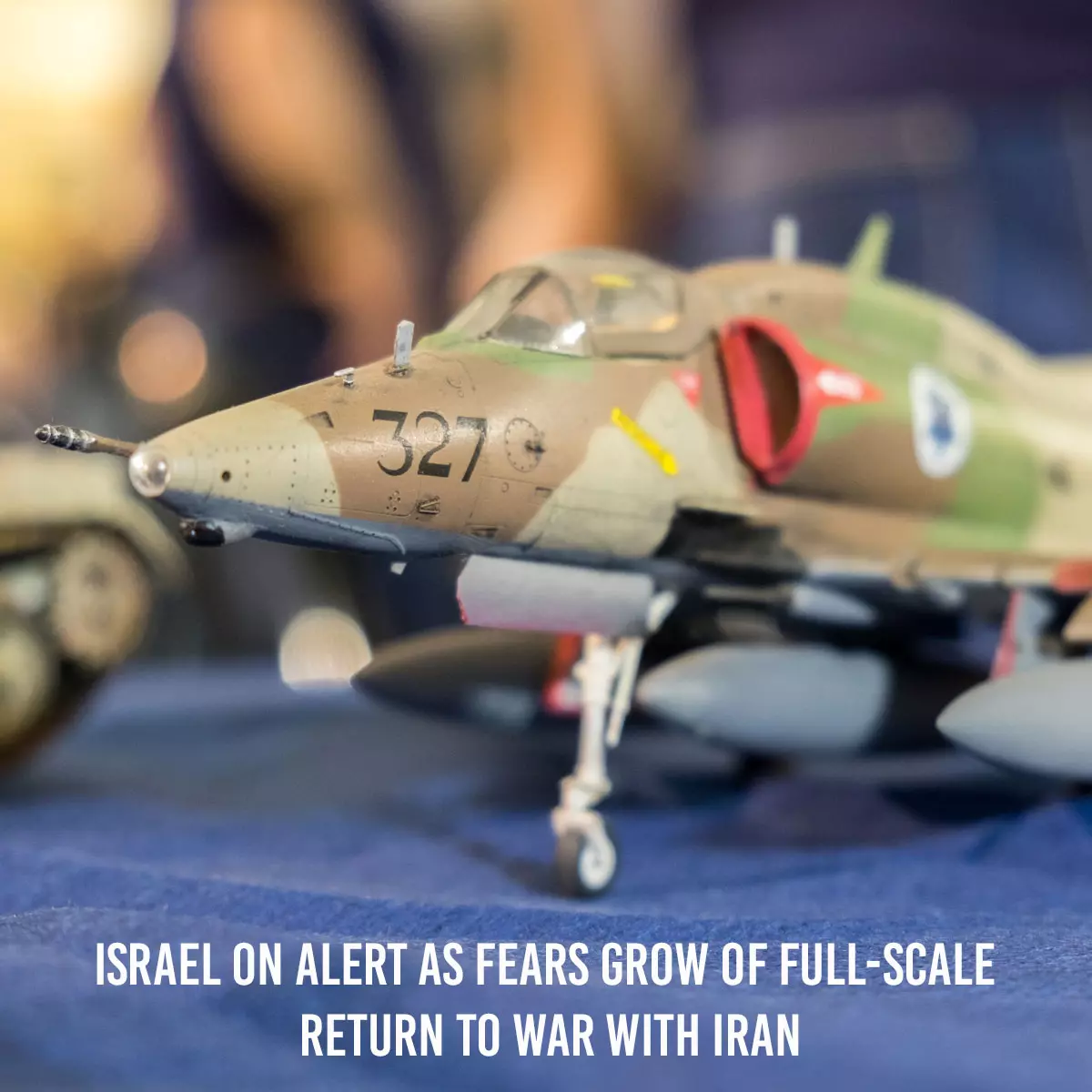
The second shift is military, and it goes beyond headlines about aircraft. The debate around potential Saudi access to F-35s is often framed in simplistic terms: either the sale happens and Israel is endangered, or it is blocked and Israel is safe.
The reality is more subtle and, therefore, more concerning. Even if Saudi receives a version that is less customized than Israel’s, the introduction of stealth capability into another major regional air force changes the strategic atmosphere. Exclusivity matters.
Israel’s air superiority has never been only about platforms; it has been about a layered ecosystem—training, doctrine, electronic warfare, intelligence, weapons integration, and the psychological advantage of being the only actor with certain capabilities. Once stealth becomes less exclusive, deterrence becomes more expensive to maintain and operational freedom becomes less automatic.
The deeper issue is the architecture Saudi Arabia is building around itself. The kingdom is not simply upgrading hardware; it is widening its security web. Closer defense ties with Pakistan, and Ankara’s interest in locking itself into that triangle, reflect a Saudi intent to build alternatives to total reliance on the United States.
Those relationships may not be directed at Israel today, but they introduce nuclear ambiguity, strategic spillover, and long-term uncertainty. Alliances shift. Leaders change. Crises arrive. The danger in the Middle East rarely comes from declared intentions; it comes from capability diffusion and the momentum of new alignments.
At the same time, Saudi domestic policy points to a model of controlled modernization rather than liberalization. Social opening can coexist with a highly centralized security state.
That matters because regimes that are rigid internally often seek external moves that reinforce legitimacy. Right now, legitimacy across the Arab and Muslim world is heavily shaped by Gaza and the Palestinian issue.
Saudi Arabia is using that reality to set its diplomatic posture and to protect itself from being cast as the power that “abandoned” the Palestinians. This is not just public relations. It is strategic insulation.
None of this means Saudi Arabia is preparing for direct conflict with Israel. The more realistic risk is structural. Israel could find itself in a region where its qualitative advantages narrow slowly, where American willingness to restrict advanced sales becomes less reliable, and where the political conditions for normalization harden rather than soften.
In such a landscape, Israel’s deterrence still holds—but it costs more, requires more capability investment, and leaves less margin for error.
Israel’s response should be unsentimental and precise. If advanced U.S. systems move to Saudi Arabia, Israel must secure hard, enforceable compensation that preserves a meaningful qualitative edge, not symbolic assurances.
That means deeper advantages in electronic warfare, networking, stand-off strike, refueling, intelligence, and missile defense, capabilities that sit one level above the aircraft itself. Israel should also stop treating Saudi normalization as inevitable. Riyadh has defined its price. If Israel cannot meet it, it must plan for a long period of distance and manage the U.S.–Saudi relationship accordingly.
MBS is building a Saudi Arabia that wants freedom of maneuver. That freedom includes arming up, broadening partnerships, and keeping Israel at diplomatic arm’s length while coordinating quietly where interests overlap.
For Israel, the danger is not a sudden betrayal. The danger is waking up years from now to discover that the region has shifted under its feet, and that the assumptions that once protected its strategic edge were allowed to expire.