NATO foreign ministers will meet Gulf Arab counterparts on Tuesday to address the stalemate over reopening the Strait of Hormuz, including a Franco-British proposal for a multinational maritime mission that Iran has so far dismissed.
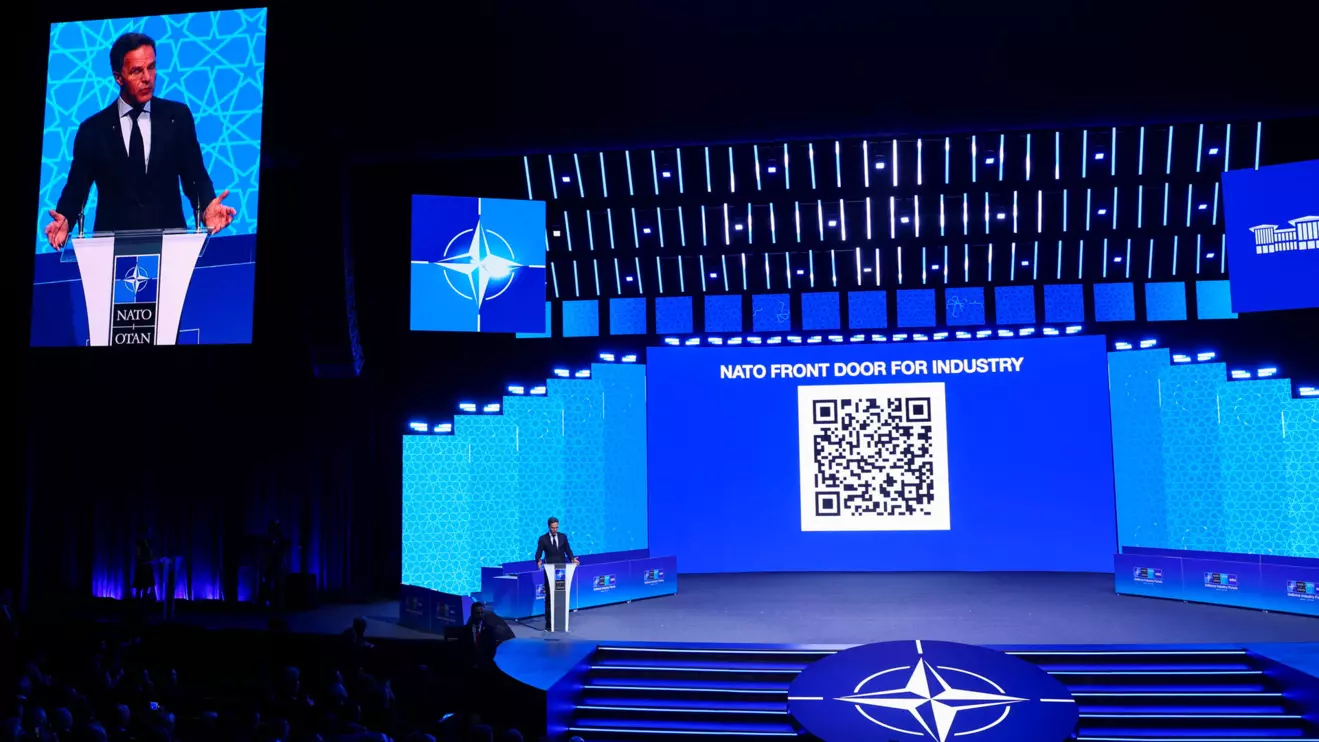
The meeting on the sidelines of a NATO summit in Ankara will bring together ministers from Bahrain, Kuwait, Qatar and the United Arab Emirates following weeks of tensions in the strategically important waterway despite an interim U.S.-Iran peace deal.
SHOWING SUPPORT TO GULF ARAB STATES
The United Kingdom Maritime Trade Operations agency (UKMTO) said early on Tuesday that a tanker was struck east of Oman's Limah. Axios reported earlier that Iran's Revolutionary Guards fired at least two missiles at commercial ships transiting the Strait of Hormuz.
"In the Gulf region, Bahrain, Kuwait, Qatar, and the United Arab Emirates were directly targeted by Iranian attacks this spring," Belgian Foreign Minister Maxime Prevot said before the meeting. "Their stability and ours are inextricably linked. This goes far beyond the Strait of Hormuz alone, however crucial it may be for Europe’s energy security," he added.
TRUMP CRITICAL OF NATO ON HORMUZ
Iran began blockading the waterway after the United States and Israel launched military action against it in February. Despite the mid-June interim accord, passage remains difficult, driving up oil prices, shipping costs and pressure on global supply chains.
NATO allies have sought to avoid direct involvement in the conflict, instead focusing on plans outside the alliance to reopen the strait, through which around a fifth of the world's oil supply normally passes.
U.S. President Donald Trump, due in Ankara later on Tuesday, has criticised NATO allies for their reluctance to contribute to efforts to reopen the waterway.
FRANCO-BRITISH MISSION NEEDS IRANIAN BACKING
European nations have said they do not want to be drawn into the war, which was launched without consulting them, but are ready to help secure the strait after the war.
France and Britain have led efforts to build a coalition among roughly a dozen countries to guarantee safe passage through the strait once tensions ease or the conflict is resolved, though any long-term arrangement would ultimately require Iranian acquiescence.
Iran has repeatedly opposed any foreign military presence in the area and last week dismissed remarks by French President Emmanuel Macron suggesting the mission would proceed.
Several NATO allies already operate minehunters, warships and support vessels in the region.
Diplomats say Paris and London hope to announce in the coming days an initial mission in the Gulf of Oman, an adjacent waterway linking the Arabian Sea to the Strait of Hormuz and bordered by Iran, Oman and the UAE.
"The Sultanate of Oman has agreed to work with the United Kingdom and France to ensure that its sovereign territorial waters are safe for navigation," said a Franco-British joint statement on July 3.
By John Irish and Lili Bayer