Let us dispense with diplomatic courtesy. The demand by France, Spain and their European partners to include Lebanon in the US-Iran negotiations is not statesmanship.
It is not humanitarianism. It is strategic blindness of the first order, and its consequences, if Washington were foolish enough to comply, would be felt for a generation.
Emmanuel Macron. Pedro Sanchez. And the dutiful chorus of European foreign ministers who have spent years constructing an elaborate performance of moral authority without ever being required to back it with action.
Faced with one of the most consequential negotiations of the decade, their collective instinct is to hand Tehran exactly what it wants: international legitimacy for Hezbollah's continued military presence in Lebanon, dressed up as a peace initiative.
It would be almost impressive, if it were not so dangerous.
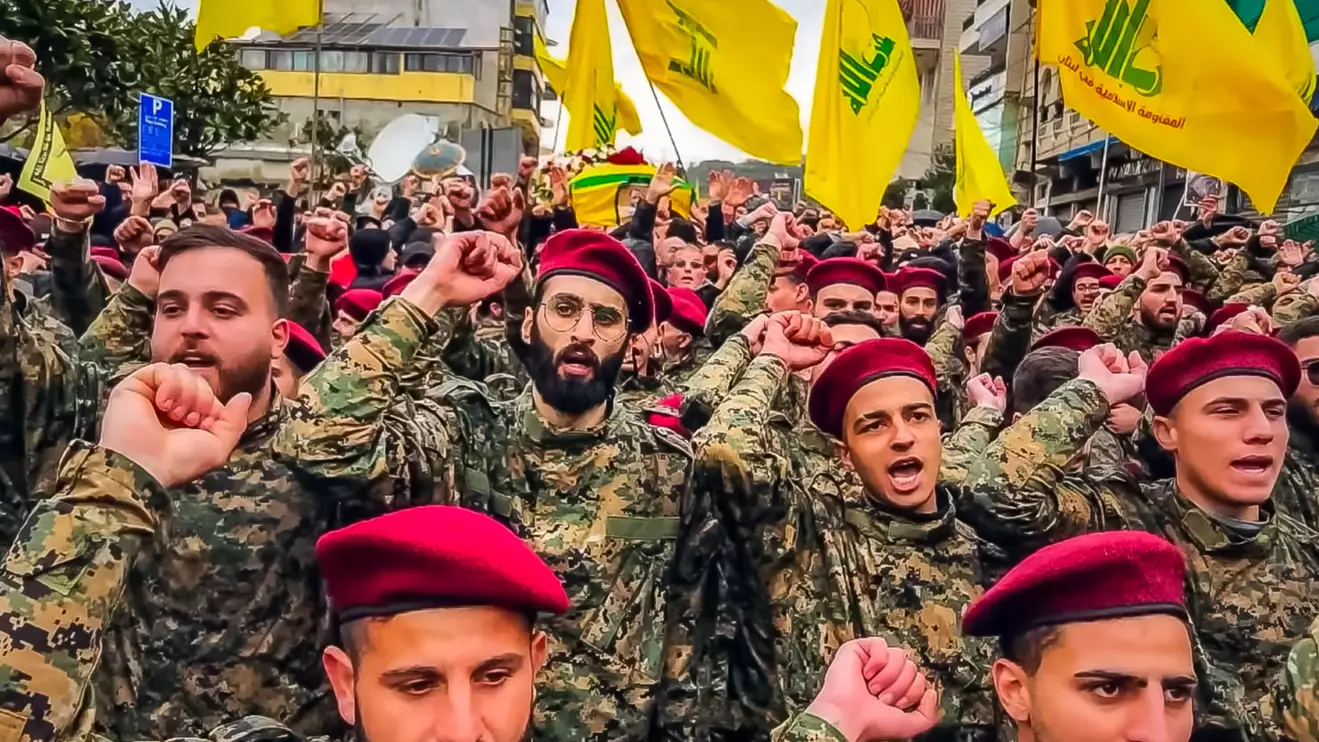
On March 2, Hezbollah attacked Israel. Not a spontaneous uprising. Not popular resistance. A calculated military operation executed by a heavily armed proxy force that takes its orders not from Beirut but from the Islamic Revolutionary Guard Corps in Tehran.
This is not a matter of interpretation. It is the operational reality of an organisation that Iran built, finances, arms and directs as an extension of its own foreign policy.
Iran is not trying to save Lebanon from « Israeli aggression ». Tehran is trying to preserve Hezbollah's military and political stranglehold over Lebanese territory, the same stranglehold that has spent forty years hollowing out Lebanese sovereignty, destroying its economy, corrupting its institutions and turning its south into a forward base for Iranian power projection.
To include Lebanon in the Pakistan negotiations, as though the Islamic Republic were a neutral party rather than the root cause of the problem, would be an insult to the Lebanese state. More than that, it would be a catastrophic strategic miscalculation with no exit.
What the European position actually does
Macron and Sanchez do not speak of Lebanon because they have a plan for it. They speak of Lebanon because it is politically costless to do so. A press statement costs nothing. A communiqué risks nothing.
A demand that Israel stop costs nothing, because someone else is doing the fighting, and someone else will bear the consequences if the fighting stops too soon.
The truth that European leaders refuse to articulate is simple and brutal: the only viable outcome in Lebanon is the complete disarmament of Hezbollah and the permanent destruction of its military infrastructure. Not a negotiated freeze. Not a monitored ceasefire. Dismantlement.
The Lebanese government attempted this. It failed, because Hezbollah is more powerful than the Lebanese state it inhabits.
The international community deployed UNIFIL. It failed, because UNIFIL's mandate was to observe, not to enforce, and Hezbollah rebuilt its arsenal in plain sight of the blue helmets. Israel is now doing what no Western government had the will or the courage to do: dismantling, by force, the apparatus that made Lebanon a permanent hostage.
If France and Spain find this objectionable, the remedy is available to them. Send troops. Enforce the disarmament yourselves. Deploy the legions of the French Republic and the armies of the Spanish Crown to the Litani River and ensure that not one Hezbollah missile remains south of it. Do the work that UNSCR 1701 mandated and that Europe spent eighteen years pretending was being done.
They will not, of course. It is far easier - and infinitely safer - to demand that Israel stand down, issue a solemn statement, and return to Brussels for dinner.
US Vice President JD Vance has stated the American position with admirable clarity: Lebanon is not part of the peace process with Tehran. The ceasefire is bilateral. What happens on Israel's northern border is a distinct matter, and one that will not be resolved by granting Iran a seat at a table where it would negotiate only to entrench its proxy's position.
Inserting Lebanon into the Pakistan talks would achieve three things. It would reward forty years of Iranian proxy warfare with diplomatic recognition.
It would grant Hezbollah the ceasefire it needs to reconstitute what Israel has spent weeks destroying. And it would signal to every state-sponsored militia on earth that the path to international legitimacy runs through enough violence to force a negotiation.
That is not a precedent Europe should want to set, even if it lacks the self-awareness to recognise it is doing so.
On the subject of moral authority
There is a particular tradition in European foreign policy, comfortable, well-funded, deeply self-satisfied, that mistakes the performance of concern for the exercise of responsibility.
It condemns without acting. It demands without contributing. It invokes international law selectively, with a precision calibrated to avoid any obligation that might require sacrifice.
Macron and Sanchez are entitled to their convictions. But moral authority is not conferred by press conferences. It is earned by decisions, by the willingness to name things as they are, to bear costs, to act rather than simply to speak.
Until the leaders calling for Lebanon's inclusion in the peace talks are prepared to explain what they propose to do about the organisation that has held Lebanon hostage for four decades, beyond asking Israel to stop, their demands deserve exactly the weight Washington has assigned them.
None whatsoever.