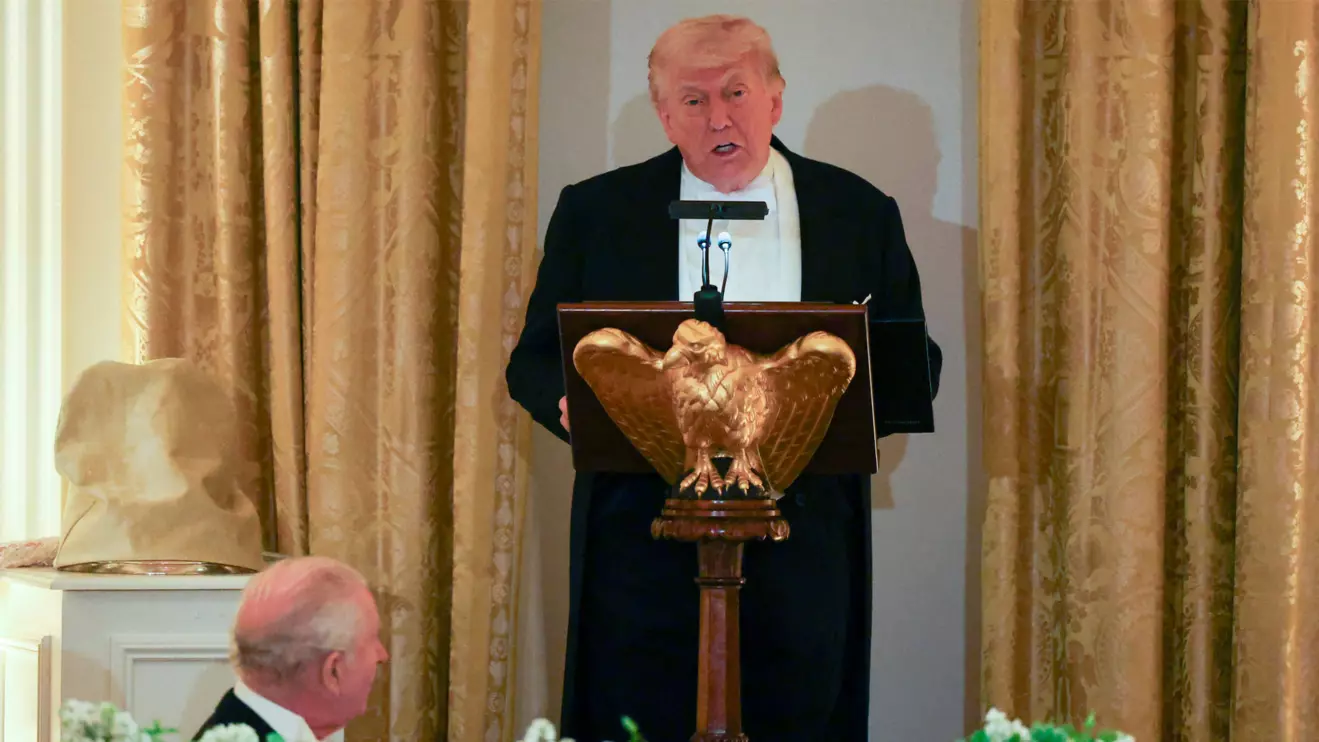
President Donald Trump said on Tuesday Britain's King Charles did not want Iran to have a nuclear weapon, introducing the fraught subject of the Middle East conflict into comments at a White House state dinner for the visiting royal.
The event was held on the second day of a four-day visit to the United States at a tense time in ties, after Trump has repeatedly criticized British Prime Minister Keir Starmer for what Trump calls lack of help in prosecuting the Iran war.
"We're doing a little Middle East work right now and we're doing very well," Trump said at the dinner.
"We have militarily defeated that particular opponent, and we're never going to let that opponent ever - Charles agrees with me even more than I do - we're never going to let that opponent have a nuclear weapon."
In his own comments following Trump, Charles did not speak about Iran or the war. The king is not a spokesman for the British government.
Asked about the state dinner comments, the British Embassy in Washington referred Reuters to Buckingham Palace, which did not immediately respond to a request for comment.
In a speech to Congress earlier, Charles made no direct mention of the Iran war, but referred to Trump's criticism of NATO, highlighted the importance of continued U.S. help for Ukraine in its war with Russia, and the dangers of isolationism.
Both Britain and the United States have maintained over the years that Tehran should not develop nuclear weapons.
Tehran, which does not have nuclear weapons, denies seeking them but says it has the right to develop nuclear technology for peaceful purposes, including enrichment, as a party to the Nuclear Non-Proliferation Treaty.
By Kanishka Singh and Jasper Ward