Iran
Liberation is not a slogan. It is a set of decisions
Seven months into this war, the Islamic Republic is in the tightest corner of its forty-seven years. That is not cheerleading; it is arithmetic.

I am not a diplomat or a security analyst. My passion in life has always been to build bridges, to use whatever reach I had to move things in a positive direction.
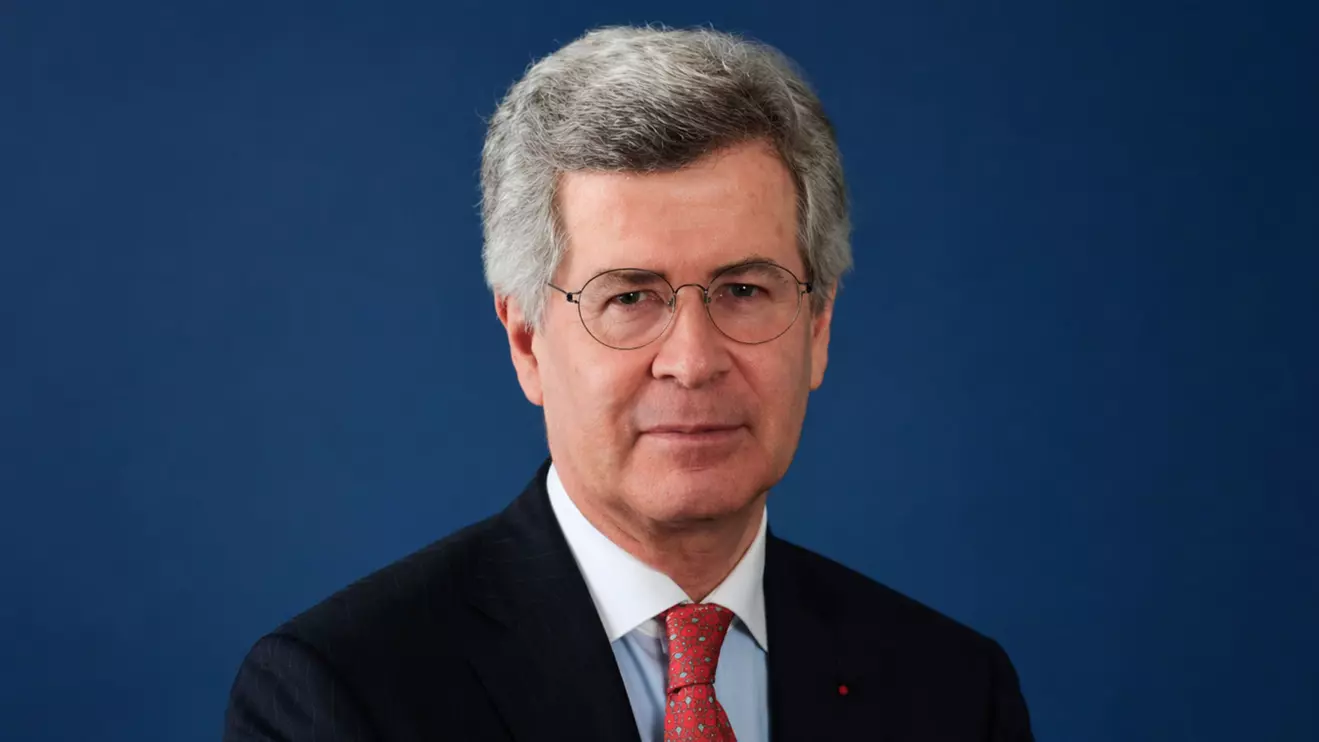
Jean-David Levitte © X
I am not a diplomat or a security analyst. My passion in life has always been to build bridges, to use whatever reach I had to move things in a positive direction.
In 2009, at the start of the Green Revolution, that impulse led me to create 100 Million Facebook Friends for Democracy in Iran.
I was an artist living in New York. Within a few weeks the page had 370,000 members and had become the largest social media mobilization platform in the world dedicated to democratic change in Iran. No government funded it. No think tank ran it.
By the time the FBI came to see me in the winter of 2011, as Tahrir Square was unfolding, I had already spent years building relationships at the highest levels on both sides of the equation. That was exactly the point they had missed.
The bridge had been built long before they knocked on my door to ask whether it existed. In the years that followed, some of those same agents became acquaintances. A few came to my openings.
Around that same time I found myself trying to reach Jean-David Levitte, Sarkozy’s national security adviser and sherpa. Ehud Barak, then Israel’s Defense Minister, had asked me to do him a favor: contact Levitte and see whether a meeting could be arranged on the sidelines of the Munich Security Conference in February 2009.
Levitte did not respond, he was in Berlin with Merkel and Sarkozy, managing what would become the first tremors of the euro crisis.
That is another story. What mattered was that the relationship existed. It had grown out of years of work I had done strengthening the ties between French diplomacy, Jewish community leaders, and American politicians at the highest levels.
I had learned over that time to admire and respect him. Few people I have encountered combine his depth of experience with his genuine command of what is actually happening in the world.
When Levitte eventually came back to me and we did speak, I asked him point blank whether he thought Obama would abandon Mubarak. He thought about it. He said he did not think so. I trusted that judgment. We both know how it ended.
Three moments. An artist in New York. A Google executive in Cairo who built a Facebook page and brought millions into the street. A senior French diplomat who did not see it coming. They tell you everything you need to know about who understood what was happening and who did not.
What was wrong then, and what remains wrong now, is a refusal to look clearly at two ideological movements that have done more damage to global security than most declared enemies: the Muslim Brotherhood and Wahhabism.
Not because the information is not there. It is. But absorbing what it actually means requires a kind of political courage that briefing rooms tend to breed out of people.
The Brotherhood was never primarily a violent movement, though violence has never been off the table. Its real method is patience.
Mosques, schools, charities, parliaments. It learns the language of whatever system it enters and uses that language until the system belongs to it.
By the time Morsi suspended the Egyptian constitution eighteen months after his election, anyone paying honest attention should not have been surprised. The Brotherhood's own literature had always said where it was going.
Brotherhood-linked organizations embedded themselves into civil society over decades
Wahhabism does not run for office. It builds the culture that makes certain offices inevitable.
Decades of petrodollar-funded seminaries and textbooks have displaced more tolerant local traditions across Africa, Asia and inside Western cities.
You do not get al-Qaeda or ISIS without the prior decades of theological narrowing that told people most of the world, including most Muslims, is the enemy.
What is still not said loudly enough is how far this infiltration has reached inside the United States and Europe.
Brotherhood-linked organizations embedded themselves into civil society over decades, establishing themselves as the default interlocutors between Muslim communities and Western governments.
Politicians seeking outreach called them. Security services consulted them. Universities hosted them.
In several European countries, Wahhabi-funded networks quietly took over mosques that had been moderate for generations, rewriting what was preached, what was taught to children, and who was considered a legitimate Muslim.
The results are not abstract. They show up in radicalization cases, in parallel legal structures, in young people who grew up in Western cities and chose to leave them for a war they had been prepared for since childhood.
I will say something that rarely makes it into print. Someone I trust at the highest levels of French politics has told me that even President Macron, not a man given to alarmism, considers the Islamisation of France his most serious and pressing concern.
Not the economy. Not Ukraine. That. When a leader of his stature, governing a republic built on the strictest separation of church and state, is kept up at night by this question, it is worth asking why so many others in equivalent positions still treat it as too uncomfortable to name.
The people who have paid the heaviest price for all of this are Muslims themselves.
The scholars, the journalists, the reformers who have been saying exactly this for years at considerable personal cost. The least the well-briefed can do is stop using diplomatic courtesy as an excuse to ignore them.
Levitte was not wrong because he lacked information. He was wrong because the assumptions shared by nearly everyone in his world made the right conclusion feel politically unthinkable.
Those assumptions are still there. The question is the same one it was in the first weeks of Tahrir Square: is there anyone in the room willing to say what they actually see.
I was at Ground Zero on September 11, 2001. I did not watch it on television. I was there, with a camera, documenting what no one should have to document.
What I saw that day cannot be explained to someone who was not standing in that smoke. The thousands of photographs I took are now in the permanent collection of the 9/11 Museum. They are there so the world does not forget.
The world is forgetting.
Last November, New York City elected a pro-Hamas mayor who will preside over the twenty-fifth anniversary of that morning.
The city that pulled bodies from the rubble will mark the occasion with a man whose politics align with the movement that put them there.
I have been watching radical Islamism advance for decades. I have never found a word adequate to what I am watching now. Unbelievable is the closest I have, and it falls short.
I should say who I am and why this matters to me personally.
I am a Jew who grew up with history heavy on my head.
I was ten years old when the mother of one of my friends looked at me and screamed: dirty Jew. I did not respond with walls. I spent my life building bridges instead. That is why I know, better than most, what it costs when the people whose job it is to defend those bridges choose to look the other way.
Seven months into this war, the Islamic Republic is in the tightest corner of its forty-seven years. That is not cheerleading; it is arithmetic.
Bruno Retailleau, the candidate of France's conservative Les Républicains in the 2027 presidential election, visited the site of the Nova music festival on Wednesday morning to mark three years since the October 7 attacks by Hamas and Islamic Jihad.
A flydubai co-pilot stabbed his captain with an emergency "crash axe" in what UAE prosecutors have called a terrorist attack, with the plane plunging 16,000 feet in 30 seconds before it was brought under control by passengers and a stand-by crew.
To make this website run properly and to improve your experience, we use cookies. For more detailed information, please check our Cookie Policy.
Necessary cookies enable core functionality. The website cannot function properly without these cookies, and can only be disabled by changing your browser preferences.