Egypt
Xi Jinping visits Egypt for first time in a decade
Chinese President Xi Jinping arrives in Egypt Tuesday evening on his first visit in a decade, as the war in the Middle East and US sanctions increasingly threaten Beijing's economic interests.

At a transit camp here on the Chad-Sudan border, Najwa Isa Adam, 32, hands out bowls of pasta and meat to orphaned Sudanese children from al-Fashir, the site of a recent violent takeover by paramilitary forces in Sudan.
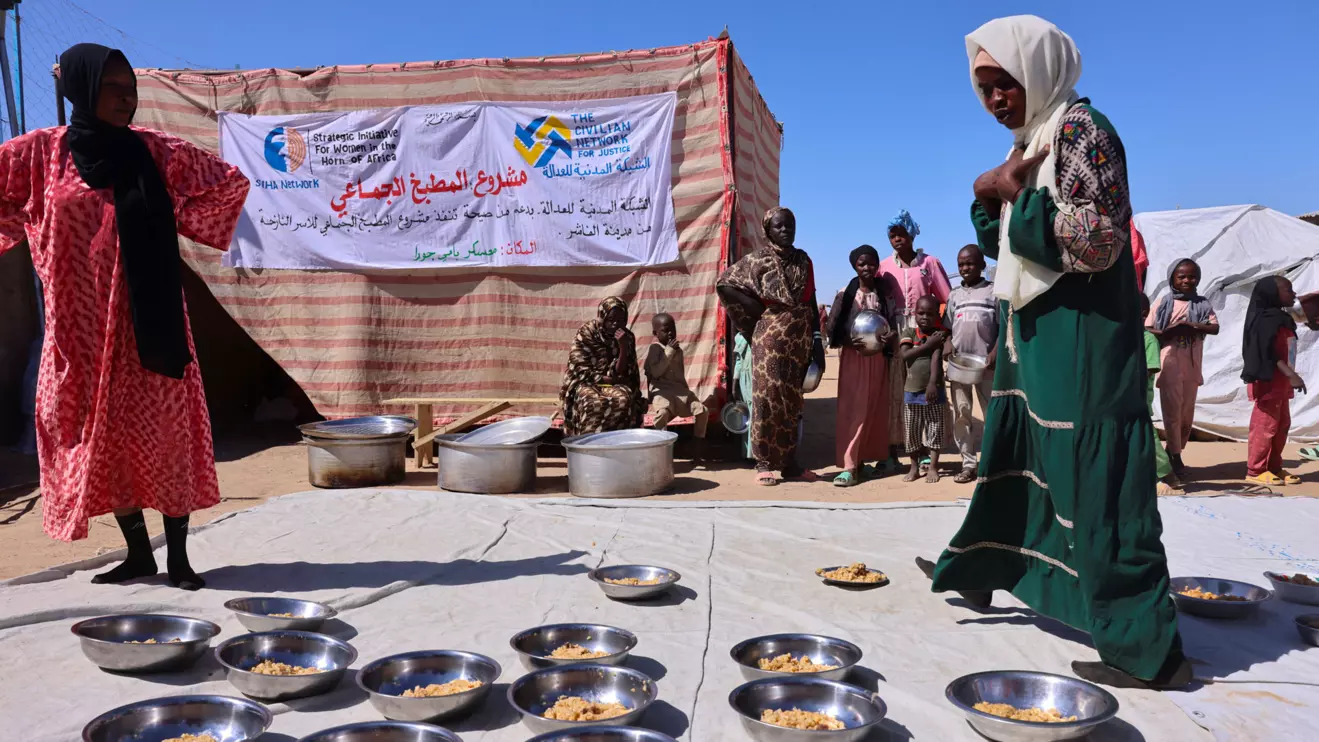
Najwa Isa Adam (L), 32, a Sudanese refugee from al-Fashir, prepares bowls of pasta and meat for orphaned children and newly arriving refugee families using donated money at the Tine transit camp in eastern Chad, November 22, 2025. Najuwa says she was held captive at gunpoint by four Rapid Support Forces (RSF) fighters who repeatedly raped her amid the conflict with the Sudanese army. Reuters/Amr Abdallah Dalsh
At a transit camp here on the Chad-Sudan border, Najwa Isa Adam, 32, hands out bowls of pasta and meat to orphaned Sudanese children from al-Fashir, the site of a recent violent takeover by paramilitary forces in Sudan.
Adam herself is a refugee from the city and arrived in October. While fleeing, she says, she was held captive at gunpoint by four RSF fighters who repeatedly raped her. A man passing by heard her cries and helped her escape.
Now, she buys and prepares food for newly arriving refugee families, using money donated by other refugees living in the border town of Tine.
“People here don’t have anything to eat,” she says. “The only support we get is from the people of Tine.”
Refugee families arriving at this border town are finding little international humanitarian aid available to them. For many, the only source of food comes from donations from other refugees, some who arrived here recently and others many years ago, during an earlier conflict in Sudan.
A handful of NGOs work in the town, including Médecins Sans Frontières, which has a mobile clinic at the border and a small out-patient department open three days a week in the camp. About one in four children MSF has seen at the camp is malnourished, a situation that is worsening with the arrival of families fleeing al-Fashir, said Josh Sim, an MSF emergency nurse.
On Saturday, the World Food Program restarted limited food distributions to pregnant and breastfeeding mothers and children under age 2 to prevent malnutrition. But in an effort to encourage refugees to move to safer areas, the U.N. food relief agency has shifted the majority of resources to other camps, farther from the border, a spokesman said.
“We haven’t got anything,” said Nawal Abubakr Abdul Wahab, 49, who used to be a teacher in al-Fashir and fled last month during the attack. “We have no shoes, nothing, no water.”
The United Nations High Commissioner for Refugees has only 38% of the $246 million it estimates it needs to respond to the Sudanese refugee crisis in Chad, a UNHCR spokesperson said.
U.S. cuts in foreign aid are a major reason for the gap in funding, the spokesperson said. In 2024, U.S. contributions of $68.4 million represented 32% of UNHCR’s total budget. This year, U.S. contributions have dropped to $35.6 million, about 10% of the total budget, which has risen along with humanitarian needs. The U.S. Department of State and the U.S. Mission to the United Nations did not respond to requests for comment.
Normally, a transit camp like the one in Tine would hold refugees only briefly, with regular relocations to safer camps further inland. But limited funding to provide sufficient water, clean sanitation and shelter at those inland camps has slowed relocation efforts, the UNHCR spokesperson said.
Relief organizations provide no durable shelter – not even tents – to new arrivals here. Instead, staff hands out plastic tarps, “just something to block the sun so they have a little protection,” said Magatte Guisse, the UNHCR representative for Chad.
Ibrahim Mohamed Ishaq, 35, arrived at the crossing on Nov. 22 with his wife and their two daughters, ages 3 and 5. They had been living in the Abu Shouk camp on the north side of al-Fashir, the capital city of North Darfur.
Al-Fashir fell to the Rapid Support Forces paramilitary in late October after 18 months of violence, marking a turning point in the 2-½-year war between the militia and the Sudanese army. More than 100,000 people are believed to have escaped the city, according to the International Organisation for Migration. An estimated 9,500 have made it to Chad. MSF estimates that about 180 people are crossing the border into Tine each day.
Ishaq and other members of his family fled al-Fashir by donkey the day before the RSF swept in. RSF fighters chased them and others in the road, he said, and he saw more than four of his relatives shot and killed.
“Thank God I arrived here safely with my family,” Ishaq said.
After crossing the border, the family stopped at a mobile clinic where an MSF nurse administered medicine to the 3-year-old. Then the family went to a UNHCR checkpoint where a representative from the International Committee of the Red Cross handed Ishaq and his family a sack containing an empty water jug, a plastic teapot, two bars of soap, two plastic pails, and a temporary tarp.
The family was then driven to a transit site about 6 kilometers away from the border, where they joined about 1,400 to 1,600 refugees awaiting transfer to other camps farther inland.
Dozens of people told Reuters similar stories of violent encounters as they fled Sudan and their struggles to survive since then.
Aziza Mustafa, 62, showed an X-ray of a bullet lodged in her side. She said she needed 500 million Sudanese pounds (about $1,500 USD) for surgery.
Another woman, Noura Mohamed Yahya, 38, is nine months pregnant and lives with her children under a tree outside the transit camp compound. She fled three months ago from North Darfur, and crossed into Tine in early November because of drone attacks.
Yahya said she hasn’t made plans for the birth. “What can I do?” she said. “I don’t have anything to eat, I don’t have anything to cover my body.”
By Reade Levinson
Chinese President Xi Jinping arrives in Egypt Tuesday evening on his first visit in a decade, as the war in the Middle East and US sanctions increasingly threaten Beijing's economic interests.
Algerian President Abdelmadjid Tebboune, whose country has observed a moratorium on the death penalty since 1993, announced Monday his intention to reinstate its application against arsonists, following deadly wildfires that ravaged eastern and northern Algeria.
Representatives of Libya's rival political parties on Sunday signed an agreement on holding long-delayed national elections within two years to resolve contentious issues over electoral laws and reform the national elections body.

To make this website run properly and to improve your experience, we use cookies. For more detailed information, please check our Cookie Policy.
Necessary cookies enable core functionality. The website cannot function properly without these cookies, and can only be disabled by changing your browser preferences.