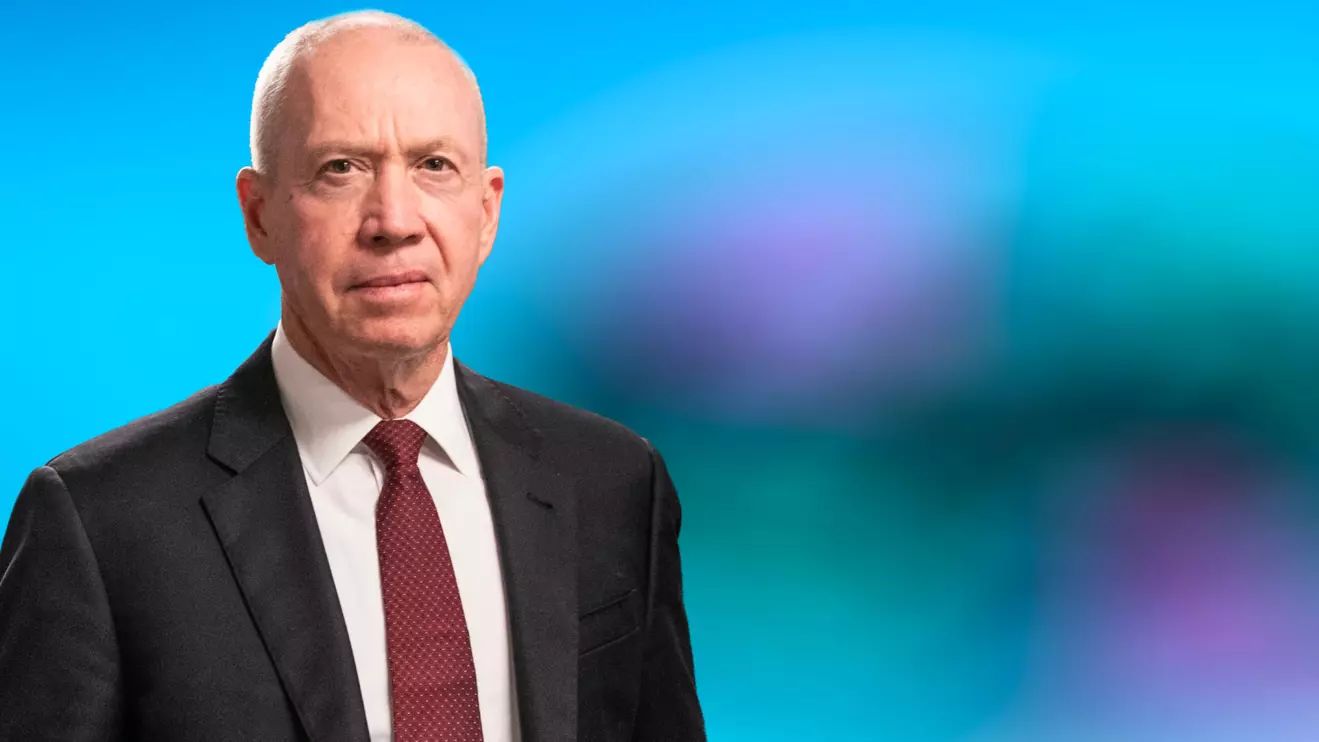
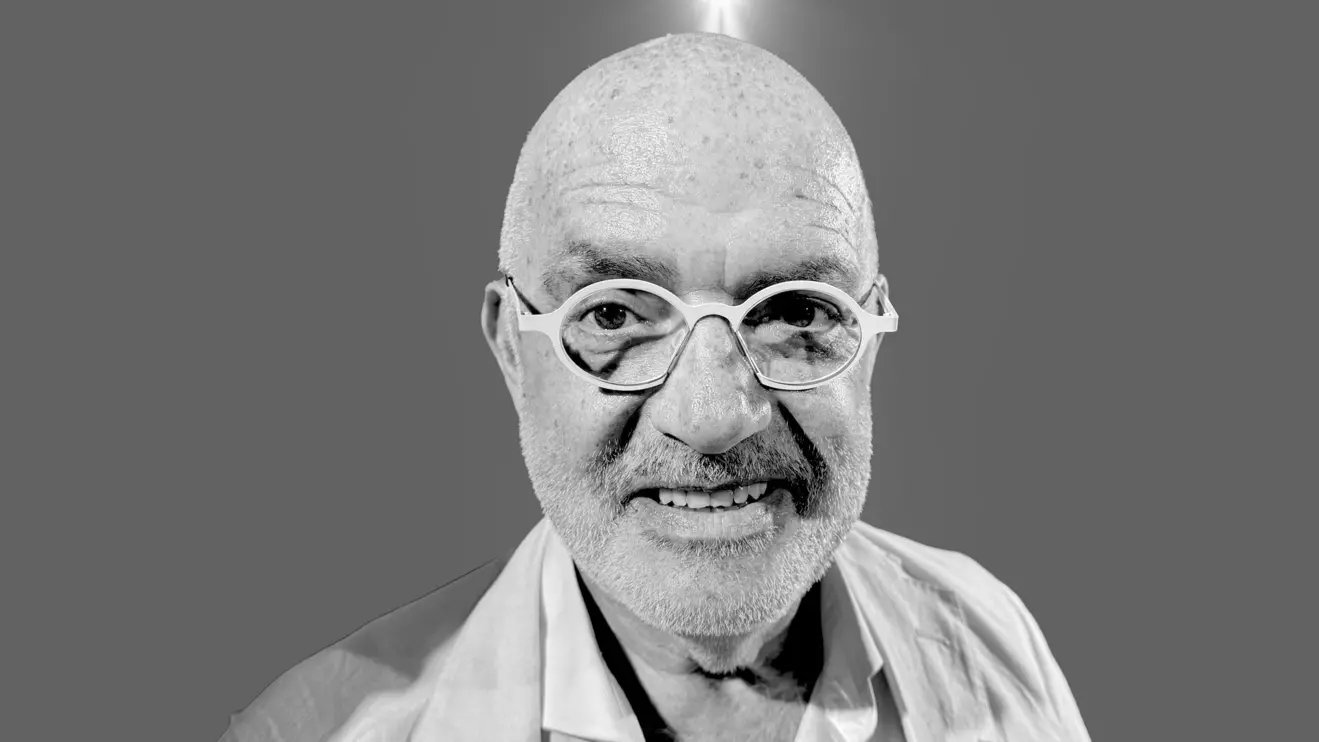
I met Yoav Gallant in Miami, not in a government corridor in Jerusalem and not in a secure situation room, but in a place where it was possible to talk openly, without protocol and without masks.
I told him something simple and uncomfortable: the model that protected Israel and the Jewish people in the twentieth century is no longer enough for the twenty-first. If we keep thinking with the same old tools, we will all pay a heavy price.
I shared with him a concept I have been working on, a new global architecture for the security of Israel and the Jewish people, a comprehensive system that connects antisemitism, terrorism, delegitimization, information warfare and international law. Not as separate, random crises, but as one continuous arena that demands systematic planning rather than improvised fire-fighting.
In the end, he agreed with one clear message, we need this.
For me, that was enough. I am not looking for name-dropping or personal credit. I am looking for a recognition that the Jewish world needs a new strategic framework, and he understood that this direction is necessary.
My respect for Yoav Gallant does not come from agreement with every policy, and certainly not from blind loyalty to any political camp. It comes from his conduct at moments of truth.
He is the man who stood up and warned that the internal rupture over the judicial overhaul was not just another political quarrel, but a real security threat to the State of Israel, knowing perfectly well it could cost him his job.
He is the man who, in the middle of the Gaza war, insisted on clear objectives, a defined strategy and a real plan for the day after, and refused to be satisfied with empty slogans designed for the evening news.
People can argue about his conclusions. Left, right and center can disagree with him on policy. That is legitimate, even essential, in a democracy. But it is hard to ignore one basic fact, in a system where almost nobody ever says “I failed,” Gallant did something different.
I respect Yoav Gallant above all because he did what almost no one in Israeli politics dares to do, he accepted responsibility. After October 7, he stated clearly that the defense establishment had failed in its most basic mission and that, as defense minister, the responsibility was his.
He did not hide behind anonymous briefings, did not send advisers to spin the media, and even called for a full state commission of inquiry that would investigate him and the entire leadership.
You don’t have to like him to understand how rare that is. In a political culture where too many cling to their seat and explain why everyone else is to blame, the media, the courts, the protesters, the generals, the Americans, the willingness to be judged and held accountable is, to me, the clearest mark of genuine leadership.
The idea I put on the table in Miami was simple, if our enemies are operating as one coordinated system, then the Jewish world cannot afford to remain fragmented.
Yoav Gallant is one of the most responsible voices we have today
Today, those who work against Israel and the Jewish people are fully networked.
They coordinate across social media, campuses, international institutions, the street and the terror arena.
We, as a people, too often respond late, separately, and mainly out of pain and emotion rather than through long-term strategic planning.
It is time for the State of Israel and Jewish communities worldwide to treat our security as one campaign, one shared threat map, one nerve center, one strategy. Not “right-wing security” or “left-wing security,” simply Jewish security and Israeli security, understood as one integrated challenge.
As someone who lives between Israel, the United States and Europe, this is not an abstract theory for me.
The cracks we feel as Jews in New York, Paris, London or Miami, the growing sense of vulnerability and isolation, are real. They are not only about rockets and borders, they are about legitimacy, identity and the erosion of basic safety in places that once felt secure.
Against this background, I see Yoav Gallant as a figure of responsibility and strategic sobriety. You can disagree with him on many things and still recognize this, he is not afraid to say uncomfortable truths to the political system.
He understands that the battle over the future of Israel and the Jewish people will not be decided only along the borders of Gaza or Lebanon, but also on campus, online, in courtrooms and inside international organizations, and that we must prepare for this front with the same seriousness that we prepare for a military campaign.
The fact that he looked at this broader concept and said, in essence, “Yes, we need this,” was for me a significant signal, not about my idea personally, but about the possibility of building a more mature, strategic response as a people.
In my eyes, Yoav Gallant is one of the most responsible voices we have today. I value his courage and his willingness to confront failure and say “the responsibility is mine” in a system that has almost forgotten that language. You do not have to vote for him or share his politics to see the difference between spin and responsibility.
The future of Israel and of the Jewish people demands that we think differently, act differently and unite around a security concept that matches the world we actually live in.
The fact that Gallant understands this, and is prepared to give such a vision conceptual backing, is proof that Israel still has leaders who look beyond tomorrow morning’s headline.
For that, I thank him, as an Israeli, as a Jew, and as someone who still believes we can build something better than fear, fragmentation and denial.