Premature recognition of Palestine undermines peace efforts

1 min Mena Today

Germany will support a United Nations resolution for a two-state solution to the Israeli-Palestinian conflict but does not believe the time has come to recognise a Palestinian state, a government spokesman told Reuters on Thursday.

Those who see recognition as a largely symbolic gesture point to the negligible presence on the ground and limited influence in the conflict of countries such as China, India, Russia and many Arab states that have recognised Palestinian independence for decades © Mena Today 

Those who see recognition as a largely symbolic gesture point to the negligible presence on the ground and limited influence in the conflict of countries such as China, India, Russia and many Arab states that have recognised Palestinian independence for decades © Mena Today 

Germany will support a United Nations resolution for a two-state solution to the Israeli-Palestinian conflict but does not believe the time has come to recognise a Palestinian state, a government spokesman told Reuters on Thursday.

"Germany will support such a resolution which simply describes the status quo in international law," the spokesman said, adding that Berlin "has always advocated a two-state solution and is asking for that all the time."

"The chancellor just mentioned two days ago again that Germany does not see that the time has come for the recognition of the Palestinian state," the spokesman added.

A two-state solution is the idea that the two sides could co-exist in peace alongside each other - a Palestinian state on territory Israel captured in a 1967 war, with the Gaza Strip and West Bank linked by a corridor through Israel.

Britain, France, Canada, Australia and Belgium have all said they will recognize a Palestinian state at the United Nations General Assembly later this month, although London said it could hold back if Israel were to take steps to ease the humanitarian crisis in Gaza and commit to a long-term peace process.

The United States strongly opposes any move by its European allies to recognize Palestinian independence.

Last week, U.S. Secretary of State Marco Rubio said that the U.S. has told other countries that recognition of a Palestinian state will cause more problems.

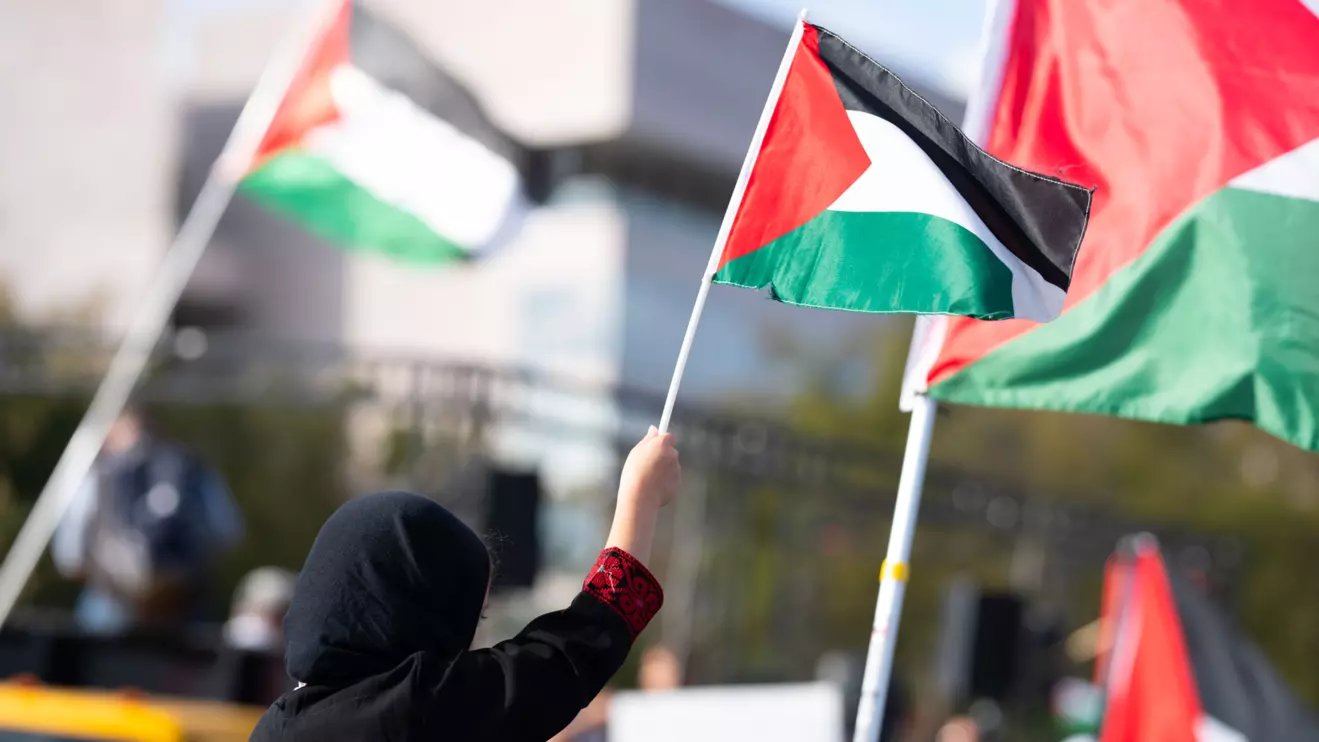
Those who see recognition as a largely symbolic gesture point to the negligible presence on the ground and limited influence in the conflict of countries such as China, India, Russia and many Arab states that have recognised Palestinian independence for decades.

Reporting by Andreas Rinke, Surbhi Misra and Ananya Palyekar

Related

Iran at war

Iran and Yemen fire missiles at Israel

The Israeli military said on Monday that Iran launched multiple waves of missiles at Israel, and an attack had also been launched from Yemen for only the second time since the U.S.-Israeli war began.

Arab League

Egypt's Nabil Fahmy takes the helm of the Arab League

Arab foreign ministers agreed unanimously on Sunday to nominate Egyptian diplomat Nabil Fahmy as secretary-general of the Arab League, succeeding Ahmed Aboul Gheit, whose second term in charge ends in June 2026, Egyptian state media outlets reported.

Jordan

Zelenskyy and Jordan's King Abdullah forge security ties

Ukrainian President Volodymyr Zelenskiy said he discussed a possible security partnership on Sunday with Jordan's King Abdullah over defending against drone attacks amid rising tensions over the Iran conflict.

Subscribe to our newsletter

Mena banner 4

To make this website run properly and to improve your experience, we use cookies. For more detailed information, please check our Cookie Policy.

  • Necessary cookies enable core functionality. The website cannot function properly without these cookies, and can only be disabled by changing your browser preferences.