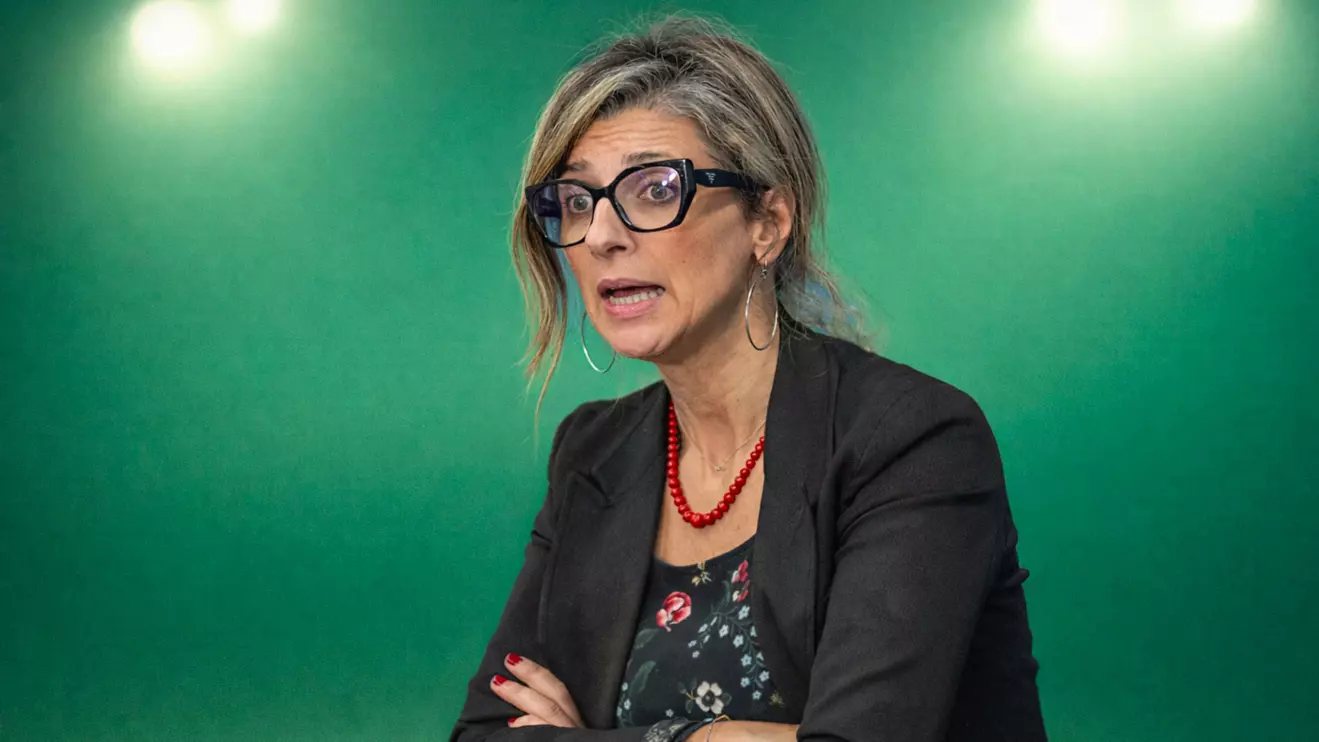
Francesca Albanese, the United Nations Special Rapporteur on human rights in the Palestinian territories, is under fire from multiple directions, and for good reason. Germany, France, Italy and several other European nations have called for her resignation, while Israel has formally accused her of flagrantly violating the UN's own code of conduct.
Albanese's response? To play the victim.
Let's be clear about what this debate is really about. Albanese has displayed a pattern of virulent hostility toward Israel that goes far beyond legitimate criticism.
Over the years, her statements have repeatedly crossed the line, flirting dangerously with antisemitic tropes, as Israel's permanent mission in Geneva formally documented in a letter to the Human Rights Council president on February 15.
The letter was unambiguous: "As long as she holds a UN mandate, she fundamentally undermines the credibility and moral authority of the United Nations."
Hard to argue with that.
The United States went further, sanctioning Albanese in July for what it described as illegitimate efforts to push the International Criminal Court to act against US and Israeli officials.
Rather than reflect on her conduct, Albanese dismissed the sanctions as part of a broader American strategy to weaken international accountability — a convenient deflection from a rapporteur who has shown precious little accountability herself.
The "Victim" Narrative
Speaking via video link from Jordan, Albanese described recent weeks as "toxic and personally damaging."
One might have some sympathy, were it not for the fact that the damage to her reputation is largely self-inflicted. Her remarks, she insists, were taken out of context. Yet the volume and consistency of criticism, from Paris, Berlin, Rome and Washington, suggests something far more systematic than a few misunderstood quotes.
France's ambassador to the UN Human Rights Council put it diplomatically but firmly: those speaking under UN auspices "must exercise the restraint, moderation, and discretion required by their mandate." Albanese has consistently failed that test.
The UN Must Act
The Human Rights Council president expressed concern about personal attacks on mandate holders. That concern, while noted, misses the point entirely. The real issue is not protecting Albanese, it is protecting the credibility of the United Nations itself.
An institution that allows one of its representatives to repeatedly make inflammatory, one-sided and arguably antisemitic statements while hiding behind the shield of a UN mandate is an institution that is failing its own standards.
The solution is straightforward: the United Nations must terminate Albanese's mandate. Not because powerful states demand it. But because the integrity, impartiality and moral authority of the UN - already under strain - cannot afford to be further compromised by a rapporteur who has long ceased to be a credible, balanced voice.
The UN was built to serve humanity. Not to provide a platform for those who weaponize its legitimacy.