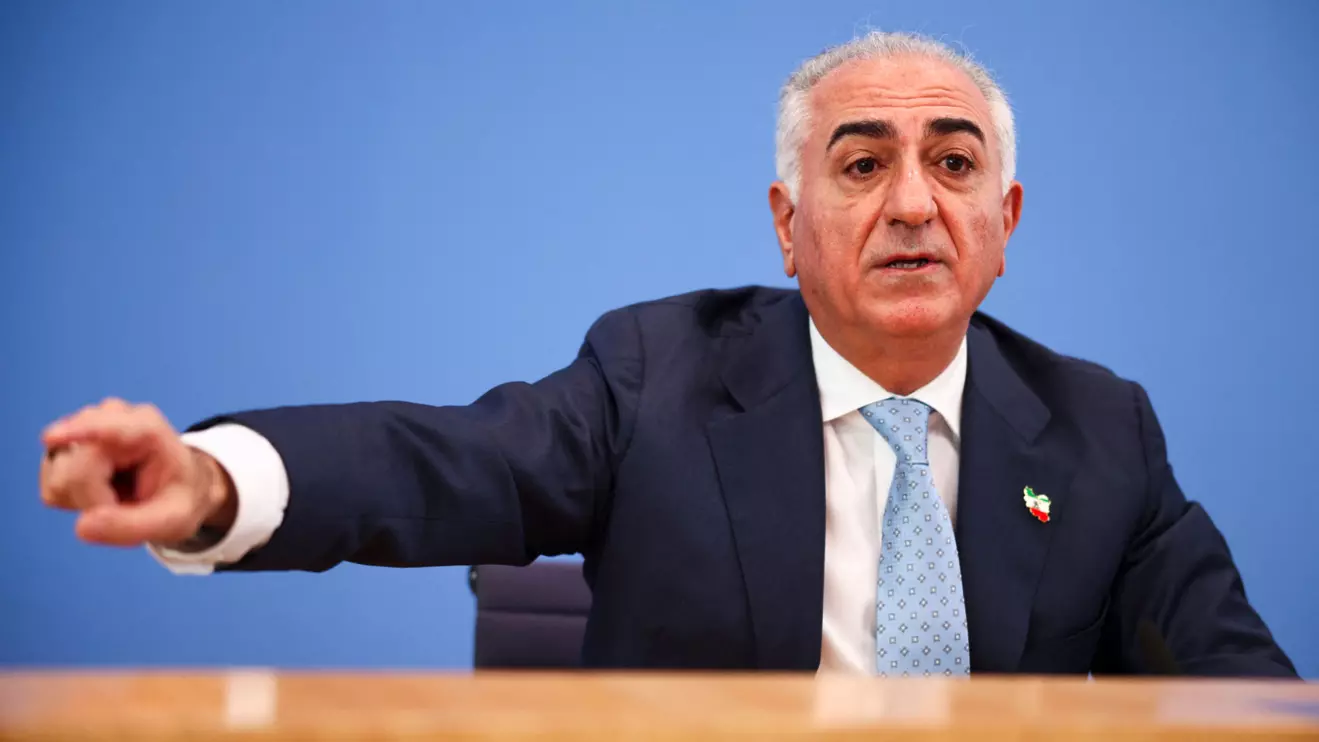
The son of the former Shah appealed to Western countries to join the war against Iran and criticised the decision of the German government not to meet him during his visit to Berlin on Thursday.
Reza Pahlavi, whose father was deposed in the revolution that brought Ayatollah Ruhollah Khomeini to power in 1979, accused Europe of standing by and allowing the Tehran government to continue the bloody repression of protests that killed thousands at the end of last year.
"The question is not whether change will come. Change is on the way," he told a press conference in Berlin. "The real question is how many Iranians will lose their lives while the community of Western democracies continue to merely watch."
Demonstrations by both supporters and opponents were held in central Berlin and a person was detained after Pahlavi, who made an appearance, was spattered with some form of red liquid.
POTENTIAL OPPOSITION LEADER
Pahlavi, who has spent most of his life in exile, emerged as a potential opposition leader after anti-government protests erupted in Tehran and other Iranian cities last year.
But Iran's opposition movements are deeply divided and many Western governments have been cautious about offering their endorsement because it remains unclear what support he enjoys, almost half a century after his father's reign was overturned.
European countries, including Germany, have ruled out joining the United States and Israel, which opened the war on February 28 with a wave of airstrikes that killed Iran's Supreme Leader Ayatollah Ali Khamenei.
Pahlavi's visit to Germany came as efforts to end the conflict appear to have stalled, with Iran and the United States both maintaining blockades of the vital Strait of Hormuz, the conduit for around a fifth of the world's oil.
He said it was a shame that Chancellor Friedrich Merz's government had not offered a meeting during his visit to Germany.
"Exercise your prerogative. As democracies, you're entitled to talk to whoever you want," he said.
Reporting by James Mackenzie