
Israel
Gaza envelope population tops pre-October 7 levels
Thousands of newcomers are joining returning evacuees, a quiet verdict on who won the southern front.

Syria’s Minister of Social Affairs and Labor, Hind Kabawat, has welcomed the recent easing of Western sanctions on her country, calling it a crucial step toward national recovery and the reintegration of millions of displaced citizens.
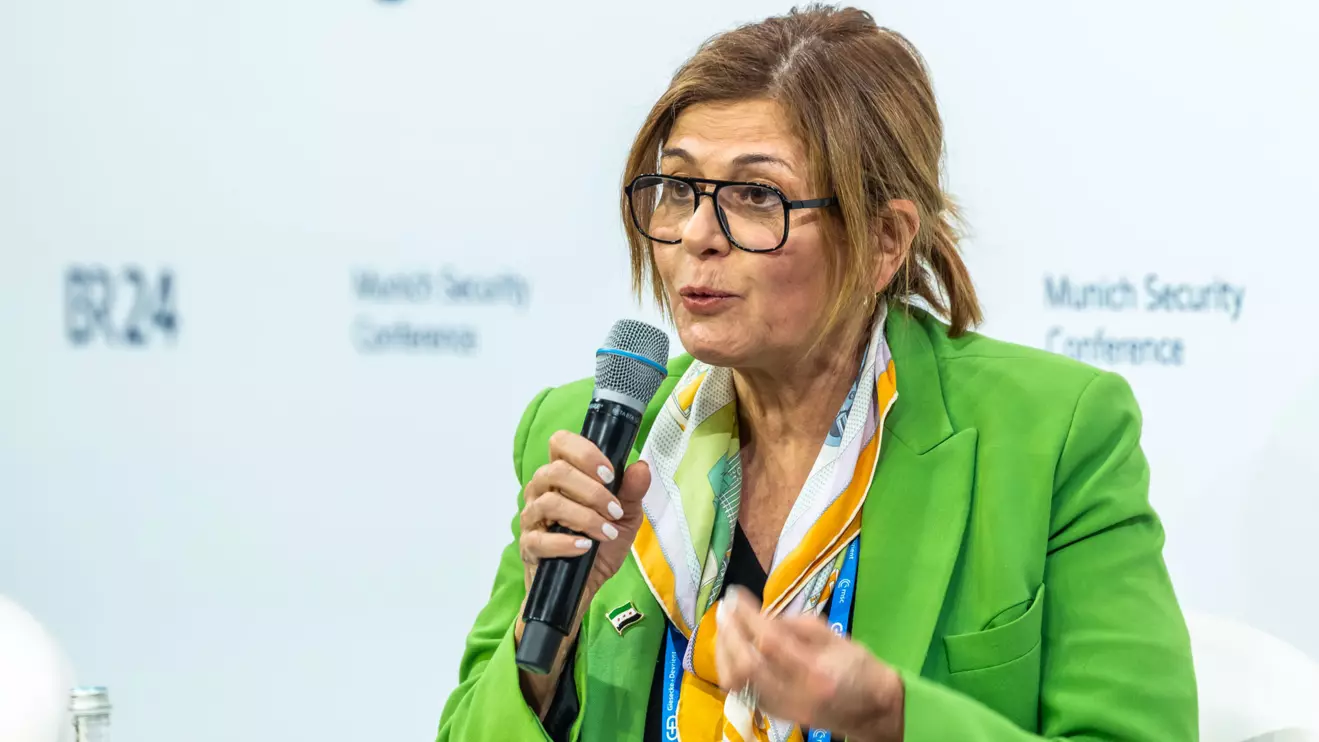
Hind Kabawat © MSC
Syria’s Minister of Social Affairs and Labor, Hind Kabawat, has welcomed the recent easing of Western sanctions on her country, calling it a crucial step toward national recovery and the reintegration of millions of displaced citizens.
In an interview with the Associated Press, Kabawat said that the lifting of most U.S. and EU sanctions, even on a temporary basis, offers hope for reconstruction and effective governance. “The steps taken by the United States and the European Union last week will allow this work to begin,” she stated.
Kabawat noted that the sanctions had long paralyzed critical state functions, blocking humanitarian efforts, infrastructure rebuilding, and anti-corruption initiatives.
“We were talking and making plans, but nothing could be achieved on the ground because the sanctions were hindering everything and restricting our work,” she said. “With them lifted, we can now move to the implementation phase.”
One of the government's key goals, according to the minister, is the repatriation of millions of Syrian refugees. She emphasized that lifting the sanctions enables Damascus to begin creating the conditions necessary for safe, voluntary return — a goal long delayed by economic paralysis and administrative gridlock.
Kabawat also mentioned that the government is preparing to tackle corruption and launch reforms, though she acknowledged the complexity of the task ahead. “We are proceeding step by step,” she said. “We have many challenges, and we must be optimistic.”
Bureaucracy Still a Hurdle
While cautiously hopeful, Kabawat stressed that the effects of sanction relief may not be immediate. “Easing sanctions will take some time to show its impact on the ground, especially since easing some financial restrictions will involve complex bureaucracy,” she explained.
The recent sanctions relief marks a significant political and economic development for Syria, and comes amid growing international debate over how best to support the country’s recovery after more than a decade of conflict.
Thousands of newcomers are joining returning evacuees, a quiet verdict on who won the southern front.
Turkish President Tayyip Erdogan said it was unrealistic to expect all countries to make the same progress on climate policy while inequalities in access to financing and technology persisted, adding he expected support from all nations for Turkey's COP31 Climate Summit action agenda.
Turkey and Iraq agreed on Wednesday for Turkish forces to hand over a military camp in northern Iraq to the Iraqi government gradually, they said after talks in New York, adding they also agreed to end the presence of "outlawed armed elements" in northern Iraq.

To make this website run properly and to improve your experience, we use cookies. For more detailed information, please check our Cookie Policy.
Necessary cookies enable core functionality. The website cannot function properly without these cookies, and can only be disabled by changing your browser preferences.