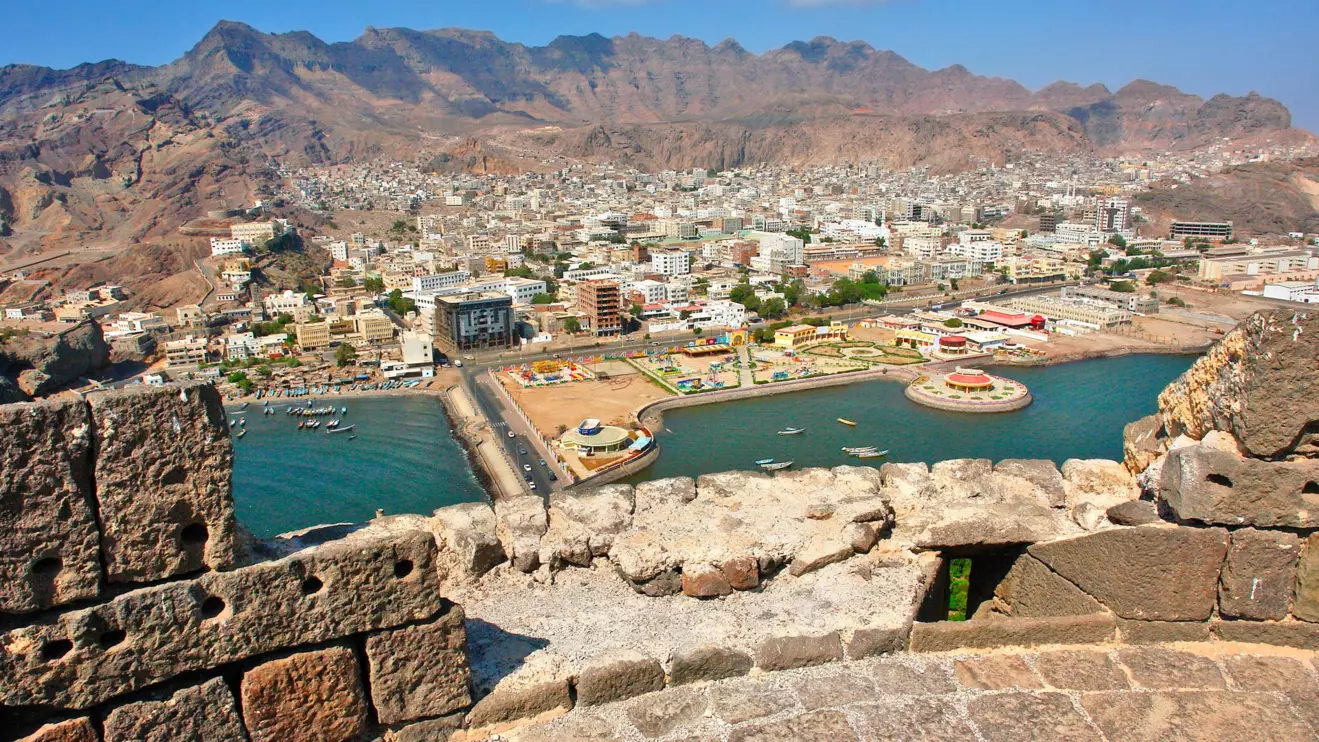
Yemen’s main southern separatist group claimed broad control across the south of the country on Monday, including in the port city of Aden which has served as the base of the Saudi-backed, internationally recognised government for a decade.
In an apparent major shift in power, the Southern Transitional Council said senior figures from other groups had left Aden, including the head of the eight-member body that acts in place of a president, and the prime minister.
The STC, which has been backed in the past by the United Arab Emirates during Yemen's decade-old civil war, has clashed with other groups in the Saudi-backed government which relocated to Aden after the Iran-aligned Houthi movement captured the capital Sanaa in 2014.
Since 2022, the STC has served in an administration that controls southern areas outside the grip of the Houthis, under a Saudi-backed power-sharing initiative.
OPERATION 'PROMISING FUTURE'
Senior STC official Amr al-Bidh told Reuters on Monday that the group had extended its presence in all southern provinces, including Aden, following a military operation codenamed "Promising Future" launched last week.
The eight southern governorates "are under the protection of the Southern Armed Forces," he said by text message.
"We are concentrating on unifying the operational theater of our armed forces to enhance coordination and readiness to reinforce stability and security in the south, as well as combatting the Houthis should there be a willingness to head in this direction."
Al-Bidh said Rashad al-Alimi, head of the Presidential Leadership Council which replaced the office of president in 2022, had left Aden, as had Prime Minister Salem Saleh Bin Braik, though al-Bidh said the STC had not ordered them to go.
"The institutional makeup remains unchanged," al-Bidh said.
Presidential Council head al-Alimi, who briefed diplomats in Riyadh on Sunday, said in a statement on Monday that the STC’s actions across the south "undermine the legitimacy of the internationally recognised government" and violate power-sharing agreements.
The STC's advance marks a major shift in control in southern Yemen. The group seeks greater autonomy for the south, which was an independent state until unification with the north in 1990.
The STC had participated under al-Alimi as part of the Presidential Leadership Council under the Saudi-led initiative to unify anti-Houthi factions. Tensions have persisted over control of territory and forces.
A UAE official told Reuters on Monday that the country’s position on Yemen “is in line with Saudi Arabia in supporting a political process” based on Gulf-backed initiatives and U.N. resolutions. The official did not directly address the STC's moves in southern Yemen.
There was no word from Saudi Arabia, where the government did not immediately respond to a request for comment.
Al-Bidh said the STC reported limited resistance as Saudi-backed forces pulled back. Among provinces where the STC had advanced were Hadramout and Al-Mahra, which border Oman and Saudi Arabia and are key to trade and smuggling routes.
Clashes occurred in Wadi Hadramout, while in Al-Mahra, local forces coordinated with the STC and there were no clashes, al-Bidh said.
Another senior STC official said the group took control of Hadramout within 48 hours of launching the operation last week. He added Saudi forces withdrew from Perim Island in the Mandeb Strait, handing control to the STC, and had left positions at the presidential palace in Aden.
Yemen's civil war reached a stalemate in 2022. Recent calm had raised hopes of peace between the Houthis, who control most populated areas in the north, and the Saudi-backed government in the south.
Reporting by Maha El Dahan, Timour Azhari and Andrew Mills