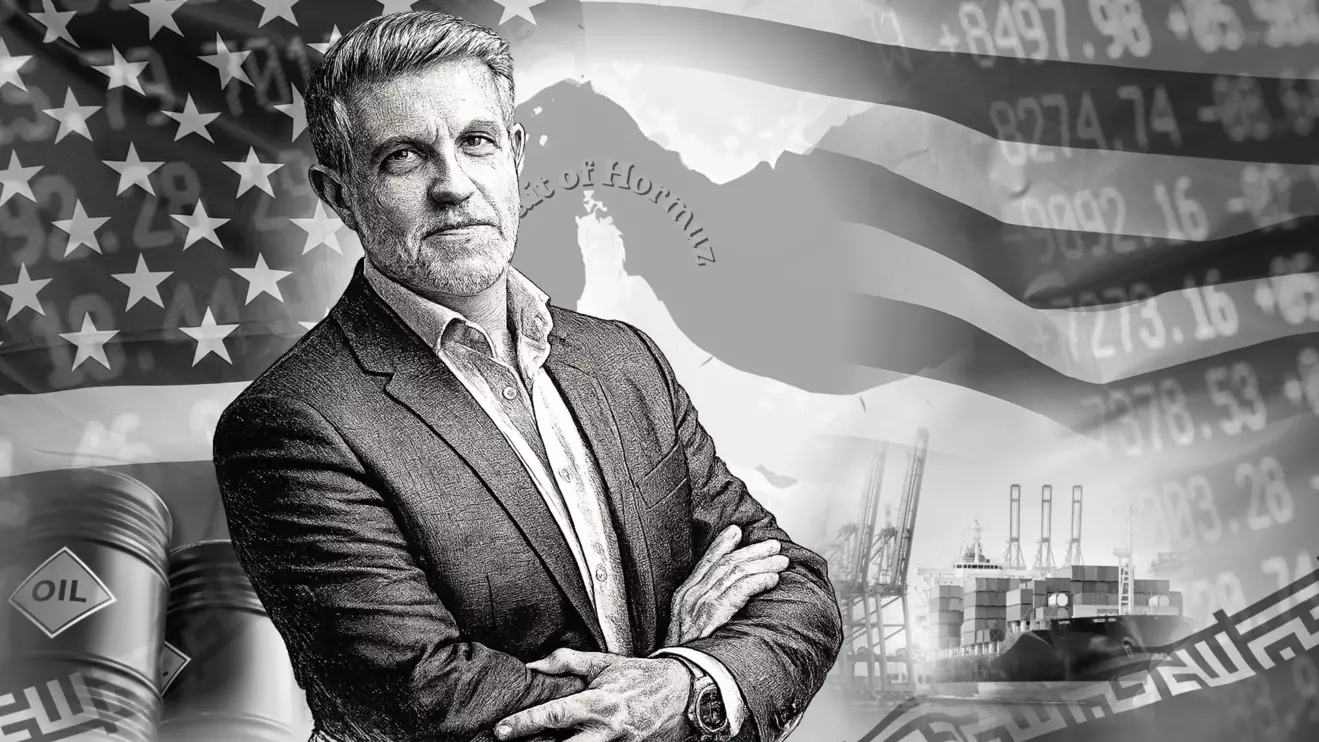
Something broke in the markets on Thursday, and it wasn't just another bout of volatility. Stocks fell. Bonds fell. Oil rebounded sharply. Commodities tightened across the board.
That combination, as Jacques Lemoisson, CEO of economic influence firm Gate Advisory, noted in a Friday morning analysis, is not a routine "risk-off" move. It is something more unsettling, a regime shift.
"When stocks fall, and bonds no longer provide protection, while energy and commodities start rising again, this isn't just a simple risk-off move," Lemoisson wrote. "The market didn't just price in bad news. It priced in a loss of confidence in the usual protective mechanisms."
The traditional safe-haven playbook, sell equities, buy bonds, wait for the storm to pass, is failing.
And it is failing precisely because the nature of the shock is different. The Hormuz blockade, Iranian missiles, stranded tankers, surging insurance premiums and global energy disruption are not the kind of shocks that central bank forward guidance or a presidential tweet can absorb. They are physical, logistical, geopolitical, and stubbornly indifferent to narrative management.
The Trump sentence problem
This morning, stock futures rebounded slightly. Why? Because Donald Trump said something reassuring. "As if a single sentence from Trump were still enough to numb the effects of Hormuz, Iran, missiles, tankers, insurance premiums, stranded ships, and global energy risk," Lemoisson observed, with barely concealed exasperation.
Oil, meanwhile, told a different story. Reuters reported WTI climbing back toward $95.93, up more than 3% at the open, reversing a portion of the roughly 6% decline seen earlier in the week when peace talk optimism briefly suppressed prices. The bounce back was swift and decisive.
"Stocks are repricing the narrative," Lemoisson concluded. "Oil is repricing reality."
The gap between equity market behaviour and commodity market behaviour has become the defining diagnostic of this moment.
Futures are still buying into the idea that "everything is fine if Trump says so." Crude oil is responding that the Strait of Hormuz is not a press release.
It is a distinction that cuts to the heart of how modern financial markets have evolved, and perhaps degenerated. Equity markets have become, in Lemoisson's formulation, "machines that react to language." Algorithms parse presidential statements, central bank minutes and geopolitical communiqués, and reprice accordingly — sometimes within milliseconds.
The real world, however, operates on a different frequency. Ships need open sea lanes. Refineries need crude. Factories need diesel. None of these require a press release. All of them require the Strait of Hormuz to be open.
What Gate Advisory's 2026 Outlook predicted
Lemoisson notes that this regime shift was anticipated in Gate Advisory's 2026 Outlook, which warned that so-called risk-free assets, principally government bonds, would cease to function as protective hedges when the dominant shock was simultaneously inflationary, geopolitical and energy-related. That is precisely the shock that 2026 has delivered.
The implication for investors is uncomfortable. The correlations on which portfolio construction has been based for decades, stocks and bonds moving in opposite directions, providing natural hedges, are breaking down. In an inflationary, energy-driven geopolitical crisis, both can fall together. And they did.
Lemoisson ends with a note of dry wit that captures the absurdity of the moment: "A charming detail, as always, when reality refuses to play by the backtests."
It is, in its way, the most important sentence of the analysis. Financial models are built on historical data. History, right now, is being made, not replayed. And the Strait of Hormuz has not read the backtests.