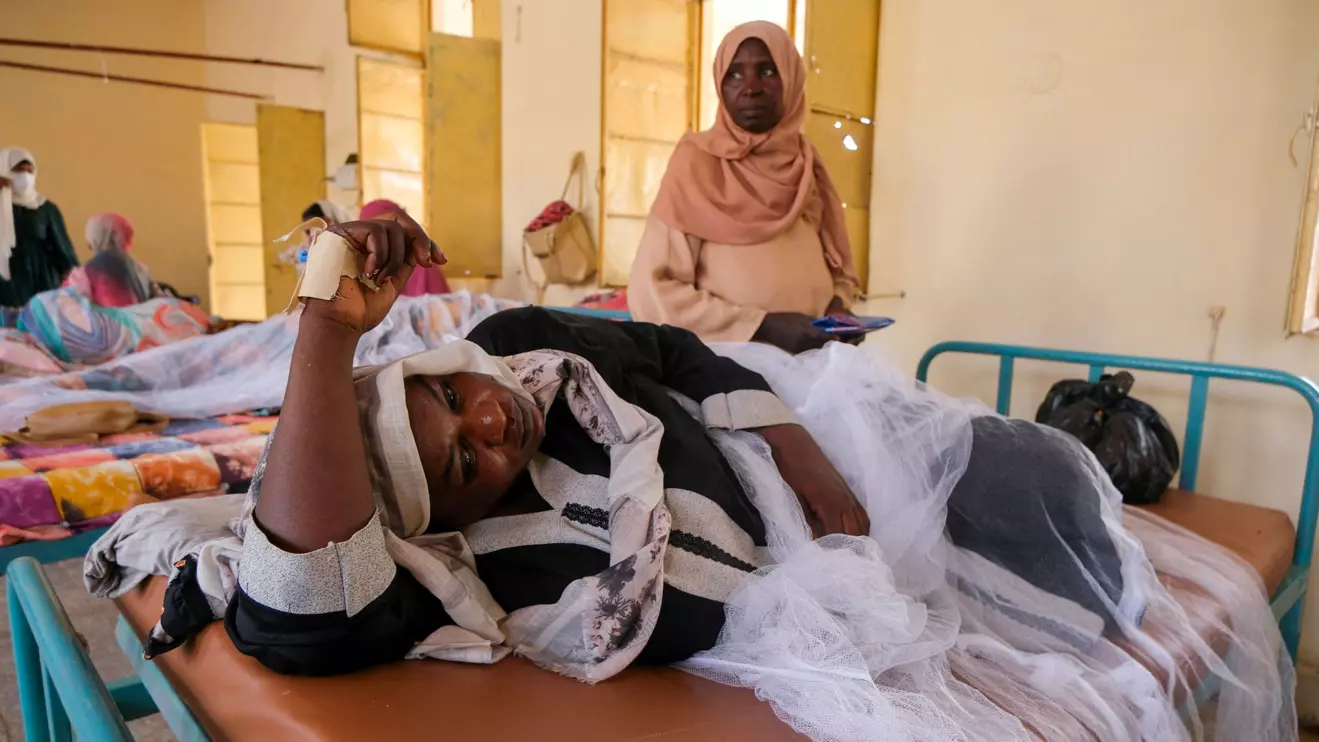
Medical supplies to clinics dealing with the humanitarian crisis in Sudan could run out within two weeks unless shipments are rapidly rerouted after disruptions due to the conflict in the Middle East, the charity Save the Children said.
The expanding U.S.-Israeli war on Iran has shaken global supply chains, with airspace closures and the halt of shipping through the Strait of Hormuz.
Some $600,000 worth of essential medicines are stuck in ports in Dubai, the charity said.
About 90 Sudanese government-run clinics serving roughly 400,000 patients rely on the charity's supply of medicines, vaccines and nutritional treatment, with no in-country alternative, Save the Children's global director of supply chain safety, Willem Zuidema, told Reuters.
Sudan's three-year conflict has displaced millions of people and triggered one of the world's largest humanitarian crises.
"We have a couple of weeks to do this rerouting before the country's stocks run out. The clock is ticking," Zuidema said, adding that once buffer stocks are exhausted patients would not be able to access basic healthcare support.
The medicines, which include antibiotics, antimalarials, pain and fever medication, and paediatric injectable drugs, normally enter via Port Sudan and travel by road to areas including Darfur.
UN aid chief Tom Fletcher said last week the Middle East conflict is straining humanitarian supply chains, with sub-Saharan Africa and Gaza under particular pressure.
RISING COSTS, DONOR CUTS COMPOUND CRISIS
The World Health Organization also warned of growing medical supply shortages in Sudan. "There's a huge crunch in Sudan, of course, and there's also a bigger crunch in medical commodities going into certain provinces," WHO regional director Hanan Balkhy said.
Rising transport costs are impacting aid budgets heavily constrained by major donor cuts, Save the Children said, with container freight rates rising about 25–30% as some shipping firms reroute vessels around the Cape of Good Hope, adding weeks to delivery times.
The level of disruption to freight and subsequent cost impact may be worse than in the initial stages of the Ukraine war and COVID pandemic, because there is little buffer in the system after the aid cuts, Zuidema said.
"Demand will go up, but the means for us to respond - especially with the increasing fuel prices driving up cost - will go down. That's extremely worrying."
Save the Children's country budget for Sudan this year has been slashed by $4 million to $98 million.
By Olivia Le Poidevin and Emma Farge