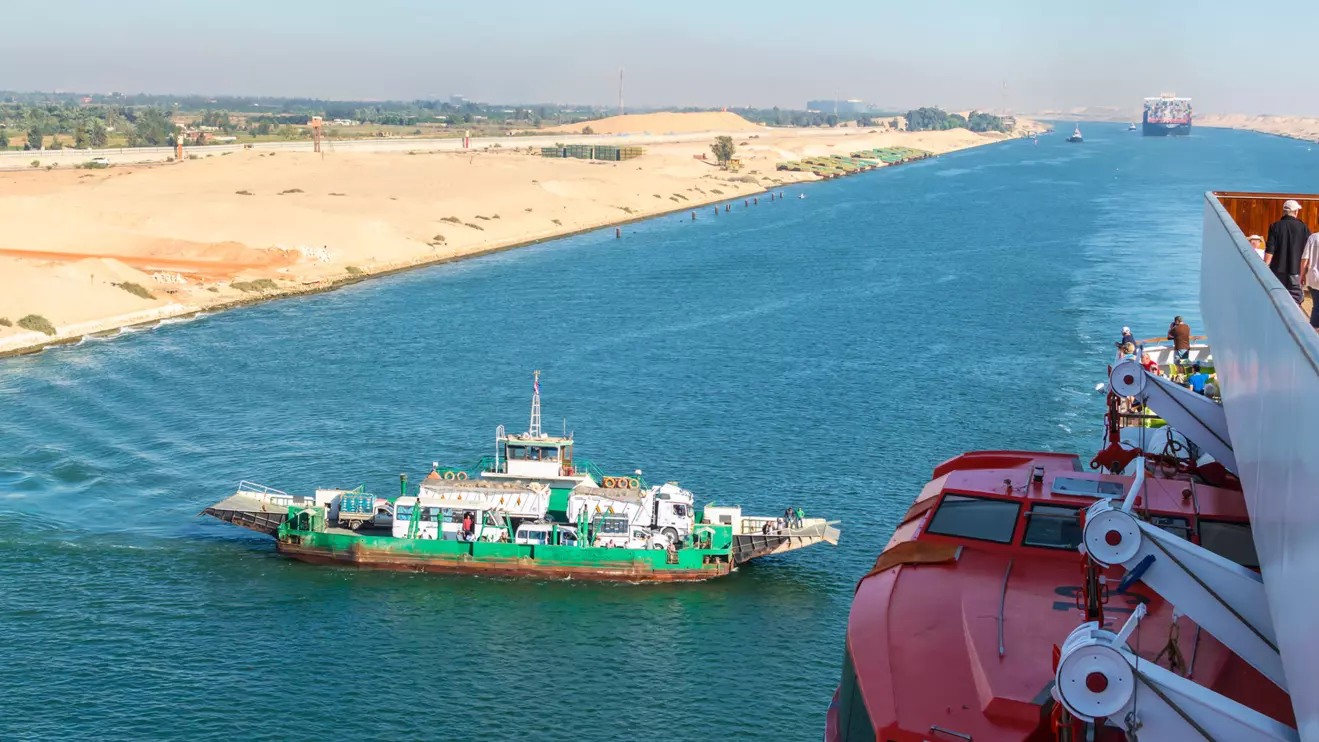
A sharp downturn in revenue after sea attacks by Yemen's Houthis diverted away shipping away from the Suez Canal has struck a painful new blow to Egypt's already deteriorating economy, adding urgency to the need for reforms and help from abroad.
Nearly all Egypt's main sources of foreign currency - natural gas exports, tourism, worker remittances from abroad, and now Suez Canal revenue - have all come under recent and severe pressure.
Egypt needs foreign currency not only to import essential commodities to feed its people, but also to repay $189.7 billion in foreign debt, most of it racked up over the last ten years. At least $42.26 billion in debt repayments is due this year, although analysts expect that some of that to be rolled over.
"Putting all of that together, it does feel as though Egypt's crisis is nearing a fork-in-the-road moment," said James Swanston of Capital Economics.
The chairman of the Suez Canal Authority said last week that canal revenue had fallen by 40% in the first 11 days of January.
In the year to June 30, the canal earned Egypt a record $8.76 billion and in the third quarter another $2.40 billion.
The CEO of Maersk said on Wednesday he expected the disruption to shipping caused by the attacks on vessels to probably continue for at least a few months.
Maersk and other large shipping lines have instructed hundreds of commercial vessels to stay clear of the Red Sea, sending vessels on the longer route around Africa.
"If the fall in Suez Canal revenue continues, it could be a serious blow. It's a big setback because it's a direct FX revenue source for the government," said Allen Sandeep of Naeem Brokerage.
PLUNGING REMITTANCES
Other revenue streams such as worker remittances that go mainly to private individuals still help Egypt's foreign exchange position, if not the government directly.
Remittances plunged by $9.85 billion in the financial year that ended on June 30 and another $1.93 billion in the July-September quarter, according to central bank figures.
Egyptians abroad have been reluctant to send earnings home when the price of the currency is fixed substantially below its black market value and as inflation runs rampant.
The pound's black market rate has slid to about 57 to the dollar from 39 before the Gaza crisis broke out on Oct. 7. The official rate has remained fixed at 30.85 to the dollar since March.
Inflation, at 33.7% in December, has been at record highs since June.
Natural gas exports fell by $2 billion year on -year in the July-September quarter, according to central bank figures, due to declining local production and falling international prices. In 2022/23, Egypt exported natural gas worth $7.20 billion.
Tourism, which earned a record $13.63 billion in 2022/23 and $4.45 billion in July-September, has slowed since the Gaza crisis broke out, although the government has not released revenue figures for the months since September.
BUDGET DEFICIT PROBLEMS
In an apparent measure to finance the government budget deficit, the central bank has turned to the printing presses. M1 money supply, which includes currency in circulation and Egyptian pound demand deposits, jumped by 37.7% in the year to end-November.
"The money supply rising sharply and the possibility of more devaluations this year will result in a sharp slowdown in the pace of disinflation, which means that inflationary pressures will remain elevated this year," said Pieter du Preez of Oxford Economics.
Many analysts believed Egypt had been waiting until after the mid-December presidential election to devalue the currency and make other painful reforms needed to put the economy on track. As expected, President Abdel Fattah al-Sisi, facing little opposition, won with about 90% of the vote.
"If the pound doesn't move soon, investors are likely to continue to be put off from investing into the Egyptian economy over the worry of a future and sharper devaluation down the line rather than taking the somewhat painful medicine now," said Swanston of Capital Economics.