Syria restored at OPCW after years of suspension

1 min Mena Today

Member states handed back Syria's voting rights at the global chemical weapons watchdog on Thursday, following what they described as "a significant change in circumstances" since the fall of the Assad regime.

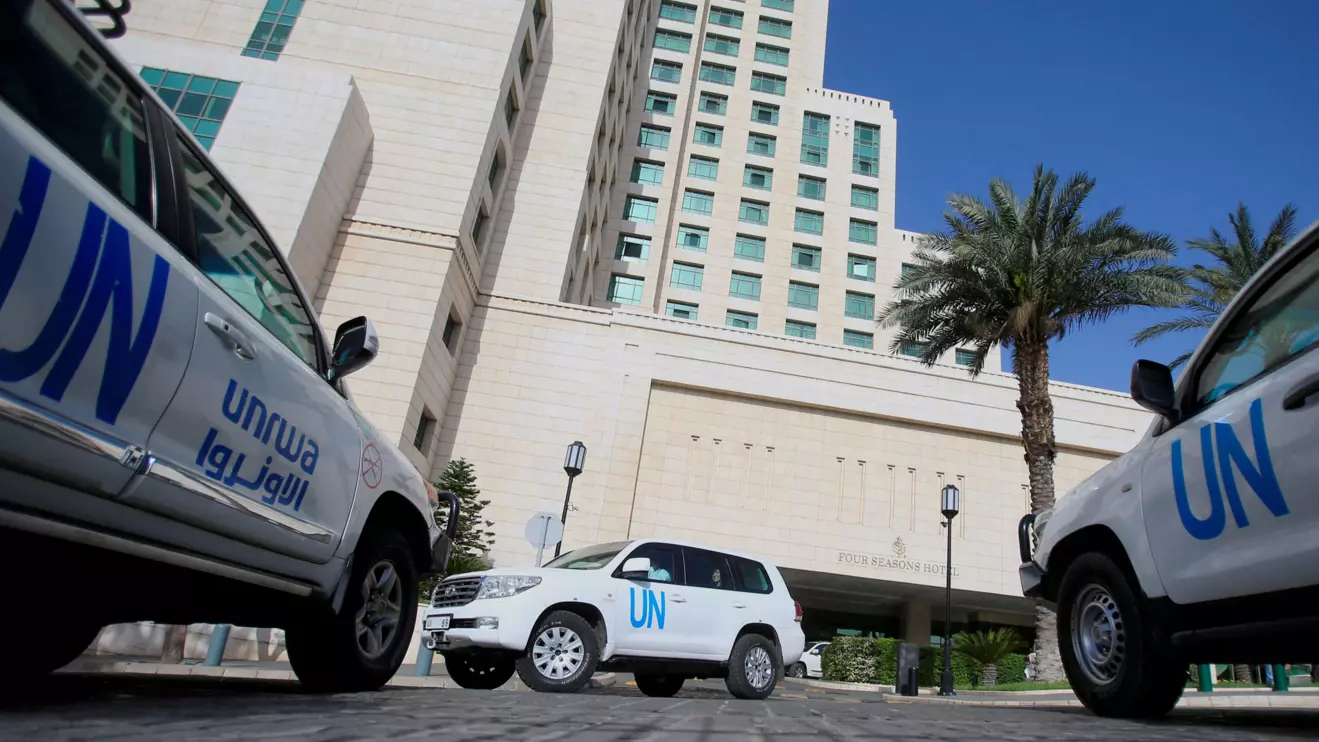
The United Nation vehicles carrying the Organisation for the Prohibition of Chemical Weapons (OPCW) inspectors is seen in Damascus, Syria April 18, 2018. Reuters/ Ali Hashisho

The United Nation vehicles carrying the Organisation for the Prohibition of Chemical Weapons (OPCW) inspectors is seen in Damascus, Syria April 18, 2018. Reuters/ Ali Hashisho

Member states handed back Syria's voting rights at the global chemical weapons watchdog on Thursday, following what they described as "a significant change in circumstances" since the fall of the Assad regime.

Syria was stripped of its rights at the Organisation for the Prohibition of Chemical Weapons in 2021, after its forces were found to have repeatedly used poison gas during the civil war.

Although largely symbolic, this sent a political signal to Syria that breaches of the 1997 Chemical Weapons Convention, prohibiting all use of chemicals on the battlefield, would not be accepted.

"Following the fall of the Assad regime, the new Syrian authorities committed to fulfilling Syria's obligations under the Convention and have since taken concrete steps," the OPCW said.

Syria has vowed to work with the international community to rid itself of legacy weapons of mass destruction that pose a proliferation risk.

A Syrian official told Reuters in May that the country's transitional leadership had located remnants of former President Bashar al-Assad's clandestine chemical weapons program, including raw materials and munitions similar to those used to carry out deadly gas attacks during the country's civil war.

Repeated investigations by the United Nations and the OPCW's special Investigation and Identification Team concluded that Syrian government forces used the nerve agent sarin and chlorine barrel bombs in attacks that investigators said killed or injured thousands.

At the time, Syria and its military ally Russia repeatedly denied the use of chemical weapons.

The OPCW's executive council on Thursday said it would continue to monitor Syria's progress and take decisions necessary to eliminate the remaining chemical weapons inherited from the former regime.

Reporting by Bart Meijer

Related

Iran

Iran expands pressure tactics to win US concessions

Iran is betting it can outlast Washington by turning the Middle East's trade routes, shipping lanes and energy infrastructure into pressure points that steadily raise the cost of confrontation, according to Gulf officials and analysts.

Iran

Ship strike in Hormuz clouds prospects for US-Iran deal

Conflicting signals from the United States and Iran over the status of talks to end their five-month-old war boosted uncertainty on Tuesday, with the latest attack on shipping in the Strait of Hormuz highlighting risks to global energy flows.

Iran

Iran's endgame: Agreement or capitulation

President Donald Trump warned Monday, in a Truth Social post, that the US naval blockade on Iran would only be lifted in the event of a "deal" or "total surrender."

Subscribe to our newsletter

Mena banner 4

To make this website run properly and to improve your experience, we use cookies. For more detailed information, please check our Cookie Policy.

  • Necessary cookies enable core functionality. The website cannot function properly without these cookies, and can only be disabled by changing your browser preferences.