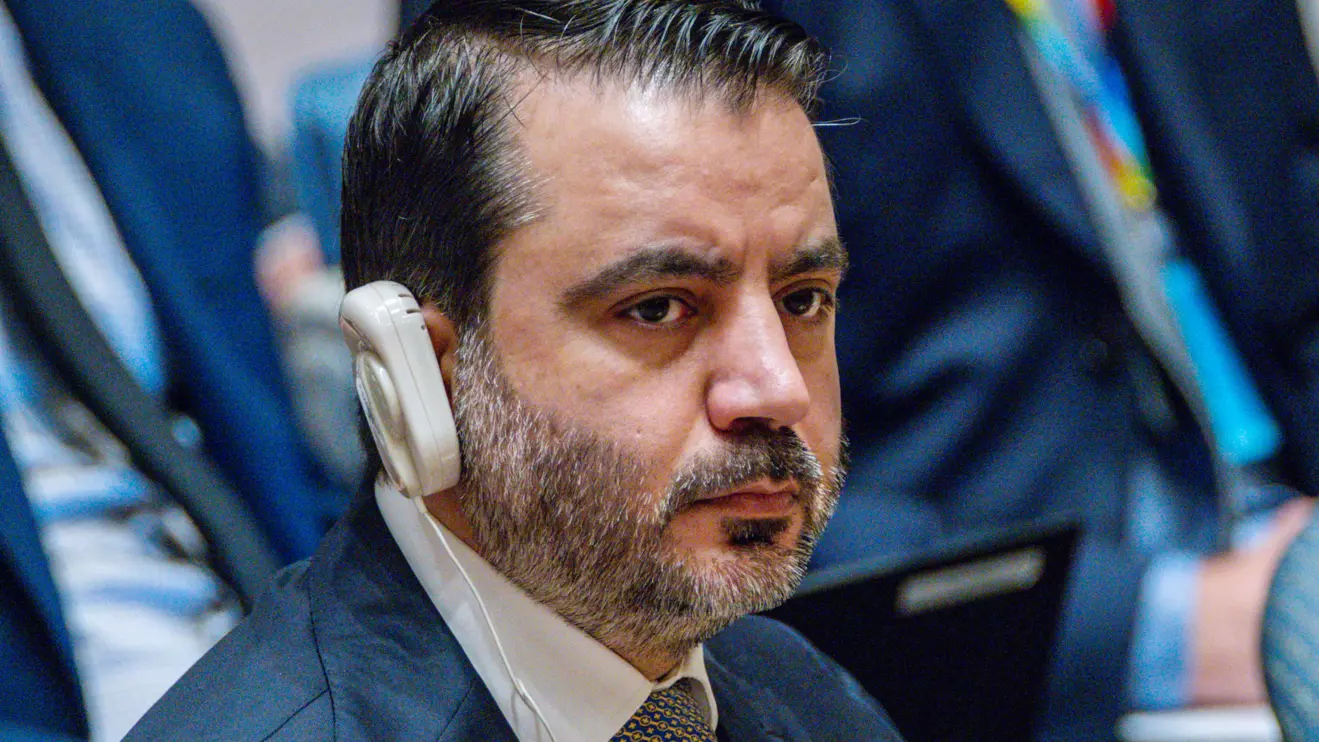
Syrian Foreign Minister Asaad al-Shibani met with senior U.S. State Department officials on Tuesday in New York, two sources familiar with the matter said, as Damascus seeks a clear road map from Washington on how to secure permanent sanctions relief.
Shibani has been in the United States for meetings at the United Nations, where he raised the three-star flag of Syria’s uprising as the official Syrian flag 14 years after the country's civil war erupted. Syria's long-time oppressive ruler, Bashar al-Assad, was ousted by a lightning rebel offensive in December.
Tuesday's meeting was the first between U.S. officials and Shibani to take place on U.S. territory and comes after Syria responded earlier this month to a list of conditions set by Washington for possible partial sanctions relief.
It was not immediately clear who Shibani met with from the State Department, although one of the sources earlier said he was expected to meet with a group of U.S. officials including Dorothy Shea, acting U.S. ambassador to the United Nations.
State Department spokesperson Tammy Bruce confirmed that "some representatives of the Syrian interim authorities" were in New York for the U.N. meetings, but declined to say whether any meetings with American officials were planned.
"We continue to assess our Syria policy cautiously and will judge the interim authorities by their actions. We are not normalizing diplomatic relations with Syria at this time, and I can preview nothing for you regarding any meetings," she said.
Damascus is keen to hear a realistic path forward from the United States for permanent sanctions relief while conveying a realistic timeline to deliver on Washington's demands for the lifting of the sanctions, one of the sources said.
The United States last month handed Syria a list of eight conditions it wants Damascus to fulfill, including destroying any remaining chemical weapons stockpiles and ensuring foreigners are not given senior governing roles.
Reuters was first to report that Natasha Francheschi, deputy assistant secretary in the Bureau of Near Eastern Affairs, handed the list of conditions to Shibani at an in-person meeting on the sidelines of a Syria donor conference in Brussels on March 18.
Syria is in desperate need of sanctions relief to kickstart an economy collapsed by years of war, during which the United States, Britain and Europe imposed tough sanctions in a bid to put pressure on Assad.
In January, the U.S. issued a six-month exemption for some sanctions to encourage humanitarian aid, but this has had limited effect.
In exchange for fulfilling all the U.S. demands, Washington would extend that suspension for two years and possibly issue another exemption, sources told Reuters in March.
In its response to U.S. demands, Syria pledges to set up a liaison office at the foreign ministry to find missing U.S. journalist Austin Tice and detail its work to tackle chemical weapons stockpiles, including closer ties with a global arms watchdog.
But it had less to say on other key demands, including removing foreign fighters and granting the U.S. permission for counterterrorism strikes, according to the letter.