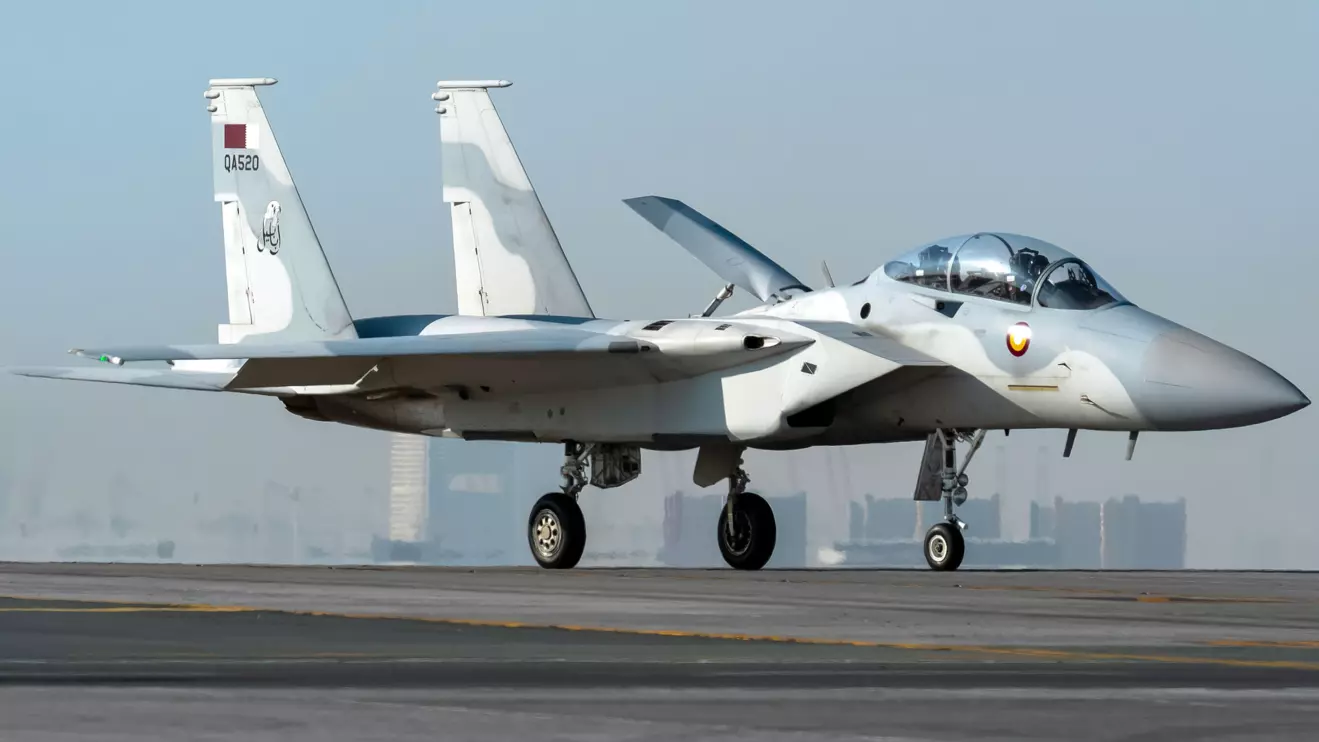
Qatar has carried out strikes against Iran over the past 24 hours in direct retaliation for Tehran's attacks across the Gulf, Israel's Channel 12 reported Monday, citing unnamed Western sources familiar with the matter.
The development marks a dramatic turning point in the rapidly escalating regional conflict, one that transforms what began as a U.S.-Israeli operation into a broader Gulf war.
Meanwhile, a senior Israeli official told the Kan public broadcaster that Israel assesses Saudi Arabia will also strike Iran in the coming hours, after the Kingdom itself came under Iranian attack yesterday.
Until now, the Gulf states had kept their powder dry, intercepting Iranian missiles and drones over their own territory while stopping short of any offensive action. That restraint appears to be over.
Qatar's decision to strike back represents a seismic shift.
Doha has long positioned itself as a mediator and back-channel broker in regional disputes, maintaining open lines with Tehran even as relations across the Gulf deteriorated.
That carefully cultivated neutrality has now been abandoned, forced upon it by Iranian missiles that struck its gas infrastructure and threatened its sovereignty.
Saudi Arabia's anticipated entry into the conflict would be even more consequential. Riyadh and Tehran have been regional rivals for decades, their rivalry cutting across sectarian, political and economic lines.
A direct Saudi strike on Iranian territory would mark the most significant escalation in that relationship in modern history.
Iran's Catastrophic Miscalculation
Tehran's decision to strike across the Gul, hitting Qatar's energy infrastructure, targeting Saudi territory and drawing multiple nations into open conflict, is fast emerging as one of the most catastrophic strategic miscalculations in the Islamic Republic's history.
Rather than deterring its adversaries or splitting the regional coalition arrayed against it, Iran has achieved the opposite: it has united the Gulf states, pushed previously neutral players into active belligerency, and handed Washington and Jerusalem precisely the broad regional front they could not have assembled alone.
The entry of Qatar and potentially Saudi Arabia into offensive operations against Iran raises the stakes to an entirely new level.
Iran now faces simultaneous military pressure from the United States, Israel, and an increasingly united Gulf coalition, without the backing of a Hezbollah already severely weakened, or a Supreme Leader killed just days ago.
The Islamic Republic is running out of cards to play, and running out of time.