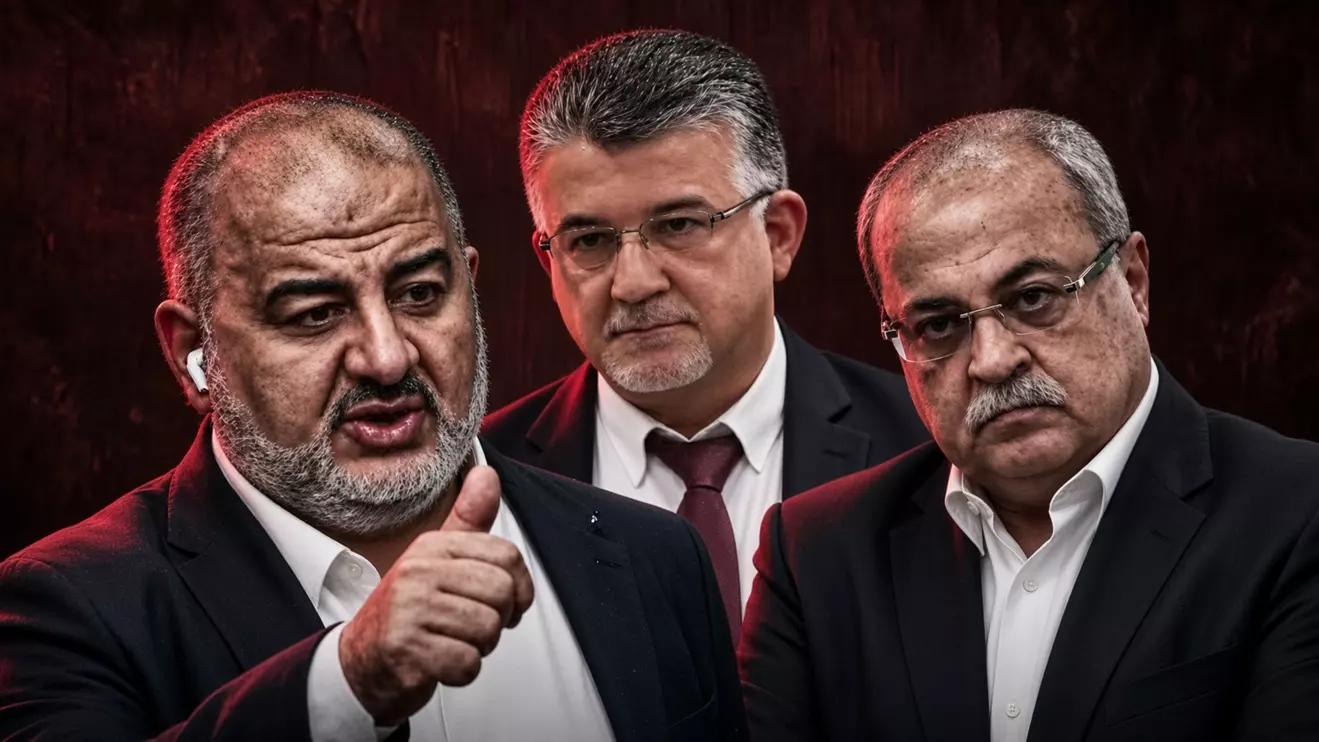
Outgoing Prime Minister Benjamin Netanyahu on Monday called for a broad coalition that excludes Israel’s Arab parties, claiming the right to lead it after his Likud party finished first in the election. The Arab parties, meanwhile, urged the opposition to “accept reality” and rely on their votes.
“We seek to establish a broad government with our partners and with any party that wishes to join us and does not support terrorism,” Netanyahu said in a statement on Likud’s Telegram channel. he added, accusing both parties of backing terrorism and denying the existence of the Jewish state.
The October 27 vote produced no majority. Netanyahu’s bloc won 53 seats and the opposition led by centrist Gadi Eisenkot 48, both well short of the 61 needed.
With a record 11 seats for the Joint List and 8 for Ra’am, the Arab parties could in theory hand the opposition a majority, though opposition leaders have so far ruled out any alliance with them.
“Anyone truly determined to replace this government is obliged to accept the political reality: the Joint List’s votes could prove decisive,” its leader Youssef Jabareen told AFP.
The two parties differ on strategy. Ra’am has not ruled out joining a government led by Eisenkot, while the Joint List favours supporting a minority government from the outside.
A unity government?
To get around the Arab parties, some Israeli commentators have floated a unity government of Zionist parties, including Likud, without Arab or ultra-Orthodox parties.
Jabareen acknowledged that this is possible in theory, but said it would betray the opposition’s core campaign pledge to remove Netanyahu.
He did not rule out new elections. But whatever happens, he said, the vote has already turned Israel’s Arab minority into “a central political force.”