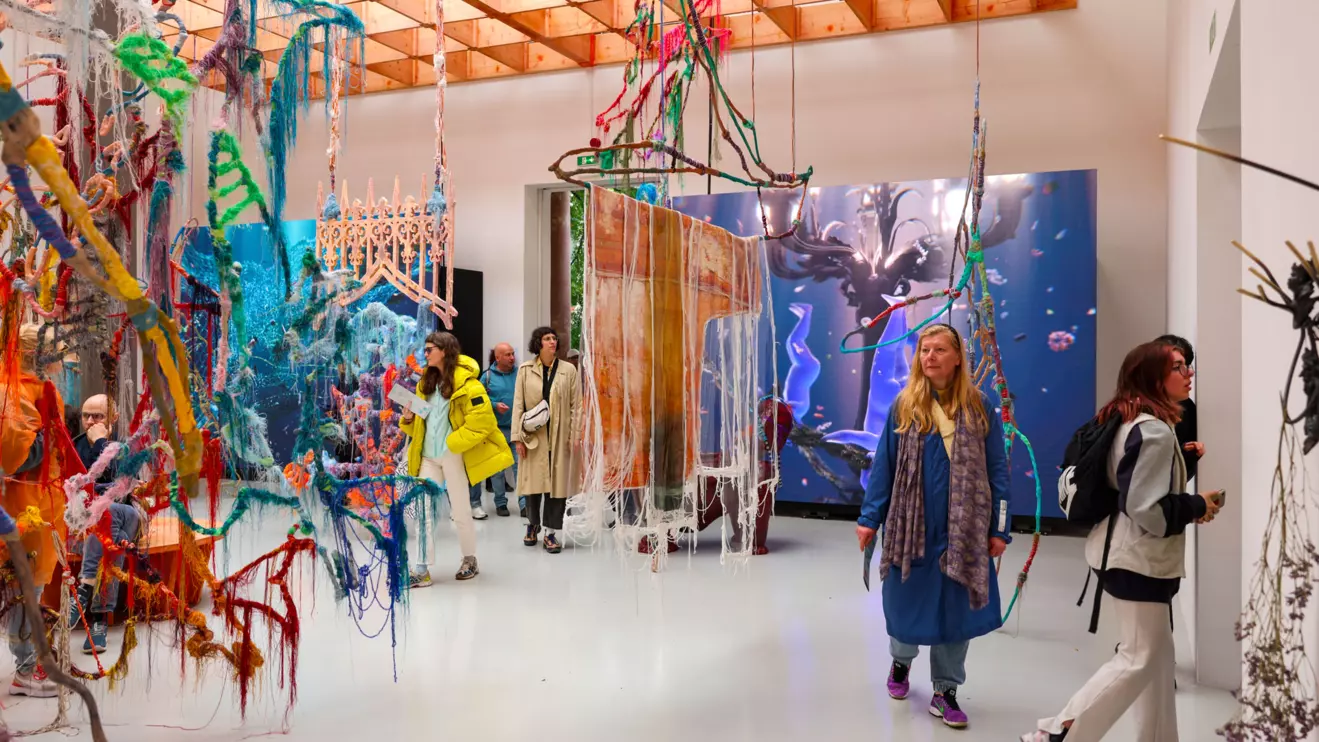
Nearly 200 participants in the Venice Biennale have signed an open letter calling for the exclusion of the Israeli pavilion, according to The Art Newspaper.
Signatories include artists Alfredo Jaar, Yto Barrada, Rosana Paulino, Meriem Bennani and Cauleen Smith, alongside curators Binna Choi and Carles Guerra.
It is a disgrace. And it is not the first time.
The Venice Biennale is the world's oldest and most prestigious international art exhibition, founded in 1895. Held every two years in Venice, Italy, it brings together artists, curators and cultural institutions from across the globe in a celebration of artistic diversity, freedom of expression and the universal power of creativity.
The 2026 edition runs from April 19 to November 23, 2026, at the Giardini and Arsenale venues. It represents the pinnacle of the international art world, a space explicitly designed to transcend politics and celebrate the full breadth of human artistic expression.
Israel has participated in the Venice Biennale since 1952, longer than many of the countries whose artists are now demanding its exclusion.
The Boycott Movement's Shameful Logic
This letter is not about art. It never is. It is about using culture as a weapon, targeting a democratic state's artistic community for the actions of its government, holding individual artists collectively responsible for political decisions they had no part in making.
The artists and curators who signed this letter are not defending Palestinian culture. They are attacking Israeli culture, a fundamentally different and deeply troubling act.
By demanding the exclusion of a national pavilion, they are doing precisely what the Biennale was created to prevent: turning a space of dialogue into a space of exclusion.
A Pattern of Selective Outrage
This is not the first time Israel has been targeted with boycott calls at Venice. Similar letters circulated in 2024, in 2022, and in years prior. The pattern is consistent, and consistently one-sided.
The Venice Biennale exists precisely because humanity has learned - at enormous cost - that culture must remain above politics. The moment art becomes a tool for political exclusion, it ceases to be art and becomes propaganda.
The 200 signatories of this letter should reflect on what they are actually defending, and what they are actually destroying.
A Biennale that excludes Israel is not a more just Biennale. It is a less free one.
And a less free Biennale betrays everything the institution was built to represent.