Jordan
Jordan's King Abdullah II begins state visit to Malaysia
King Abdullah II of Jordan began a state visit to Malaysia on Monday with talks with King Sultan Ibrahim bin Sultan Iskandar in Kuala Lumpur.

In 1815, Talleyrand arrived at the Congress of Vienna representing a defeated nation. France had burned Europe for two decades and lost.

Imagine a single line drawn on the map, running from the Red Sea northward: a chain of desalination plants powered by the fiercest sun on the planet, feeding a corridor of pipelines, reservoirs, and irrigated farmland that no single nation owns, because all of them do © Mena Today
In 1815, Talleyrand arrived at the Congress of Vienna representing a defeated nation. France had burned Europe for two decades and lost.
Yet he walked out with his country whole and seated among the powers that had beaten it. His secret was not cunning, though he had plenty of it. It was that he changed the question. While the victors argued over punishment, he spoke of the future, and the man who holds the future always outranks the men holding grievances.
The Middle East has spent nearly eighty years arguing over punishment. Every negotiation, every framework, every ceasefire has been conducted in the languages of security, territory, and grievance.
These languages can only produce pauses between catastrophes. They cannot produce a destination. We have become fluent in stopping wars and illiterate in describing what should replace them.
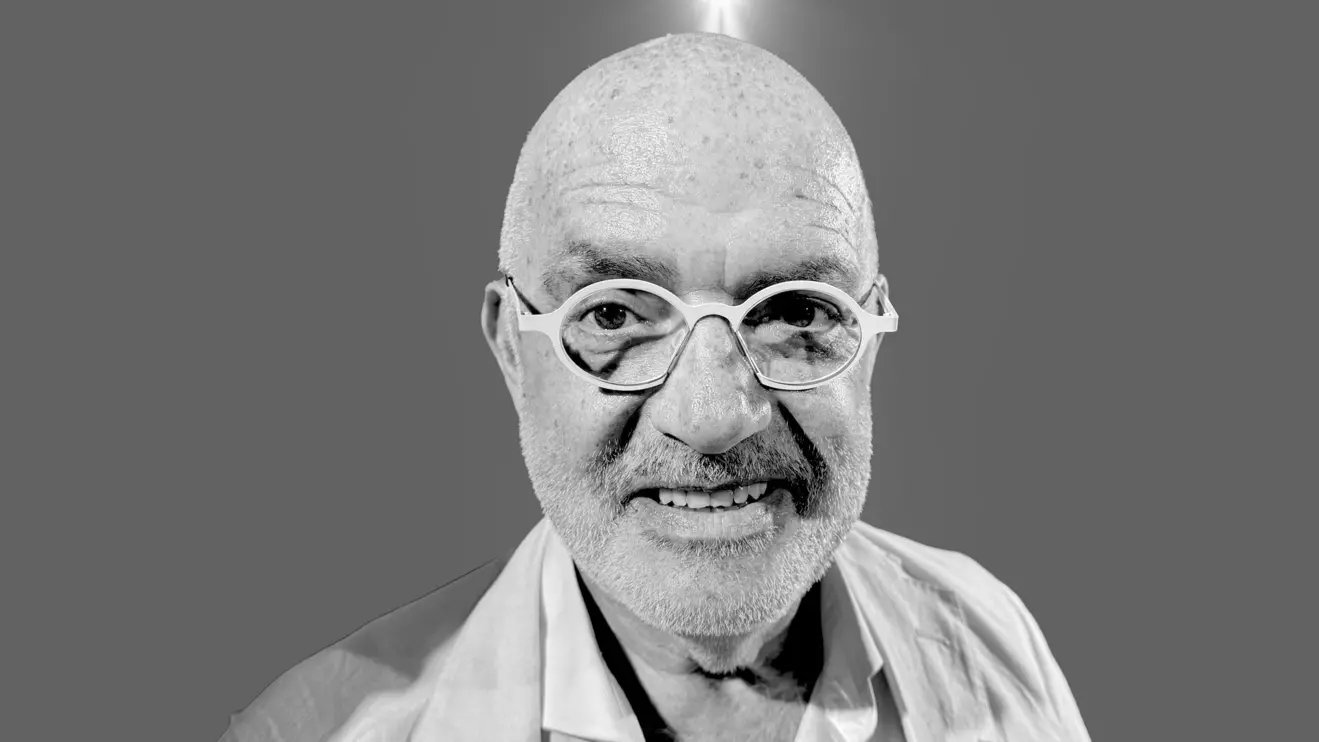
I am an artist, not a diplomat, and perhaps that is the point. An artist knows that no one is moved by a blank canvas. Regions, like paintings, need an image of what they are becoming. So let me propose one, and let it be shockingly concrete: water.
Israel makes fresh water from the sea more efficiently than any nation on earth. Jordan is one of the most water-poor countries in existence.
Egypt watches the Nile shrink under dams it does not control. Saudi Arabia desalinates at staggering cost and scale.
The Palestinians in Gaza have lived for years above an aquifer poisoned by salt and sewage.
Here is the one resource where every interest in the region already points in the same direction, and thirst, unlike ideology, does not check your passport at the border.
Imagine a single line drawn on the map, running from the Red Sea northward: a chain of desalination plants powered by the fiercest sun on the planet, feeding a corridor of pipelines, reservoirs, and irrigated farmland that no single nation owns, because all of them do.
Israel, Jordan, Egypt, Saudi Arabia, the Emirates, and a Palestinian entity, each holding shares in one authority. Call it the Covenant of Waters.
Israel contributes what it alone possesses: the technology that turns sea into abundance. The Gulf contributes capital and sun-drenched land.
Jordan and Egypt contribute geography and desperate demand. The Palestinians contribute the thing everyone claims to want for them and no one has ever built: a stake in the future that is worth more intact than in flames.
This is not a treaty. Treaties are words, and words in this region have a short life expectancy.
This is a machine. Pipes in the ground, turbines in the sun, wheat in the desert, salaries in a hundred thousand pockets on every side of every border. A treaty can be denounced in an afternoon. A machine that waters five nations cannot be abandoned without your own people going thirsty.
Skeptics will call this naive. They should study how Europe was built. In 1951, six years after Auschwitz, while French cities still bore German shell marks, France and Germany did not sign a friendship treaty.
They fused the two industries that had armed their wars, coal and steel, into a single community that neither could weaponize without destroying itself. Robert Schuman said the purpose plainly: to make war not merely unthinkable but materially impossible.
Materially impossible. Not morally, not diplomatically, but materially. That is the standard the Middle East has never attempted. The European Union, the most successful peace project in human history, did not begin with reconciliation. It began with infrastructure. The reconciliation came later, as a consequence.
The seed already exists here. Israel and Jordan, with Emirati backing, sketched a water-for-energy exchange, Jordanian solar power for Israeli desalinated water, before politics froze it in place. That deal was the idea in miniature.
The Covenant of Waters is that seed scaled up from a bilateral swap into the founding institution of the region.
It is the Abraham Accords given a body. The Accords proved that Arab states will sign with Israel when the future is on the table. What they lack is a physical form, something a child in Amman or Ashkelon or Jeddah can point to and say: that is ours, together.
Consider what such a covenant does to the calculus of every spoiler in the region. Today, Iran and its proxies pay almost nothing for arson, because the things they burn belong to their enemies.
Every civilization is remembered for what it built at the height of its confidence
But a missile aimed at a shared desalination corridor is a missile aimed at Jordanian farmers, Egyptian families, Saudi investment, and Palestinian jobs all at once. The Covenant does not eliminate enemies. It multiplies the owners of peace, and it turns every act of sabotage into an attack on the Arab world itself.
Consider also what it does inside Israel. For decades Israelis have been asked to trade tangible land for intangible promises, and they have learned, at terrible cost, what promises are worth. The Covenant reverses the equation. Israel trades nothing away. It contributes genius, and it receives, for the first time, neighbors whose prosperity is plumbed directly into its own.
Every civilization is remembered for what it built at the height of its confidence. Rome built roads. France built cathedrals. America built the Marshall Plan. The Middle East, the cradle of the alphabet, of monotheism, of mathematics, is currently building rubble.
The prophets of this land measured redemption in water. Isaiah did not promise treaties. He promised rivers in the desert. Perhaps the prophets understood something the diplomats have forgotten: that peace is not a document but a landscape, and a landscape must be built before it can be believed.
For eighty years the world has asked the peoples of this region to negotiate away from catastrophe.
It has never once asked them to build toward an image. So here is the image: white plants gleaming on the Red Sea shore, silver water moving north through five nations, green spreading where the maps have always shown brown, and children on every side of every border growing up beside a machine their parents built together, too valuable to destroy, too beautiful to abandon.
The question at Vienna was never who had won the last war. It was who owned the future. Let it be us, all of us, and let the future begin with a glass of water.
King Abdullah II of Jordan began a state visit to Malaysia on Monday with talks with King Sultan Ibrahim bin Sultan Iskandar in Kuala Lumpur.
Turkey, Pakistan, Egypt and Saudi Arabia condemned attacks by Yemen's Iran-backed Houthi militants on Riyadh's international airport, saying they were a "dangerous escalation that cannot be justified or accepted under any pretext".
At least 72 artisanal miners were killed in an airstrike in northern Sudan on Saturday, rights monitor Emergency Lawyers said on Sunday, in the second such incident in several months.
To make this website run properly and to improve your experience, we use cookies. For more detailed information, please check our Cookie Policy.
Necessary cookies enable core functionality. The website cannot function properly without these cookies, and can only be disabled by changing your browser preferences.