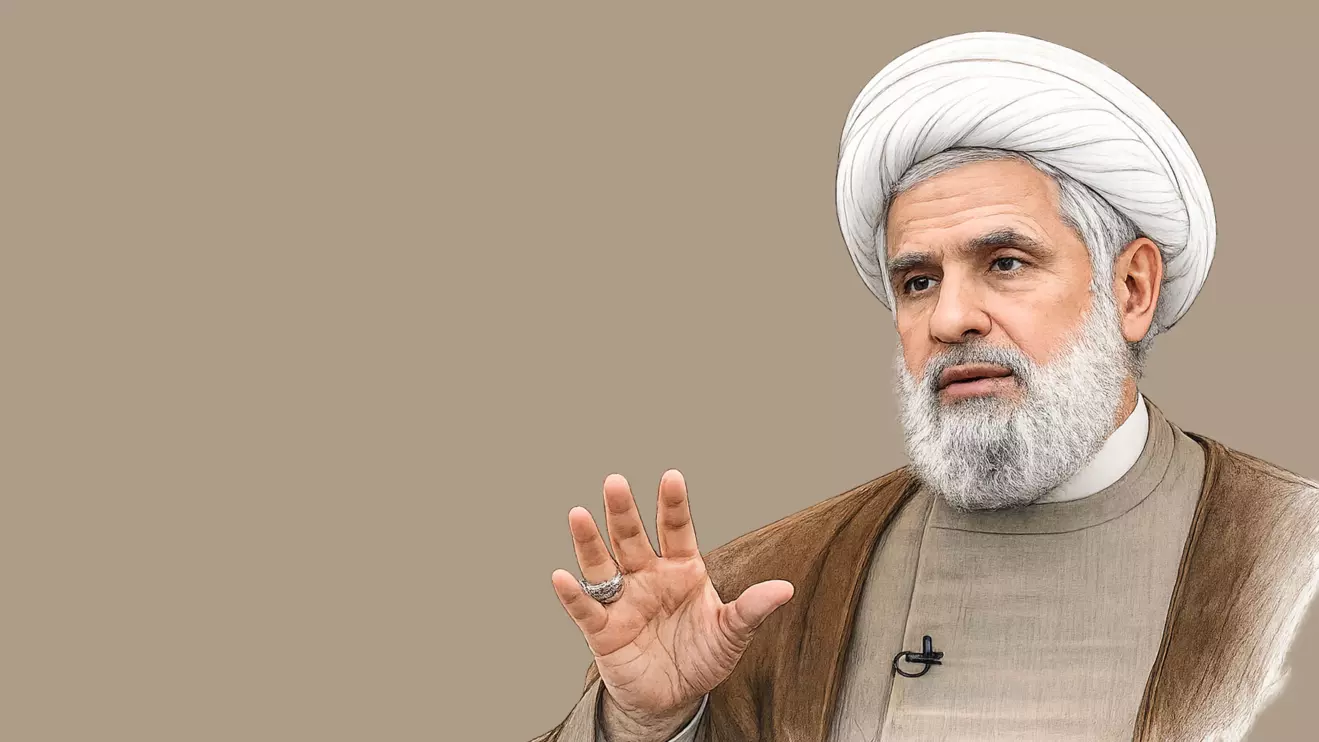
The most forceful response to Hezbollah chief Naim Qassem's threats against the Lebanese government came not from Beirut, but from Washington.
Secretary of State Marco Rubio condemned "in the strongest terms Hezbollah's irresponsible call to overthrow Lebanon's democratically elected government," declaring that "the era of a terrorist group holding an entire nation hostage is coming to an end."
The trigger was a speech Qassem delivered Sunday evening, in which he called on Lebanese citizens to take to the streets to bring down their own government and block the direct negotiations with Israel set to resume Friday in the United States.
Those talks centre on Hezbollah's disarmament, a process the Iran-backed group has categorically rejected, deferring instead to its patrons in Tehran.
Rubio accused Hezbollah of running a "deliberate campaign to destabilise the country" and plunge it into chaos, even as, he noted, "the Lebanese government wants to ensure the country's recovery and a stable future for its citizens with the full support of the United States."
The ceasefire holding since the conflict resumed on March 2, when Hezbollah rocket fire in support of Iran reopened the Lebanese front, is already under severe strain. Israeli strikes, the occupation of dozens of villages in southern Lebanon, and continued Hezbollah attacks have all eroded what little stability existed.
The lines are now drawn with unusual clarity. Beirut wants to negotiate. Hezbollah wants to sabotage. And Washington has made unambiguously clear whose side it is on.