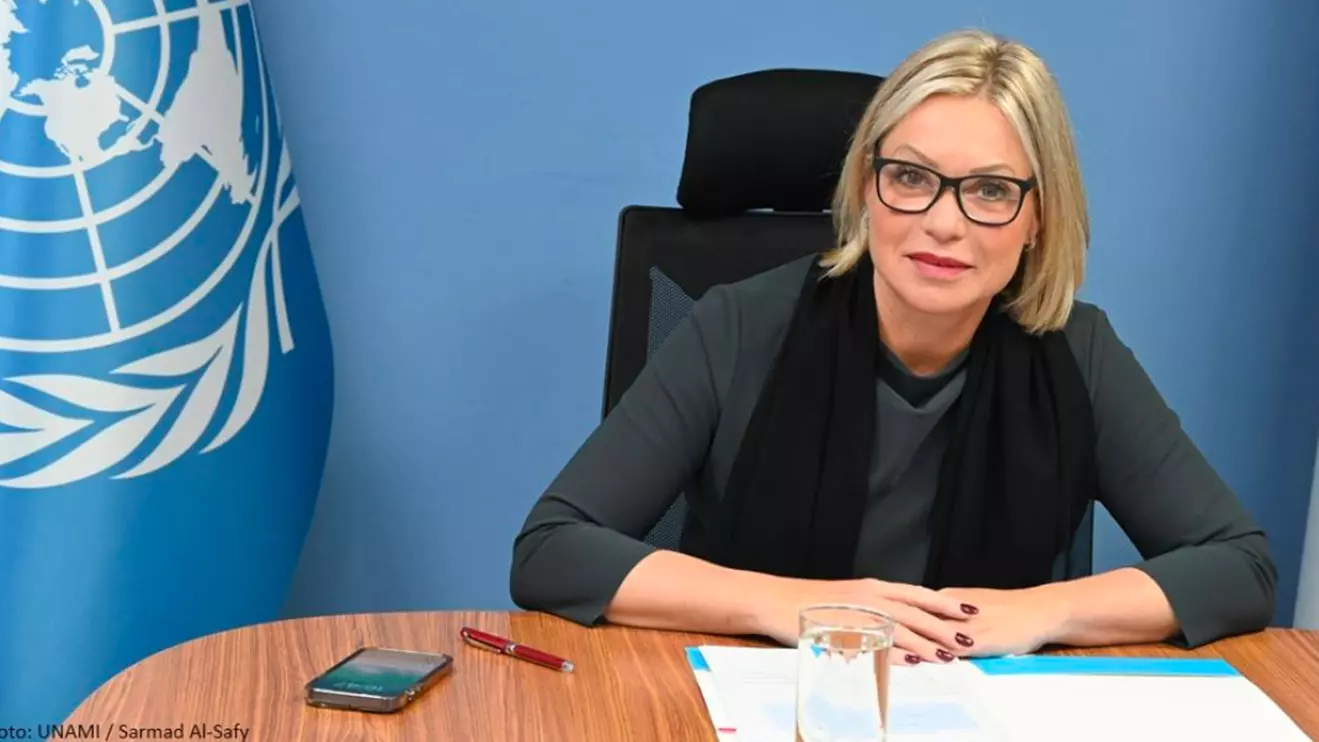
Jeanine Hennis-Plasschaert, the United Nations Special Coordinator for Lebanon, arrived in Israel on Sunday for a three-day visit.
During her stay, she will meet with Israeli officials to discuss the implementation of UN Security Council Resolution 1701, according to a brief statement from her office. Adopted in 2006, Resolution 1701 aimed to end the July war between Hezbollah and Israel.
Consultations on this resolution will take place "during the month" before the annual vote to renew the mandate of the United Nations Interim Force in Lebanon (UNIFIL), expected at the end of August.
According to the statement, during her visit, Hennis-Plasschaert is expected to discuss "the necessity of restoring calm and paving the way for a diplomatic solution" to facilitate the return of displaced individuals to their homes in both Lebanon and Israel.
Since October, tens of thousands of civilians on both sides of the border have had to leave their villages due to near-daily clashes between Hezbollah and the Israeli army. The diplomat will also address "the pending provisions of Resolution 1701," including the withdrawal of Hezbollah fighters north of the Litani River and adherence to the Blue Line.
Jeanine Hennis-Plasschaert has been based in Beirut since June 1. During her first visit to the UNIFIL headquarters on June 21, she stated that "there is no inevitability to the conflict," urging "all parties" to agree to a ceasefire.
The clashes in southern Lebanon, which began on October 8 when Hezbollah opened a "support front for the resistance in Gaza," have resulted in 486 deaths.
Most of the victims are Hezbollah fighters or leaders, but there have also been 75 civilian casualties, three journalists, and about twenty aid workers, according to figures from L'Orient-Le Jour.
Hennis-Plasschaert's visit underscores the UN's commitment to fostering peace and stability in the region. Her discussions with Israeli officials aim to address the complex dynamics at play and work towards a sustainable solution that can bring lasting peace to both Lebanon and Israel.
As the situation remains tense, her diplomatic efforts will be crucial in the lead-up to the upcoming UNIFIL mandate renewal and the ongoing implementation of Resolution 1701.