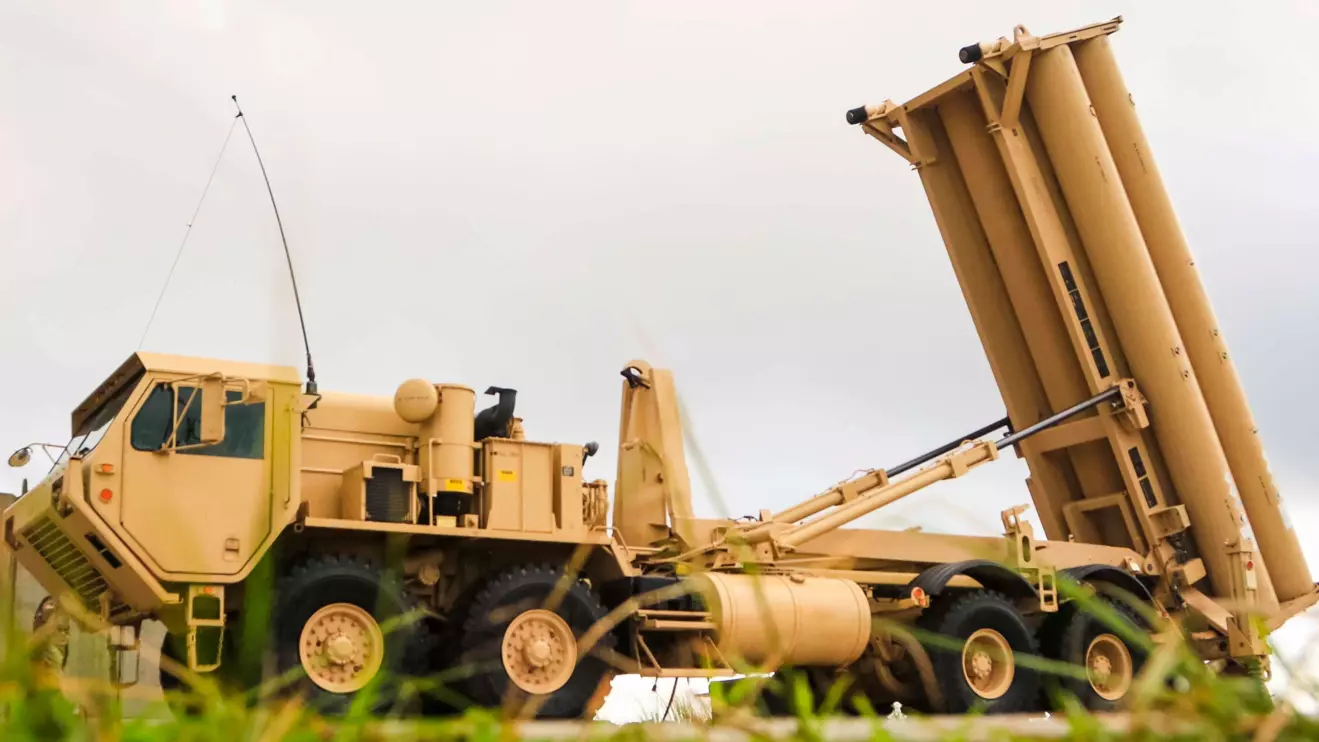
The U.S. military has rushed its advanced anti-missile system to Israel and it is now "in place", Defense Secretary Lloyd Austin said.
THAAD, or the Terminal High Altitude Area Defense system, is a critical part of the U.S. military's layered air defense systems and adds to Israel's already formidable anti-missile defenses.
"The THAAD system is in place," Austin said, speaking to reporters before his arrival in Ukraine on Monday.
He declined to say whether it was operational, but added: "We have the ability to put it into operation very quickly and we're on pace with our expectations."
President Joe Biden said the THAAD's deployment, along with about 100 U.S. soldiers, was meant to help defend Israel, which is weighing an expected retaliation against Iran after Tehran fired more than 180 missiles at Israel on Oct 1.
The United States has been urging Israel to calibrate its response to avoid triggering a broader war in the Middle East, officials say, with Biden publicly voicing his opposition to an Israeli attack on Iran's nuclear sites and his concerns about a strike on its energy infrastructure.
Responding to questions from reporters, Biden said last week he had a good understanding of when and how Israel would attack Iran. But he also said he saw an opportunity to end the two enemies' back-and-forth strikes.
Austin was cautious.
"It's hard to say exactly what that (Israel's) strike will look like," Austin told reporters.
"At the end of the day, that's an Israeli decision, and whether or not the Israelis believe it's proportional and how the Iranians perceive it, I mean those may be two different things."
"We're going to do - continue to do - everything we can ... to dial down the tensions and hopefully get both parties to begin to de-escalate. So, we'll see what happens," he added.