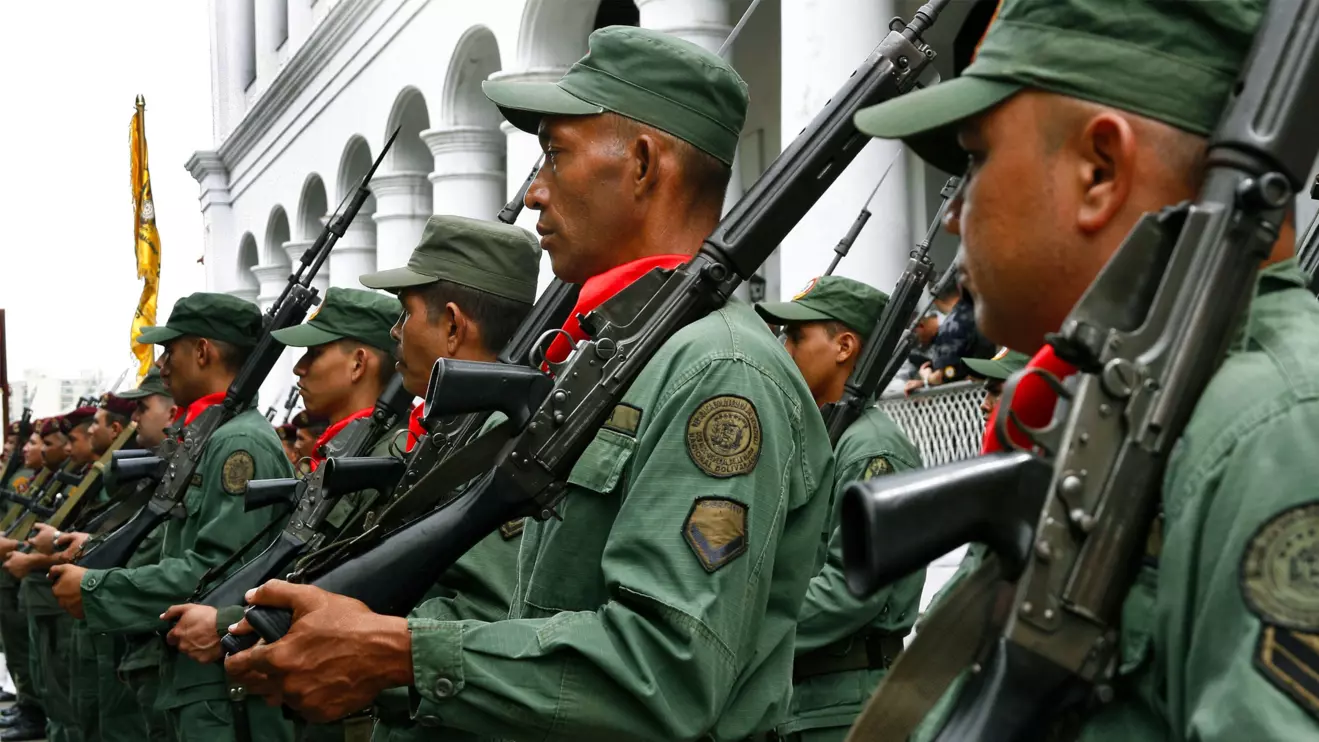
Venezuela should be understood on its own terms before it is read as a symbol. For years the country has been trapped in a downward spiral marked by economic collapse mass migration weakened institutions and a ruling system that survived not by legitimacy but by insulation.
Under Nicolás Maduro, the state increasingly functioned less as a provider of public goods and more as a gatekeeper for power money and protection. That structure mattered first and foremost to Venezuelans who paid the price through shortages repression and the departure of millions.
Venezuela’s internal decay also created an external reality. As normal governance eroded the regime compensated by opening space to partners who could help it survive financially politically and logistically. This was not ideology.
It was survival. A government short on cash and legitimacy trades access for loyalty. Over time Venezuela became unusually permissive to sanctioned actors shadow trade and illicit networks. Ports asked fewer questions banks tolerated higher risk and officials facilitated workarounds that would not have been possible in a functioning state.
That is why any sudden rupture in Caracas whether through elite fracture external pressure or leadership removal has consequences that begin at home but do not end there. When a system built on controlled access loses control the first effects are domestic.
Ministries stall contracts freeze security services hesitate and insiders reassess. Records matter in these moments. Who signed what who approved which shipment who authorized which document becomes leverage. When the guarantees disappear people talk.
Only after that domestic picture is clear does the international story come into focus. Venezuela mattered to outside actors not because it was powerful but because it was permissive.
It offered routes and cover. When that permissive environment weakens the impact is immediate and practical. Shipping insurers step back traders pause intermediaries disappear and the cost of doing business rises sharply.
This is where Iran enters the story as a downstream effect rather than the headline. Tehran’s relationship with Caracas was transactional. Venezuela offered sanctions workarounds shipping options technical cooperation and a way to signal reach beyond the Middle East.
Those channels depend on predictability. When Venezuelan guarantees weaken those channels become fragile. Routes must be rechecked partners reassessed and exposure contained.
For Iran the damage is not only material. It is psychological. Iranian planners are accustomed to patterns such as gradual sanctions measured responses and managed escalation.
What unsettles them is uncertainty when assumptions no longer hold. A sudden loss of a permissive partner forces Tehran to divert attention inward protect networks and anticipate exposure. Confidence erodes when the map changes.
The same logic applies to Hezbollah. Its interests in Latin America have historically centered on finance facilitation and logistics rather than public spectacle.
Access to low risk environments matters enormously to any organization that relies on moving money and people quietly. When a state that once offered cover becomes unpredictable that advantage disappears. Financial channels face scrutiny travel pipelines tighten and facilitators reconsider their options. The damage accumulates quietly which is often the most effective kind.
None of this requires fixation on Israel to understand but it does intersect with Israeli security in clear ways. *Israel* has long argued that its adversaries draw strength from global networks far from the battlefield. When those networks are disrupted through exposure enforcement or loss of state protection capabilities shrink. Fewer routes mean fewer options. Fewer options mean higher costs. Higher costs mean less reach.
The broader context is the posture of the United States. Under *Donald Trump*, American power has been defined less by process and more by surprise.
Supporters view this as a return to clarity after years of ambiguity. Critics warn of escalation and precedent. Both are right about one thing. Unpredictability changes behavior. When adversaries cannot forecast the next step they hedge pull back and make fewer bold moves. Deterrence is psychological as much as it is physical.
Concerns about instability and humanitarian strain are legitimate especially for Venezuela’s people who deserve protection and relief. Any transition must prioritize food medicine and basic services. Those realities should guide policy choices ahead.
Still the strategic lesson remains. Venezuela was not only a country in crisis. It became a hub created by crisis. If that hub fractures the consequences ripple outward to financiers traffickers sanctioned states and militant groups that relied on permissiveness. The message is structural rather than theatrical. Geography is no shield and partnerships built on weak states are liabilities.
Seen this way the story rightly begins in Venezuela. But it does not end there. When permissive regimes falter the quiet architecture of illicit power is exposed. And when unpredictability returns to American decision making those who depend on predictable gray zones feel it first.