Hezbollah
Hezbollah torpedoes U.S.-brokered deal
Hezbollah leader Naim Qassem rejected a U.S.-brokered security agreement between Lebanon and Israel on Saturday a day after it was signed, describing it as a surrender to Israel.
US Secretary of State Marco Rubio met with Qatari Prime Minister and Foreign Minister Sheikh Mohammed bin Abdulrahman Al-Thani on Saturday to discuss security threats and defence cooperation in the Middle East, the State Department announced.
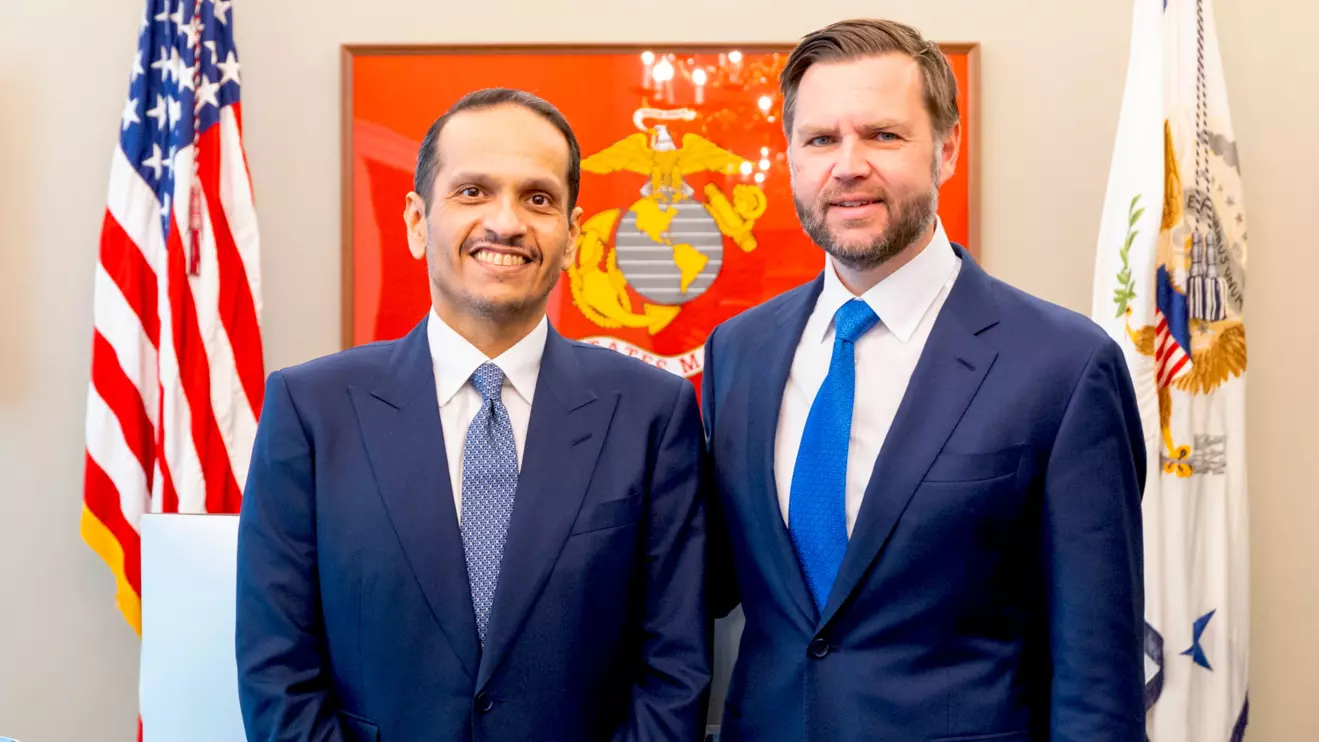
Sheikh Mohammed bin Abdulrahman bin Jassim Al-Thani and Vice President of the United States of America, J. D. Vance © X
US Secretary of State Marco Rubio met with Qatari Prime Minister and Foreign Minister Sheikh Mohammed bin Abdulrahman Al-Thani on Saturday to discuss security threats and defence cooperation in the Middle East, the State Department announced.
The two officials addressed "US support for Qatar's defence and the importance of close coordination to repel threats and promote stability and security in the Middle East," according to a State Department communiqué, notably without explicitly naming Iran, despite the ongoing conflict that has seen Qatari territory targeted by Iranian strikes since hostilities began on 28 February.
The meeting follows Sheikh Mohammed's separate talks with Vice President JD Vance in Washington on Friday, underlining the intensity of US-Qatari diplomatic engagement at this moment of acute regional tension.
Qatar occupies a unique and delicate position in the Middle East landscape. A close US military ally , home to Al Udeid Air Base, Washington's largest military installation in the region, it has simultaneously served as America's most trusted regional intermediary, most notably brokering ceasefire negotiations between Israel and Hamas in Gaza.
Since the outbreak of the Iran conflict, that dual role has become significantly more complex, as Doha finds itself both a target of Iranian aggression and a potential back-channel for diplomatic outreach.
By Maher Hassan
Hezbollah leader Naim Qassem rejected a U.S.-brokered security agreement between Lebanon and Israel on Saturday a day after it was signed, describing it as a surrender to Israel.
The framework agreement reached Friday between Lebanon and Israel at the fifth round of Washington negotiations is drawing sharply contrasting reactions across Lebanon's political landscape, with Kataeb leader Samy Gemayel declaring victory and Aounist figure Gebran Bassil sounding notes of caution.
Lebanese President Joseph Aoun received a phone call Saturday from UAE President Mohamed bin Zayed Al Nahyan (MBZ), in a show of Gulf solidarity following the announcement of the Lebanon-Israel framework agreement in Washington.
To make this website run properly and to improve your experience, we use cookies. For more detailed information, please check our Cookie Policy.
Necessary cookies enable core functionality. The website cannot function properly without these cookies, and can only be disabled by changing your browser preferences.