"We are not putting any trust in the other side »

1 min Mena Today

The top U.S. general said on Wednesday U.S. troops stood ready to resume fighting if Tehran failed to strike a negotiated settlement as the Trump administration sought to portray the war as a decisive victory against Iran.

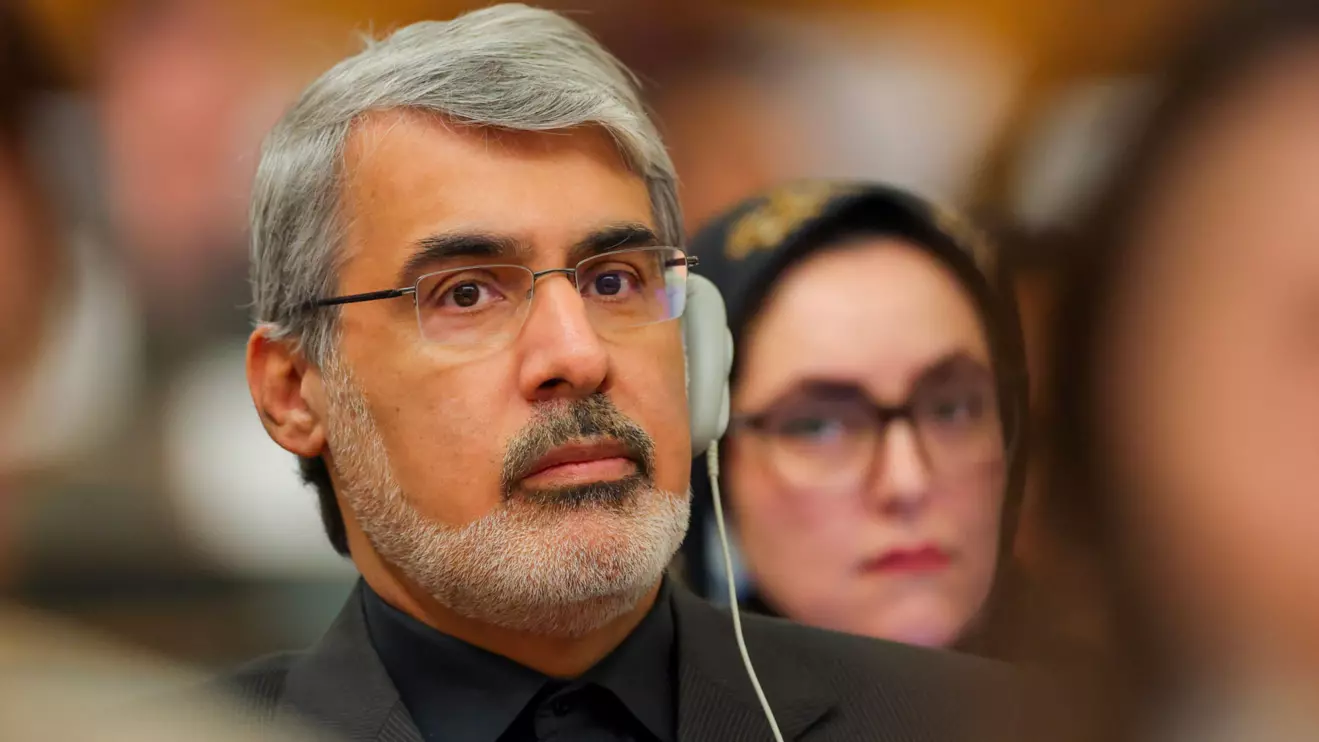
Ali Bahreini, Ambassador and Permanent Representative of the Islamic Republic of Iran to the United Nations Office in Geneva, Reuters/Denis Balibouse

Ali Bahreini, Ambassador and Permanent Representative of the Islamic Republic of Iran to the United Nations Office in Geneva, Reuters/Denis Balibouse

The top U.S. general said on Wednesday U.S. troops stood ready to resume fighting if Tehran failed to strike a negotiated settlement as the Trump administration sought to portray the war as a decisive victory against Iran.

"We hope that Iran chooses a lasting peace," General Dan Caine, chairman of the Joint Chiefs of Staff, told a Pentagon news conference.

"A ceasefire is a pause and the joint force remains ready, if ordered or called upon, to resume combat operations -- with the same speed and precision as we've demonstrated over the last 38 days."

Hegseth said the U.S. military was "hanging around" in the Middle East to ensure Iran complies with the two-week ceasefire and to monitor the country's enriched uranium stockpile. 

"On the uranium, we're watching it. We know what they have, and they will give it up, and we'll get it. We'll take it if we have to," Hegseth told reporters. 

Our military forces are keeping their preparedness

Iran will approach peace talks with the U.S. with greater caution than in the past due to a deep lack of trust, and the war will affect the future legal regime of the Strait of Hormuz, Iran’s ambassador to the U.N. in Geneva said on Wednesday.

"We are not putting any trust in the other side. Our military forces are keeping their preparedness...but meanwhile, we will go for negotiations to see how serious the other side is," the ambassador, Ali Bahreini, told Reuters.

Pakistani Prime Minister Shehbaz Sharif said he had invited Iranian and U.S. delegations to meet in Islamabad on Friday for what would be the first official peace talks since the war began, and that Iran's president had confirmed it would attend.

By Idrees Ali, Phil Stewart and Olivia Le Poidevin

Related

Lebanon

Israel strikes hundreds of Hezbollah targets across Lebanon

Israel launched a massive surprise assault on Hezbollah across Lebanon on Wednesday, striking what Defence Minister Israel Katz described as "hundreds" of the group's members in command centres throughout the country. 

Iran

What each side actually said about the ceasefire

The United States, Israel and Iran have agreed to a two-week ceasefire, reached with Pakistani mediation, and U.S. and Iranian officials are expected to hold talks on Friday to discuss a long-term settlement.

Diplomacy

The two-week truce with Iran: a pause, not a peace

Let us be clear from the outset. The two-week ceasefire brokered between the United States and Iran - with Israel as the silent third party and Pakistan as the unlikely intermediary - will not lead to peace. 

Subscribe to our newsletter

Mena banner 4

To make this website run properly and to improve your experience, we use cookies. For more detailed information, please check our Cookie Policy.

  • Necessary cookies enable core functionality. The website cannot function properly without these cookies, and can only be disabled by changing your browser preferences.