The United Nations' top court will rule on Friday on whether it will grant emergency measures against Israel following accusations by South Africa that its military operation in Gaza is a state-led genocide against Palestinians.
The 15 judges at the International Court of Justice (ICJ), also known as the World Court, are joined for this case by a judge specially appointed by South Africa and one by Israel.
Both are distinguished figures in their countries with extraordinary personal histories. The court's legally-binding decisions are made by a simple majority but it has no way to enforce them.
DIKGANG MOSENEKE
- Moseneke, 76, is one of South Africa's most senior retired judges who fought against apartheid and played a key role in the country's transition to democracy.
- He was imprisoned at the age of 15 for protesting apartheid and spent 10 years in South Africa's notorious Robben Island prison, where he befriended Nelson Mandela.
- Moseneke studied for his university degree while behind bars and worked as an attorney after his release. He was later asked by Mandela to help draft South Africa's interim constitution and oversee its first democratic elections. - He was appointed to South Africa's Constitutional Court in 2002. In 2005, he was appointed Deputy Chief Justice, a position he held until his retirement in 2016.
- In a 2021 interview with Oxford University about his autobiography he recalled he had a very deep sense of right and wrong as a child. "Apartheid was already a big teacher, like most states... it taught people inequality.".
- He has a reputation as "a fair-minded and thorough judge who follows the facts of the case", according to Frans Viljoen, a professor of international human rights law at the University of Pretoria.
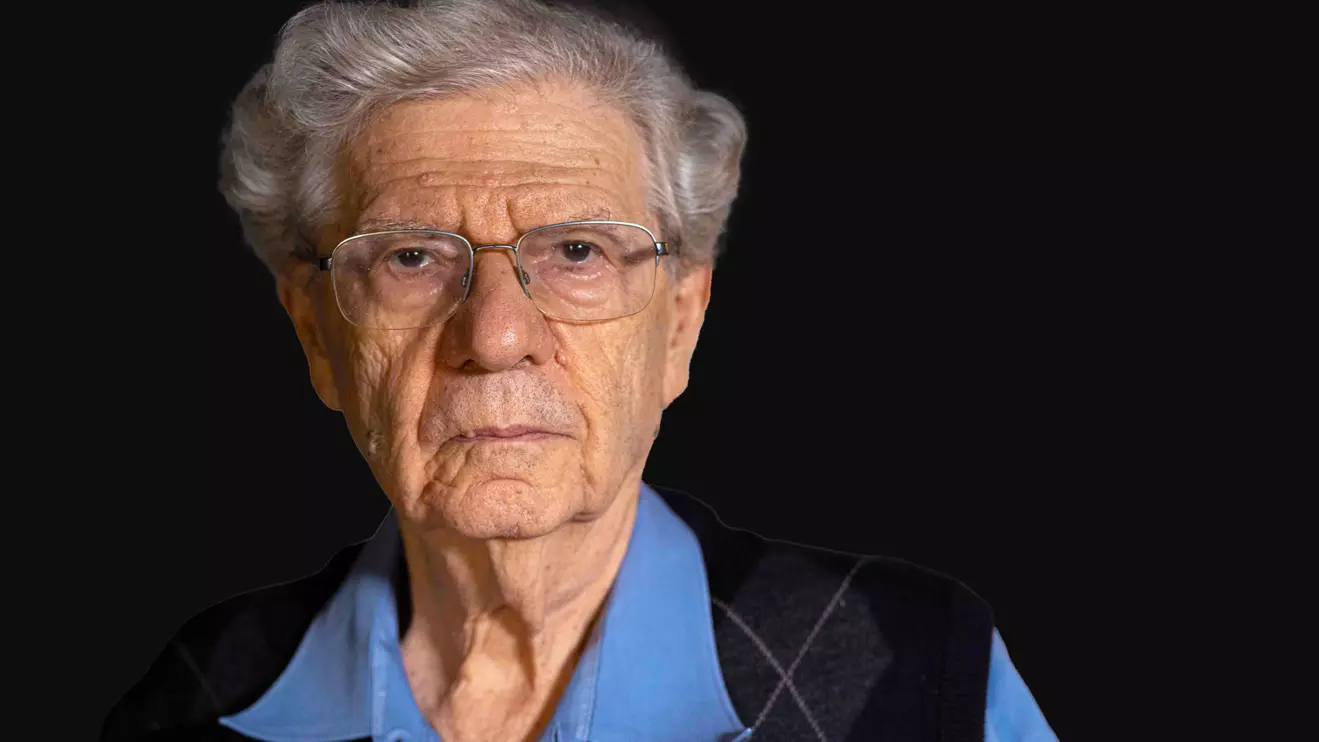
AHARON BARAK
- Barak, 87, is a Holocaust survivor born in Lithuania in 1936 who became a chief justice of Israel's Supreme Court.
- He is one of few children to survive the Jewish ghetto in the central Lithuanian city of Kovno (Kaunas) during World War Two. He has called his survival a miracle. "Since that episode, I have never feared death," he said.
- Barak was smuggled out of the ghetto by his mother who hid him in a bag of uniforms that were manufactured there. He immigrated to then-British Mandate Palestine in 1947, a year before it became Israel
- Between 1975 and 1978 Barak served as Israel's Attorney General. In 1978 he was appointed to the Supreme Court and served as its president from 1995 to 2006 when he retired.
- Barak is known as a champion of Supreme Court activism and has been a vocal critic of Prime Minister Benjamin Netanyahu, whose judicial reform push last year bitterly polarized the public.
- In an interview last November with Canadian daily the Globe and Mail, Barak voiced support for Israel's military actions in Gaza. "I agree totally with what the government is doing," he said. Asked about accusations that Israel was conducting a genocidal war in Gaza, Barak said that term should be used to describe the Oct. 7 attacks on Israel by Hamas.
"What we are doing is to prevent them from doing it again," he said.
Reporting by Stephanie van den Berg and Anthony Deutsch