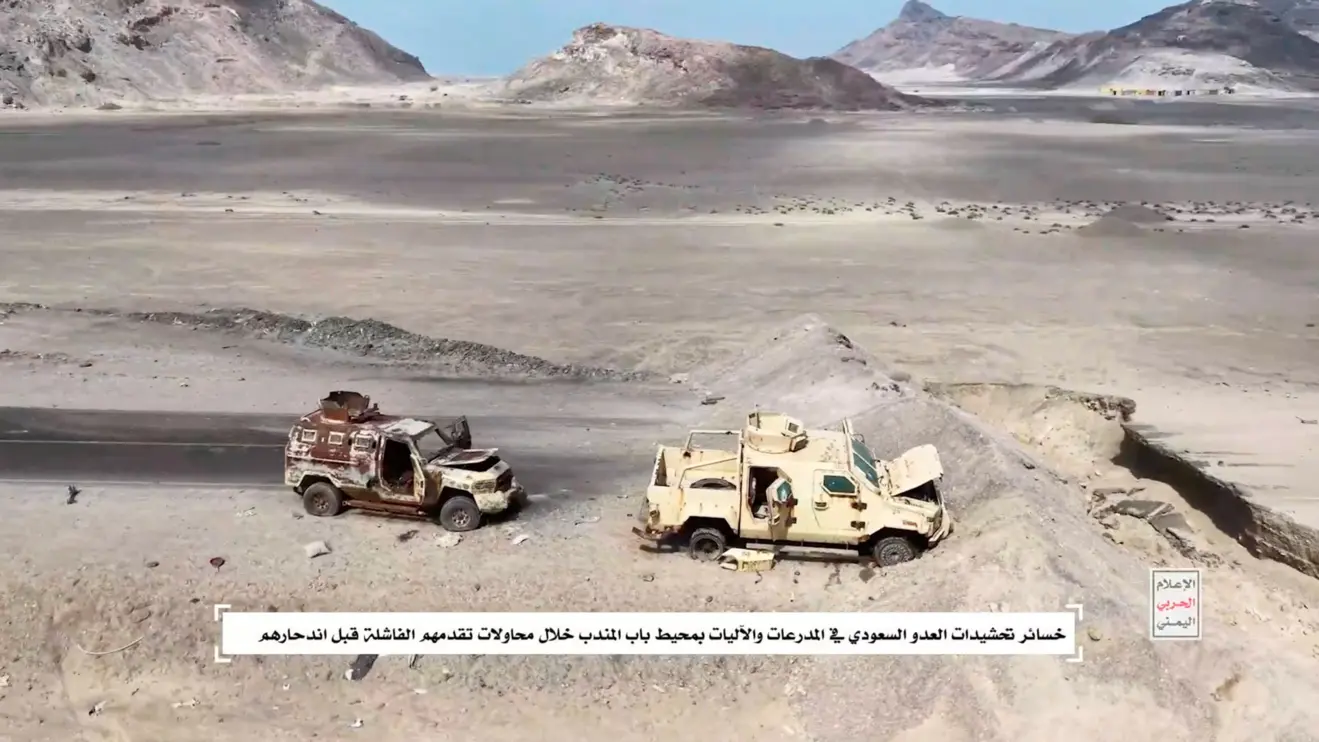
Saudi Arabia has replaced the commander overseeing its coalition against Yemen's Iran-allied Houthis after Riyadh's Yemeni allies were forced to withdraw from swathes of territory in a major setback for their campaign against the group.
Below are the factions involved in Yemen's 12-year-old civil war, which erupted after the Houthis seized the capital Sanaa, prompting a Saudi-led military intervention. A UN-brokered truce in 2022 largely halted heavy fighting but failed to produce a lasting settlement, while spillover from the Iran conflict has triggered the latest round of fighting.
A'AMALIQA (The Giants)
This military formation, which is leading most of the charge against the Houthis, consists mostly of students of the ultra-conservative Sunni Salafi movement in the south. It emerged in 2016. Like many armed groups in Yemen, it later split into competing factions, complicating efforts to stabilise the Arab world's most impoverished country.
The largest one is led by hardliner Abu Zara al-Muharrami, a member of Yemen's Presidential Leadership Council, who is now managing military operations along the vital Red Sea coastline overlooking Bab el-Mandeb. Another faction remains aligned with the United Arab Emirates, which withdrew its forces from Yemen in January after a dispute with former ally Saudi Arabia. A third faction, the Homeland Shield Forces, broke with the UAE and is now backed by Saudi Arabia.
THE HOUTHIS
The conflict began when the Houthi movement, formally known as Ansar Allah, ousted the Saudi-backed, internationally recognised government of then-President Abd Rabbu Mansour Hadi in late 2014.
The group remains Yemen's dominant military force, controlling Sanaa and much of the north. It is estimated to hold territory inhabited by between 60% and 65% of the population.
The Saudi-led coalition accuses Iran of arming, training and funding the Houthis. The group denies being an Iranian proxy and says it develops its own weapons. Tehran also rejects the allegations.
The Houthis have demonstrated their missile and drone capabilities during the Yemen war in attacks on Saudi Arabia and the UAE, targeting oil installations and vital infrastructure.
Widely seen as part of a regional alliance known as the "Axis of Resistance" backed by Iran, the Houthis have also rallied behind the Palestinians in the Gaza war, lobbing drones and missiles at Israel and attacking commercial shipping in the Red Sea.
The Houthis entered the current war alongside Iran with an attack on Israel on March 28, but largely stayed quiet before declaring a naval blockade against Saudi Arabia in July and stepping up attacks against the south of the kingdom in September.
The Houthis have proven resilient, defying over 10 years of bombing by the Saudi-led coalition, as well as US and British strikes in recent years.
SAUDI ARABIA
Riyadh entered the conflict in March 2015, leading a military coalition against the Houthis in an effort to restore Hadi's government and prevent the Iran-aligned movement from consolidating control of Yemen.
Despite a China-brokered rapprochement, Saudi Arabia and Iran remain regional rivals with deep mutual distrust.
The kingdom, the world's largest oil exporter, signed a defence pact with Turkey and Pakistan in August in response to growing instability linked to the US-Israeli war on Iran. The Houthis have repeatedly targeted Saudi energy infrastructure.
THE SAUDI-BACKED GOVERNMENT
The eight-member Presidential Leadership Council, led by Rashad al-Alimi, is the internationally recognised Yemen authority based in the port city of Aden. It was formed in Riyadh in April 2022 to replace former president Hadi and unify anti-Houthi forces, but the council has been paralysed by the divisions it was meant to solve. The government is heavily reliant on Saudi air power as it tries to reverse Houthi gains.
NATIONAL RESISTANCE FORCES
The National Resistance Forces are a well-equipped anti-Houthi force led by Tarek Saleh, a nephew of former Yemeni president Ali Abdullah Saleh and a member of the Presidential Leadership Council. Originally established with UAE support to battle the Houthis on Yemen's west coast, the force has maintained ties to Saudi Arabia and aims for a unified Yemen, positioning itself as a counterweight to both the Houthis and southern secessionists.
On September 10, Saleh told his forces on the west coast to regroup and establish an alternative command centre in a safe location, as Houthi fighters seized territory.
STC
The Southern Transitional Council, trained and equipped by the UAE, sought secession for the south in January. South Yemen was an independent state until unification with the north in 1990. An earlier attempt to break away in 1994 was swiftly crushed by forces loyal to then-President Ali Abdullah Saleh.
The STC, led by Aidarous al-Zubaidi, is part of the Saudi-led coalition but declared in 2020 it would establish self-rule in the south. Tensions peaked in December 2025 when the group seized large areas of Hadramout and Al Mahra provinces and advanced to the Saudi border, challenging Riyadh's influence.
ISLAH PARTY
The Yemeni Congregation for Reform, better known as al-Islah, is a Sunni Islamist movement with historic ties to the Muslim Brotherhood. It is a key component of the recognised government but is viewed by the UAE and the STC as a terrorist organisation. Its main stronghold has long been Marib, home to Yemen's only gas-producing region and one of its largest oilfields.
UAE
The UAE joined the Saudi-led coalition and was among its most effective ground forces. A withdrawal of UAE troops was announced in 2019 and completed in 2020, but it maintained influence on the ground through the STC and other factions.
Analysts say the UAE was motivated both by its opposition to the Muslim Brotherhood and its desire to secure shipping lanes through Bab el-Mandeb and the Gulf of Aden.
The UAE withdrew its remaining forces from Yemen in January after a dispute with Saudi Arabia, its former ally in the war.