ADNOC to invest $55 Billion over next two years

1 min Sandrine Zimra

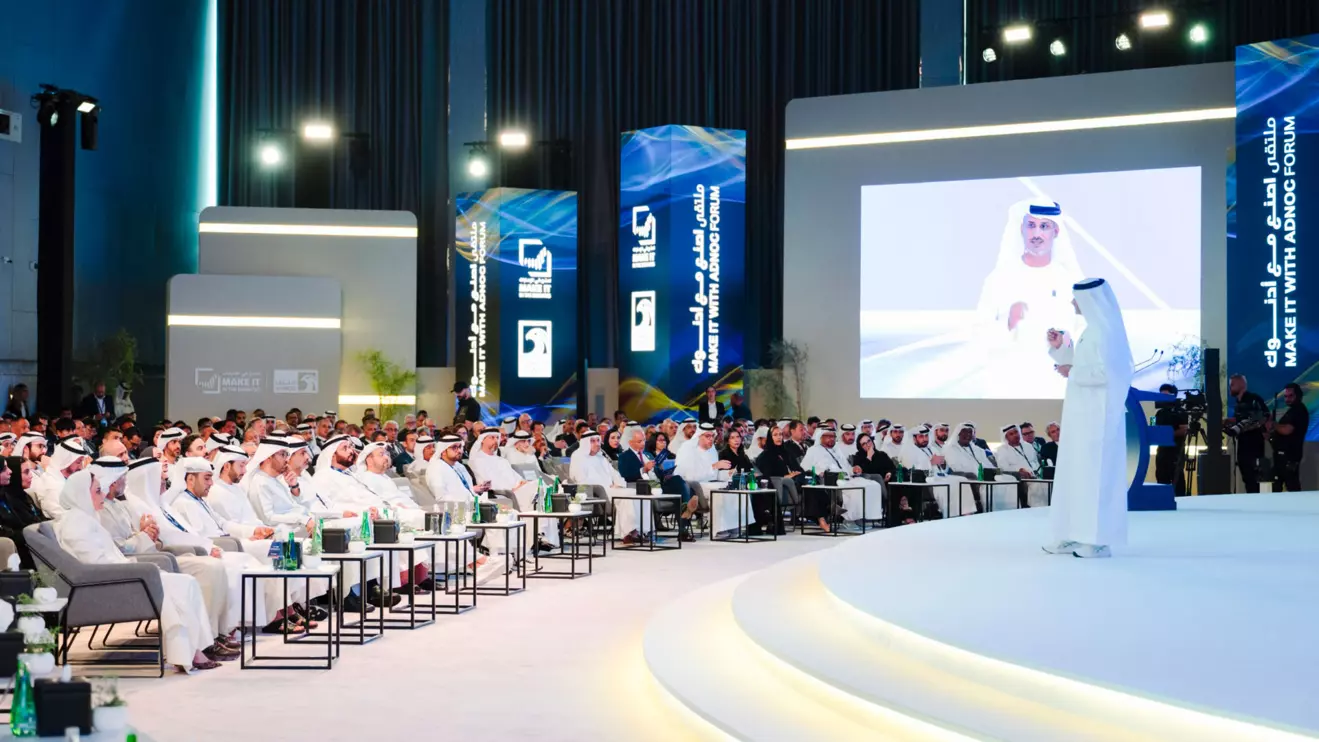
Abu Dhabi National Oil Company (ADNOC) announced Sunday a commitment to spend $55 billion on new projects over the next two years, a bold opening move in the UAE's new era of energy independence, coming just two days after the Emirates officially withdrew from the OPEC cartel.

The investments will span the full oil value chain: upstream exploration and crude production, refining, and downstream valorisation including petrochemicals © X

The investments will span the full oil value chain: upstream exploration and crude production, refining, and downstream valorisation including petrochemicals © X

Abu Dhabi National Oil Company (ADNOC) announced Sunday a commitment to spend $55 billion on new projects over the next two years, a bold opening move in the UAE's new era of energy independence, coming just two days after the Emirates officially withdrew from the OPEC cartel.

The investments will span the full oil value chain: upstream exploration and crude production, refining, and downstream valorisation including petrochemicals. 

ADNOC said the spending programme would boost the UAE's manufacturing production capacity, strengthen industrial resilience and accelerate the country's broader energy ambitions.

The OPEC exit is a watershed moment for Abu Dhabi. For decades, the UAE chafed under a Saudi-led quota system that capped its production at 3.4 million barrels per day,  well below its actual capacity. As the fourth-largest producer in the OPEC+ grouping behind Saudi Arabia, Russia and Iraq, the Emirates was producing roughly 3.5 million barrels per day before the Middle East conflict began.

Now, unshackled from cartel discipline, Abu Dhabi is free to produce as it sees fit. Its target is ambitious: five million barrels per day by 2027, a near 50% increase on its previous quota ceiling that could generate enormous additional revenues for the emirate.

A calculated bet

The timing is significant. With the Middle East conflict disrupting regional energy markets and the Strait of Hormuz blockade sending global oil prices surging, the UAE is positioning itself to capitalise on elevated prices while simultaneously expanding its long-term production capacity.

For Riyadh and the remaining OPEC members, the UAE's departure and its $55 billion investment pledge sends an unambiguous message: Abu Dhabi is done playing by other people's rules.

Sandrine Zimra

Sandrine Zimra

Sandrine Zimra has been a financial analyst for 25 years. Based in Geneva, she covers countries in the Middle East and travels regularly to the United Arab Emirates, Saudi Arabia, Qatar, Bahrain, Egypt, and Israel. She contributes to Mena Today with her financial reports and insights on the region.

Related

United Arab Emirates

UAE restores normal air traffic

The UAE's aviation authority said air traffic in the country has returned to normal, the state news agency reported on Saturday, after precautionary measures implemented on February 28 at the start of the Iran war were lifted.

Qatar

US approves massive arms sales to Gulf states

The United States has approved more than $8.6 billion in arms sales to key Middle East allies, the State Department announced Friday, as Washington moves to bolster the defences of countries targeted by Iranian strikes since the conflict erupted on 28 February.

Subscribe to our newsletter

Mena banner 4

To make this website run properly and to improve your experience, we use cookies. For more detailed information, please check our Cookie Policy.

  • Necessary cookies enable core functionality. The website cannot function properly without these cookies, and can only be disabled by changing your browser preferences.