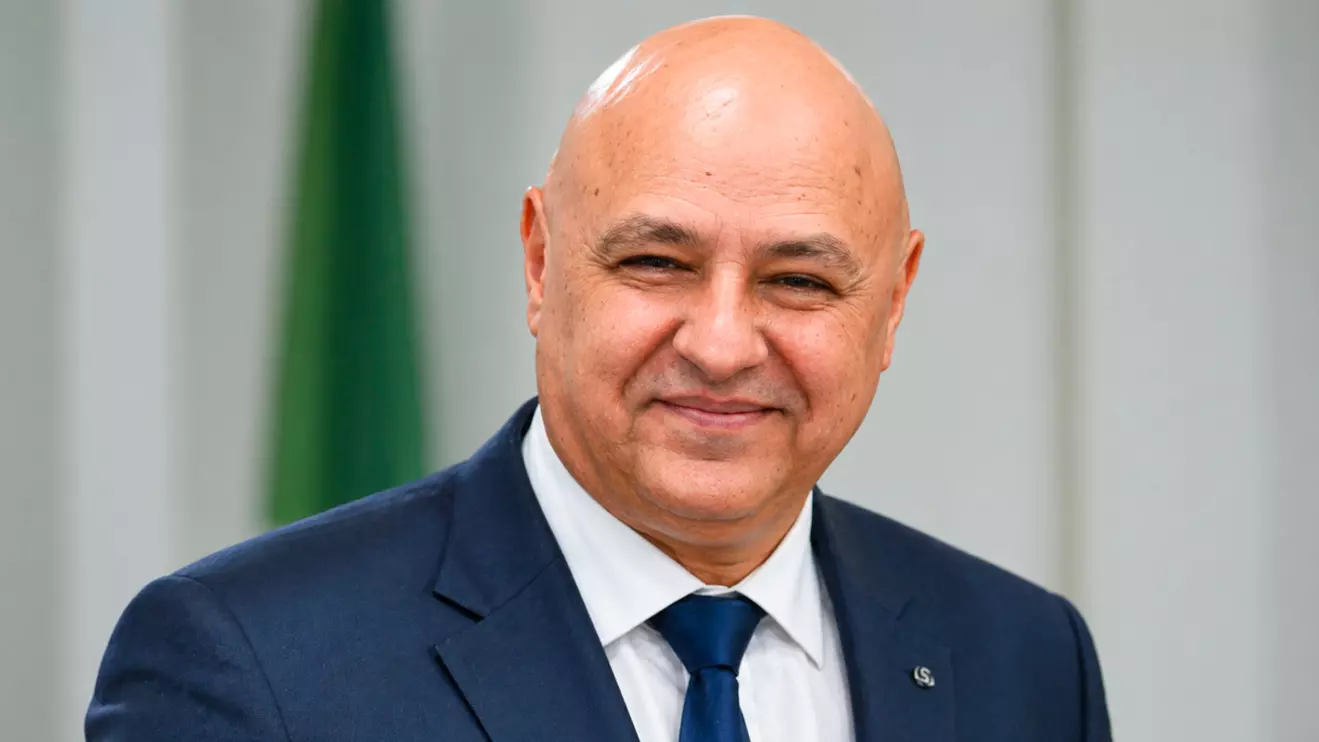
Lebanese President Joseph Aoun has delivered a pointed and defiant response to Hezbollah, dismissing the militant group's accusations that direct negotiations with Israel constitute a betrayal of Lebanon.
"Betrayal is committed by those who drag their country into war to serve foreign interests," Aoun said Monday, his most direct attack yet on Hezbollah's role in plunging Lebanon back into conflict.
The remarks came hours after Hezbollah chief Naïm Kassem called on Lebanese authorities to reverse their decision to engage in direct talks with Israel, warning that the move would "plunge Lebanon into instability."
Aoun was having none of it.
Addressing those who argue that direct negotiations lack a national consensus, the Lebanese president turned the accusation back on its authors with surgical precision: "When you chose war, did you first obtain that consensus?"
The question needs no elaboration. On 2 March, Hezbollah launched rockets against Israel, ostensibly to "avenge" the death of Iranian Supreme Leader Ali Khamenei, killed two days earlier in a joint Israeli-American offensive against Iran. That decision, taken unilaterally by the Iran-backed group, drew Lebanon into a regional war it had not chosen and could not easily escape.
A historic diplomatic opening
Aoun had been the first Lebanese leader to call for direct negotiations with Israel, doing so from the very outset of the conflict on 3 March. That call bore fruit on 23 April, when Lebanese and Israeli ambassadors met in Washington, only the second direct contact between the two countries since 1983. The meeting resulted in a three-week extension of the ceasefire that had entered into force on 17 April for an initial period of ten days.
The extension, announced by US President Donald Trump, has kept the guns silent, for now, while negotiations on a broader political settlement continue.
At the heart of this confrontation lies a fundamental question about Lebanese sovereignty: who speaks for Lebanon in matters of war and peace? Aoun's message is unambiguous, it is the state, not an armed faction answering to Tehran, that holds that authority.
For a country that has suffered the consequences of Hezbollah's unilateral military decisions for decades, the president's words carry the weight of a long-overdue reckoning.