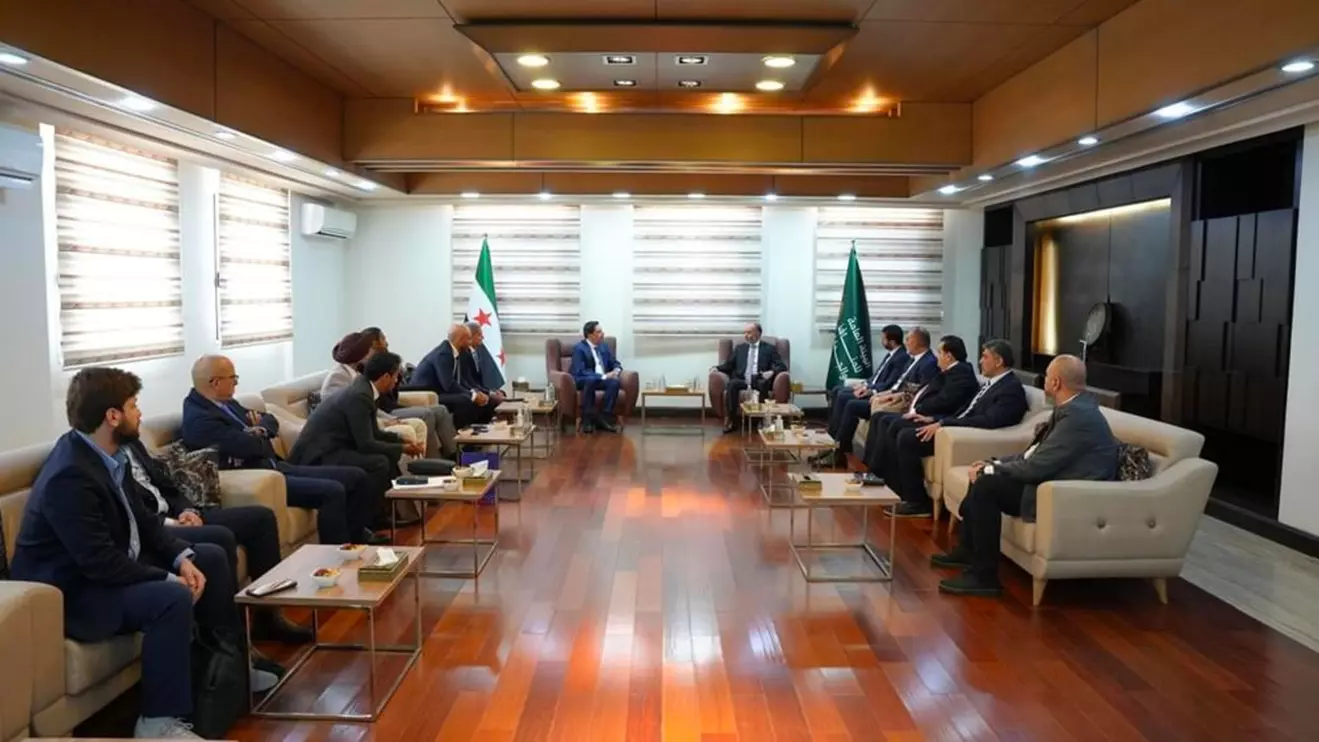
DP World Chairman Essa Kazim met with Syria's General Authority for Borders and Customs chief Qutaiba Ahmed Badawi to review progress on the Port of Tartous development, a flagship $800 million project that is rapidly becoming a cornerstone of Syria's economic recovery.
Under a 30-year concession signed in July 2025, DP World has committed to upgrading infrastructure, expanding capacity and introducing advanced digital cargo-handling systems at Tartous, Syria’s second-largest port, strategically positioned on the Mediterranean to serve trade routes linking Southern Europe, the Middle East and North Africa.
Discussions focused on accelerating implementation and boosting the port's capacity to handle containers, general cargo, breakbulk and roll-on/roll-off traffic. DP World is also exploring logistics zones, inland freight hubs and transit corridors to integrate Tartous into regional and global supply chains.
The backdrop is striking. UAE-Syria non-oil trade reached a record $1.4 billion in 2025, a 132.4% year-on-year surge, underscoring the momentum behind the two countries' economic partnership.
"The Port of Tartous development marks a defining moment in Syria's journey of economic recovery," said Rizwan Soomar, DP World CEO for the Subcontinent, Central Asia, Levant and Egypt.
With operations in over 80 countries and handling roughly 10% of global container traffic, DP World brings formidable expertise to a project that could reshape the Levant's logistics landscape for decades.