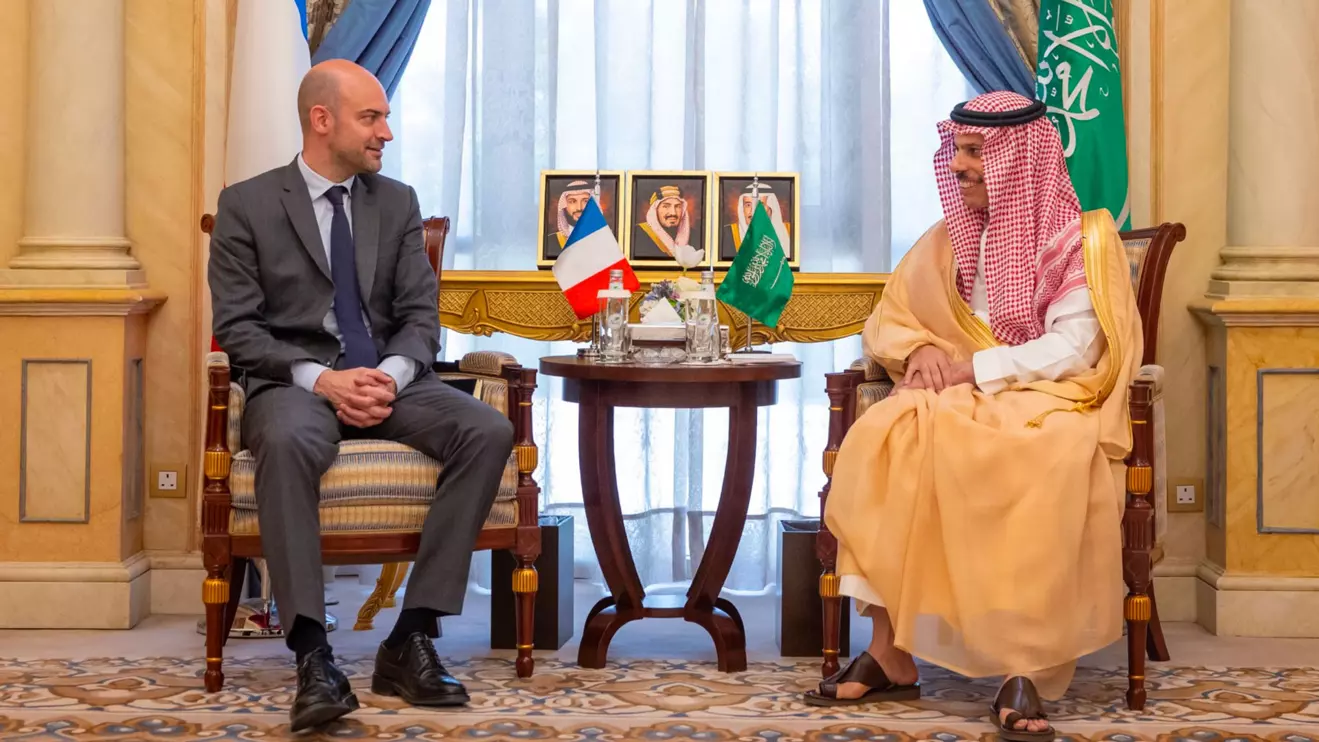
The French foreign minister Jean-Noel Barrot landed in Riyadh on Thursday for talks with Saudi Foreign Minister Prince Faisal bin Farhan, with stops in Doha, Abu Dhabi and Muscat still to come. Regional and international developments, security, stability, the usual diplomatic vocabulary was duly deployed.
It all looks very active. The question is whether it amounts to very much.
France has a problem in the Middle East. It is not a new problem, but the current crisis has made it impossible to ignore. In the war between Iran and the US-Israeli coalition, Paris is a spectator.
In Lebanon, where France once wielded enormous historical influence, it is Washington that is brokering the ceasefire and setting the diplomatic agenda. In the Israeli-Palestinian conflict, French positions are noted, filed and largely disregarded by the parties that matter.
In the Gulf, the picture is no better. The major strategic decisions, on energy, on security architecture, on the future of Iran, are being made in Washington, Jerusalem and Riyadh. Not Paris.
A regional tour with limited leverage
Barrot's Gulf tour is not without value. Diplomatic presence matters, relationships need maintaining, and France does retain real economic and cultural ties across the region. French arms sales to Gulf states remain significant. French companies have stakes in major Gulf energy and infrastructure projects.
But influence is not the same as presence. And at a moment when the Middle East is being fundamentally reshaped, by war, by the collapse of Iranian power, by the emerging Gulf-Israel realignment, France finds itself without a seat at the table where the real decisions are made.
The Americans have the military muscle. The Israelis have the strategic initiative. The Gulf states have the money.
France has Barrot, flying business class between capitals, meeting ministers, issuing communiqués.
It is called diplomacy. But in the Middle East right now, it looks a lot like going through the motions.