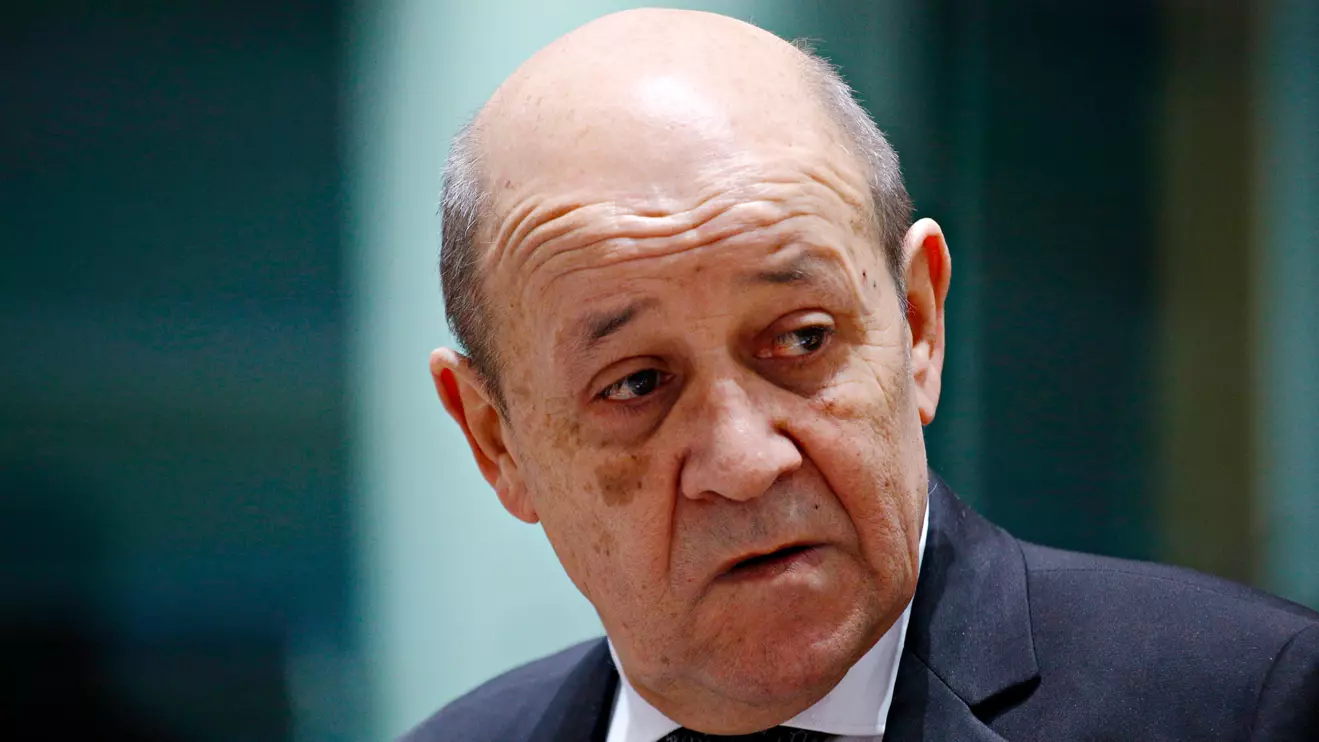
Lebanon is facing threats to both its unity and territorial integrity, French presidential envoy Jean-Yves Le Drian warned Thursday, pointing to Israeli occupation of Lebanese territory in the south and Hezbollah's grip on the rest as twin threats to the country's survival as a coherent state.
"Lebanon is threatened in its integrity because part of its territory is occupied by Israel and another part is animated by Hezbollah, which serves Iranian interests, a foreign power," Le Drian told French television.
He acknowledged the 45-day ceasefire extension as offering a "perspective" for continued talks, and praised Lebanon's leadership as "high quality" and "courageous" for pursuing direct negotiations with Israel to break free from what he called a stranglehold.
Le Drian also noted, with barely concealed frustration, that Israel had refused to allow France a seat at the negotiating table, "even though the Lebanese asked for it," he claimed.
That claim deserves scrutiny. Beirut never formally demanded French participation. Lebanon's leaders are experienced enough to know that Washington carries infinitely more weight than Paris in this dossier, and that American involvement, which Le Drian himself called "positive," is what actually moves the needle.
Which raises an uncomfortable question: what exactly is the French special envoy's role here? Le Drian visits, speaks to cameras, issues warnings and praises Lebanese courage. Meanwhile, the real negotiations happen in Washington, without him.
France's influence in Lebanon - once substantial - has quietly ebbed. Le Drian's mission is not without goodwill. But goodwill, in the current Middle East, is not a currency that buys much.