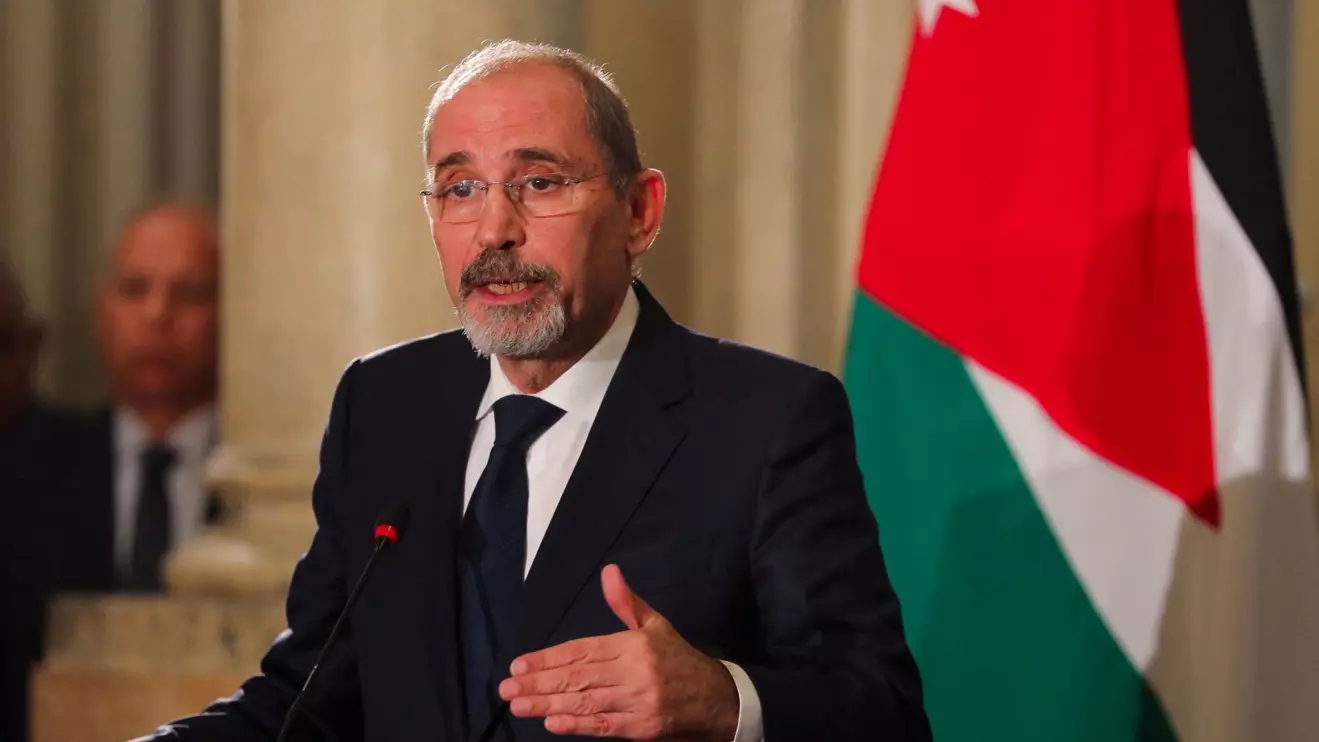
Jordan's Foreign Minister Ayman Safadi said on Wednesday an Israeli retaliation against Iranian strikes could bring a real risk of dragging the whole region into a devastating war.
In an interview released by state media, Safadi said his country was lobbying major powers against an escalation that would have far-reaching consequences for regional stability and security.
"The risks are enormous. That could drag the whole region into war, which would be devastating to us in the region and we’ll have very, very serious implications for the rest of the world including the U.S," Safadi said.
"The situation is too dangerous. The chances of regional explosion are real, and that has got to stop. We’ve got to make sure there’s no further escalation," he added.
Staunch U.S. ally Jordan, with the help of American air defences and support from the UK and France, shot down most of the Iranian drones and missiles that were flying over the country towards Jerusalem and a wide range of targets in Israel.
"Now the pressure should be on Israel not to escalate," Safadi said, adding Tehran had said it attacked in retaliation for a suspected Israeli airstrike on its embassy compound in Damascus on April 1 and would not go further unless Israel responded.
Jordan neighbours Syria and Iraq – both countries where Iranian proxy forces operate – and is next door to Israel and the Israeli-occupied West Bank
"We are in the middle of the fire, so both parties have to understand that we'll do what we have to do to protect our own, and to prevent this escalation," Safadi said.
Safadi warned that his country would act firmly in the event of another flare-up and that Jordan would not allow "either Iran or Israel to turn the kingdom into a battlefield."
"We will take down any projectiles that threaten our peoples and violate our sovereignty, and pose a threat to Jordanians. And we made this clear to both Israel and Iran," he said.
Iranian drones that came from the direction of Iraq and flew over southern Jordan and the city of Aqaba that were heading to Israel's Eilat port were also intercepted.
Israeli Prime Minister Benjamin Netanyahu was using the confrontation with Iran to divert attention from Gaza, Safadi said. The Israeli leader should not be allowed to drag "Washington and major Western powers into a war with Iran," he added.