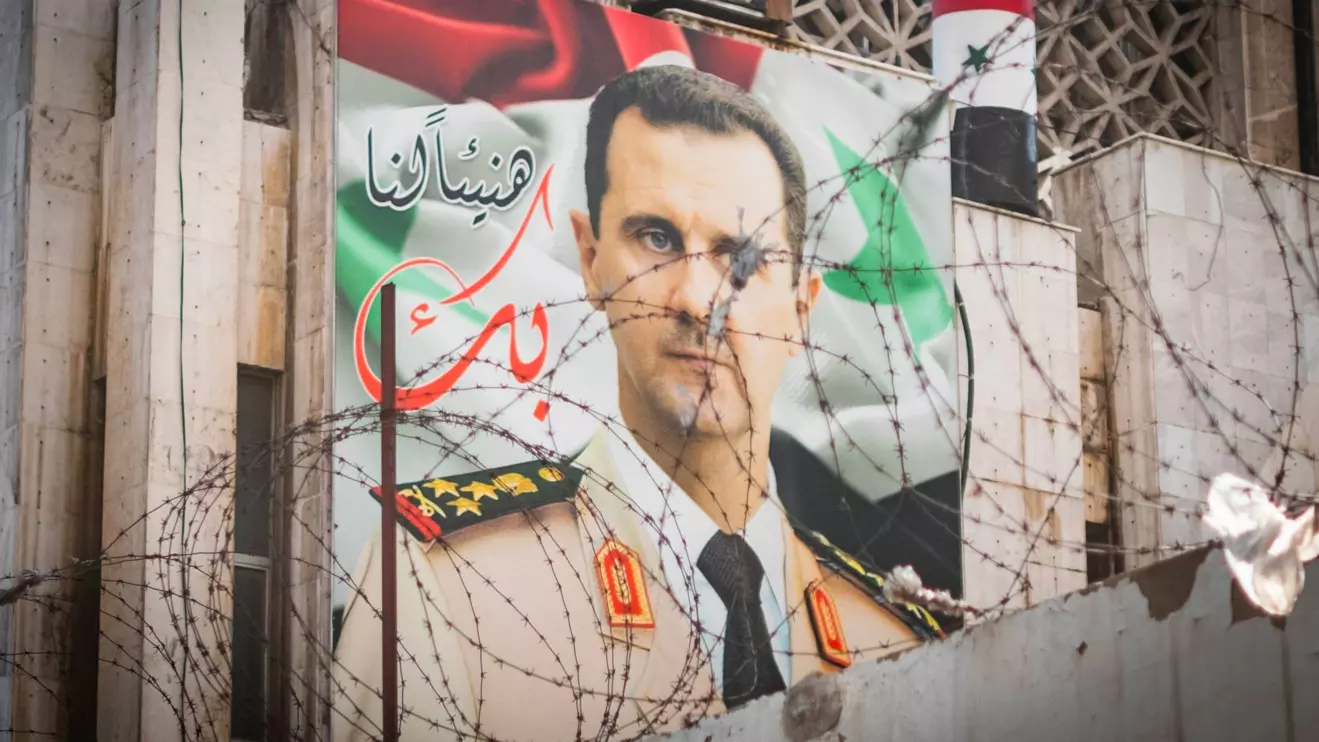
The United States delivered a pointed assessment at the UN Security Council Thursday, accusing the Assad regime of having "permitted or turned a blind eye" to Hezbollah's activities and captagon trafficking networks, allowing the Iran-backed group to "sow destruction in Syria and across the region."
The statement, delivered by US Deputy Representative Tammy Bruce, drew a stark contrast with Syria's new authorities, whom Washington credited with having "disrupted Hezbollah's plans, seized drug shipments and cooperated with Jordan and Lebanon to combat cross-border crime."
Hezbollah still trying to operate in Syria
The assessment is backed by recent events on the ground. Ten days ago, Syria's Interior Ministry announced the dismantling of a Hezbollah-linked cell whose members had "infiltrated Syrian territory after undergoing intensive specialised training in Lebanon", and were preparing "a sabotage agenda including targeted assassinations of senior government officials."
Earlier this year, Damascus also dismantled a cell responsible for attacks in the Mazzé district, with weapons traced to Hezbollah, allegations the group has consistently denied, claiming it has "no presence on Syrian soil."
The pattern is clear. Hezbollah, which fought alongside Assad for a decade and used Syria as a conduit for Iranian weapons and funds, is attempting to maintain operational footholds in a country whose new government has explicitly rejected Iranian influence.
Washington also reiterated its support for transitional justice, calling on Damascus to cooperate with UN mechanisms on enforced disappearances. "Hundreds of thousands of Syrian families — as well as several American families, are still waiting for answers about their missing loved ones," Bruce stated, urging close cooperation between the Syrian government and international partners.
The recent arrest by Syrian authorities of former Assad regime members accused of atrocities against civilians was welcomed by Washington as "an important step against impunity."