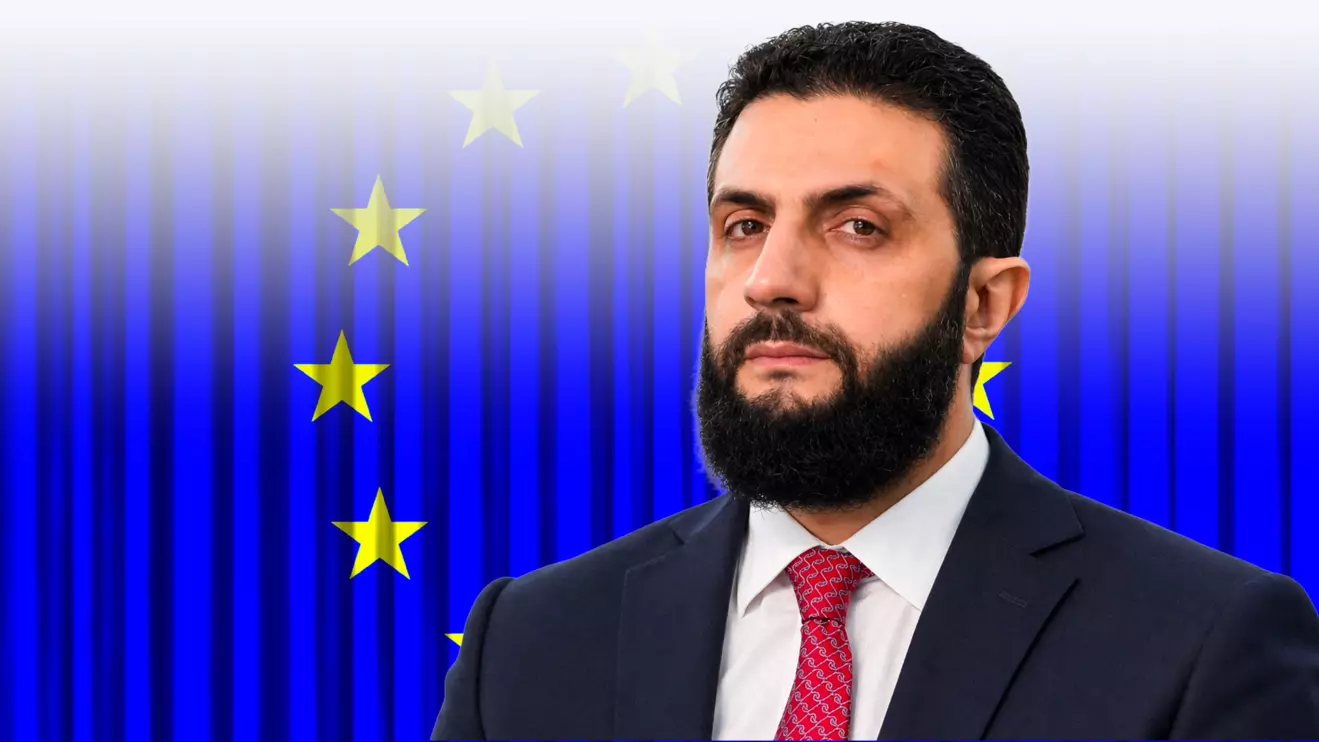
Ahmad al-Sharaa, the man who toppled Bashar al-Assad in December 2024, stood alongside the President of the European Council and the head of the European Commission on Friday in Nicosia, welcomed as a partner in rebuilding Syria and reintegrating it into the international community.
"The European Union recognises the important steps you have taken to rebuild Syria," European Council President Antonio Costa told al-Sharaa before the press. "We support your efforts for a peaceful and inclusive Syria." Commission President Ursula von der Leyen echoed the sentiment, pledging continued support for Syria's economic recovery and social reconciliation.
A high-level EU-Syria political dialogue is scheduled for 11 May in Brussels, the first of its kind, potentially paving the way for a future association agreement between the bloc and Damascus.
A troubling past, a convenient present
What went largely unspoken in Nicosia is the extraordinary journey that brought al-Sharaa to this point. A former jihadist rebel commander, he led the offensive that ended Assad's five-decade family dynasty, and his own history includes years of armed insurgency under the banner of groups that Western governments once designated as terrorist organisations.
His rehabilitation has been swift and, for many observers, uncomfortably so. In the space of months, a man whose past would have barred him from any Western capital has become a fixture on the international diplomatic circuit, received in Riyadh, Paris, Ankara, and now Nicosia, where he sat alongside Lebanese President Joseph Aoun, Egyptian President Abdel Fattah el-Sissi and Jordanian Crown Prince Hussein bin Abdullah.
Pragmatism over principle
Europe's embrace of al-Sharaa is driven by cold strategic logic. With the Middle East in turmoil, Syria's stability matters enormously, for migration flows, for regional security, and for the broader effort to contain Iranian influence. Brussels is betting that engagement is preferable to isolation, and that al-Sharaa's stated commitment to an "inclusive Syria" is more than rhetoric.
Al-Sharaa, for his part, welcomed the upcoming Brussels dialogue as a "great event" that would consolidate Syria's role as Europe's "strategic partner."
Whether the partnership holds, and whether a former jihadist can credibly lead a pluralist, peaceful Syria, remains the question that polite diplomatic language in Nicosia carefully avoided answering.