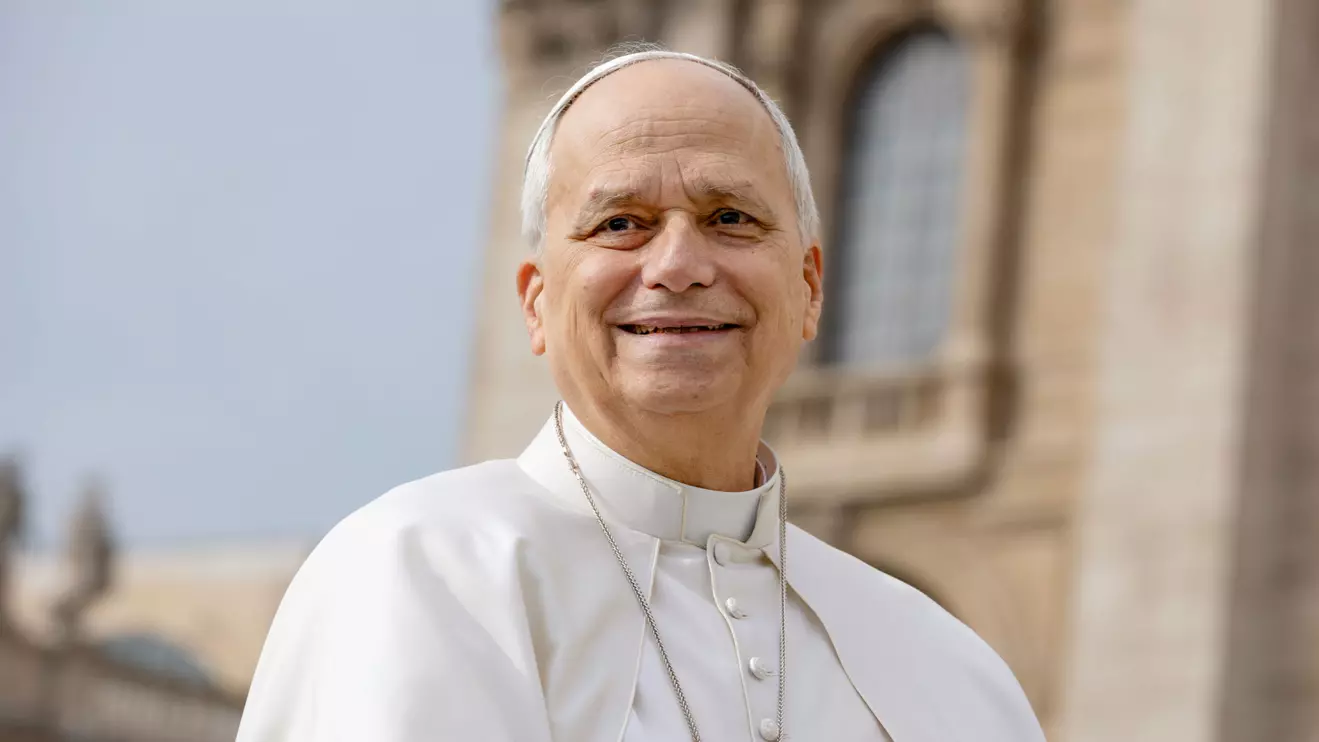
Speaking to the crowd gathered in St. Peter's Square following his traditional Sunday prayer, Pope Leo XIV said he felt "closer than ever" to the Lebanese people "in these days of pain, fear and indestructible hope in God."
He spoke of the "moral obligation to protect civilian populations from the atrocious effects of war" and called on all parties to pursue peace.
It was a moving declaration. It was also a carefully incomplete one.
The Pope did not mention Hezbollah. Not once. The Iranian-backed armed group that has held Lebanon hostage for four decades, financed, trained and weaponised by Tehran, responsible for dragging the country into successive conflicts, embedding its military infrastructure in civilian areas and systematically hollowing out the Lebanese state, went entirely unnamed in the pontiff's address.
To speak of Lebanon's suffering without naming Hezbollah is a bit like describing a house fire without mentioning who struck the match. The group is not a side effect of Lebanon's troubles. It is their primary cause. Its decision to open a front against Israel, in coordination with Tehran, triggered the latest round of devastation that the Pope now mourns from Rome.
This is not the first time the Vatican has opted for studied neutrality over moral clarity in the Middle East. When Pope Leo visited Lebanon in late November, he expressed solidarity with its people but carefully avoided any language that might be interpreted as assigning responsibility. The same pattern repeated itself on Sunday.
Calling on "all parties" to pursue peace sounds balanced. But when one party is a designated terrorist organisation funded by a revolutionary theocratic regime, false equivalence is not neutrality , it is a political choice dressed up as pastoral care.
Moral Obligation Requires Moral Courage
The Pope is right that protecting civilians is a moral obligation. But moral obligation does not end with sympathy for victims. It extends to the courage of naming those responsible for their suffering. Lebanon's civilians have paid an enormous price for Hezbollah's choices, choices made in Tehran as much as in Beirut.
A Pope who truly stands with the Lebanese people might consider telling the full truth about what has been done to them, and by whom.